In an era of infinite content, 'critical ignoring' is becoming the ultimate cultural skill – and smart brands are learning when not to speak.
There’s a particular kind of exhaustion that doesn’t look like exhaustion yet. It looks like scrolling, hovering over tabs you’ll never close, and living inside an endless corridor of almost-information, where everything seems urgent and nothing quite resolves.
A recent Wall Street Journal article (dropped into SEED CLUB by Shikhar Bhardwaj) framed this condition through a useful lens: “critical ignoring”. Not disengagement or digital asceticism but a more surgical skill – learning when not to let information past the threshold of attention in the first place.
The argument was simple but slightly unsettling: we’ve been trained for decades to believe that more information equals better judgement, when in fact the opposite now often holds. In a landscape saturated with low-grade content, synthetic text, engineered outrage and algorithmic noise, the act of consumption itself has become the vulnerability.
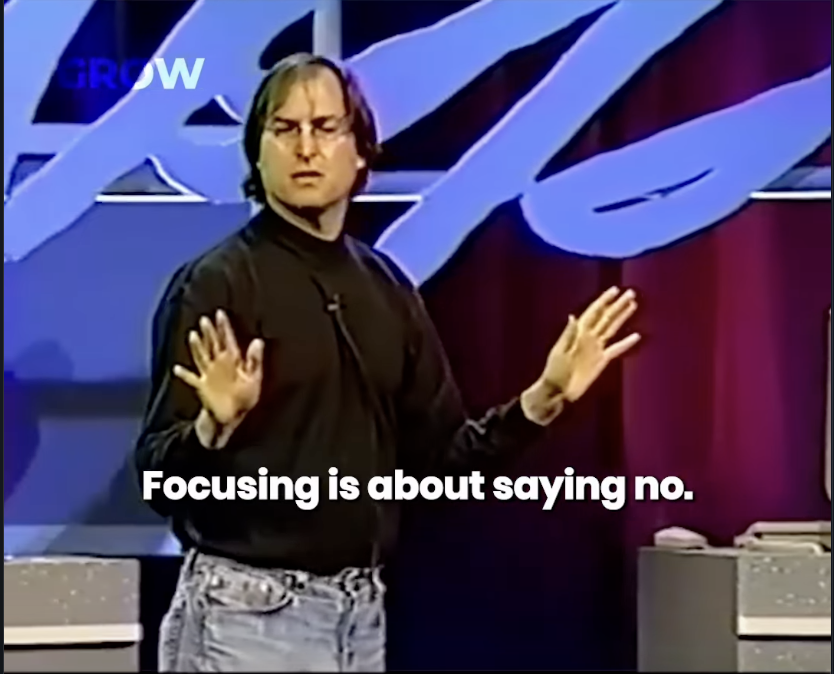
Critical ignoring, in this sense, is not passive. It is an active filter. A discipline of refusal. A way of keeping your attention from exhausted over by everything that is trying to claim it. It feels like the brands, people and creatives cutting through right now are increasingly the ones not trying to say everything. They’re often the ones disciplined enough to decide what deserves attention in the first place – an idea Steve Jobs captured perfectly when he said:
“People think focus means saying yes to the thing you’ve got to focus on. But that’s not what it means at all. It means saying no to the hundred other good ideas that there are. You have to pick carefully. I’m actually as proud of the things we haven’t done as the things I have done. Innovation is saying no to 1,000 things.”
What’s striking about that quote now is how contemporary it feels. Attention itself has become finite in a way that feels tangible. Every brand is competing within the same compressed psychological space. Every notification, campaign, trend cycle and content stream draws from the same dwindling reserve of focus.
The old assumption was that relevance came from participation. Be present everywhere. React instantly. Comment on the moment as it happens. But audiences are becoming more literate in filtering. They can sense when something is adding value versus simply adding volume. Even in our recent Do Memes Still Matter? FORUM, Catty Berragan, co-founder of creative studio PATHETIC – born from an Instagram meme page now reaching 50 million people a month – argued that the era of brands jumping into each other’s comment sections should probably be over. Brands, he argued, have started flattening meme culture by overproducing and overparticipating in it.
This is where critical ignoring becomes strategically useful. Not as silence for the sake of silence, but as a sharper form of editorial judgement. It might mean brands resisting the pressure to attach themselves to every cultural conversation. It might mean fewer campaigns with more conviction behind them. Less “always-on” thinking, more intentional presence.
Luxury has understood this for years. Scarcity works because absence creates meaning. But now that logic is spreading far beyond luxury into broader culture. The brands people trust increasingly feel edited rather than exhaustive. They don’t flood feeds with constant explanation. They don’t mistake visibility for identity.
Protein AGENCY provides insight, foresight and strategy for global brands that's rooted in culture and the collective knowledge of SEED CLUB - our decentralised research community of 450+ global experts.