The Fog Economy
When systems slow people down, culture reorganises around the illusion of progress.
It’s 5am and I thought I was early. Sixty people are already in line outside the immigration office, all of us circling the same question: is it ready yet? Some slept on the pavement; others clutch scraps of paper as a woman assigns numbers, building order before the system even opens. No one questions it. Here, clarity isn’t given – it’s improvised to survive the wait.
The air feels dense, a bluish haze of sweat, coffee and delay. Phone screens glow, each of us scrolling. I realise 5am is already too late. In this line, time stretches. Online, it doesn’t. Messages, updates, people becoming things. After years of being legally bound to this process, I’ve trained myself to say “soon”, trying to keep pace with a world that never pauses.
Nothing moves around me, yet everything moves on-screen. In this in-between, there’s a market. Becoming fades; appearing scales. The fog isn’t just atmosphere – it’s product. And it’s everywhere, even when you’re in it.
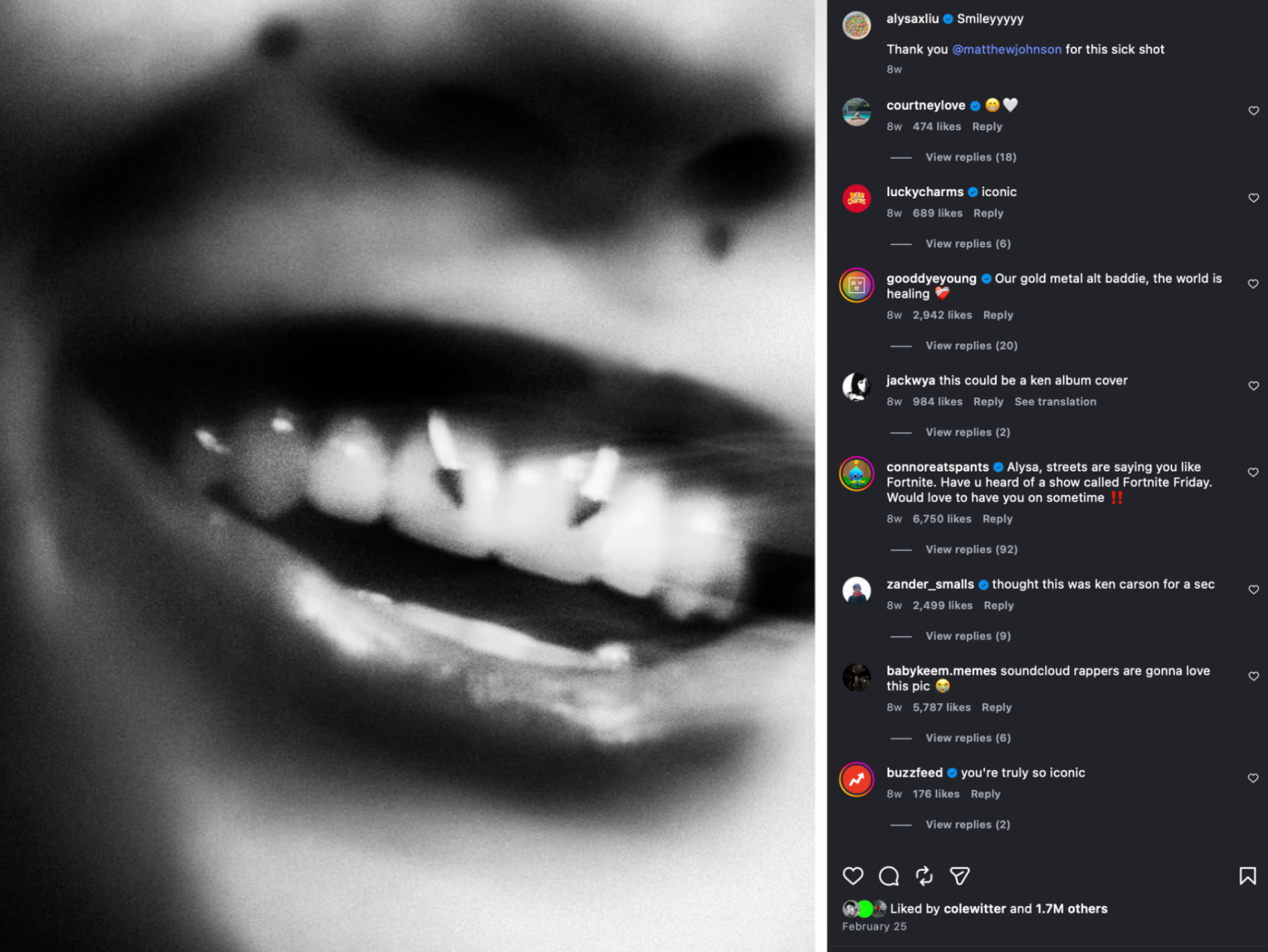
At the same time, the tools to signal success are everywhere. AI influencers pulling in millions. One-click portfolios that render you fully formed in seconds. Speculative case studies passing as real commissions. People paying to fake VIP access, or generating high-res “event” images from their bedrooms – proof of presence without ever being there. During the Olympics, photographer Matthew Johnson posted images that went viral when it emerged they were taken from a television screen, not the field.
Some questioned it, others didn’t mind. A few outlets praised the resourcefulness. Then Alysa Liu – the viral gold medalist – reposted one of the images, and suddenly its origin felt irrelevant. It was already part of the feed.

What matters isn’t whether this is right or wrong, but how quickly it collapses the distance between being there and appearing to be there. Proximity, accreditation, circulation used to define the work. Now circulation comes first, validation follows. Context becomes secondary – we see, we like, maybe we certify.
Placed next to someone spending years getting accredited, building a portfolio, waiting for access, the overlap becomes visible. Two different paths producing similar outputs, competing for the same attention: one through the system, one around it.
And in a space already saturated with voices moving through this fog, that distinction blurs faster than expected.
Into The Void
At some point, the performance of becoming presents as a new way of what becoming means. And some have made it obvious to prove a point, and more likes.
Ragebait – the word of 2025, according to Oxford University Press – has gone viral as a clout strategy. When doing things “right” no longer guarantees attention, doing things obviously wrong does: misinformation, engineered controversy. Rather than breaking the system, this visibility adds another layer to it – an atmosphere of attention and proof of presence, two things brands now chase most.

If being right takes time to believe, being wrong – loudly – produces immediate feedback. You don’t need to arrive at anything. You just need to activate the system around you, wait for a voice of power to validate you – and let the audience rage.
“No Pain, No Gain” doesn’t feel as strong as “No Flare, No Care”.
The strange part is that everyone involved often understands the mechanism. The performance isn’t hidden. It’s almost collaborative. The audience corrects, the creator responds, the loop continues. But it raises a quieter question that doesn’t resolve as easily: what does it mean to build anything – identity, work, direction – inside a system where visibility can be generated independently of progression?
Flooding The Zone
The issue nowadays is not much whether something is true or false. It’s whether you still have the capacity to care. Walking through a space so saturated, our orientation easily collapses. Flooding the zone isn’t so new, but today it intensified. With political environments shaped by disinformation, echo chambers and algorithmic filtering, the volume and the velocity of content begin to dominate the user, especially in moments of quiet, like in a waiting line.
Here’s where the fog thickens, as branded ideologies take these emotional charges as part of their strategy to provide triggering information to benefit their agenda to the point of digital domination, as stated by John Maynor, professor of Department of Political and Global Affairs, Middle Tennessee State University.
Anger travels faster than clarity, so clarity starts to feel inefficient. Too slow, too layered, too easy to ignore. A trigger feels more true because it moves. In a system conditioned for movement, truth becomes secondary to traction. The online world doesn’t reward accuracy as much as response. Being right isn’t the metric – being reacted to is. And some powers benefit from this shift, producing content that doesn’t hold, only hits. The result is an inversion where attention detaches from credibility, and visibility becomes less a signal of value than a residue of friction.

Monoliths Of Light
And yet, every now and then, something cuts through. Creating new silhouettes inside this fog to make others notice with contemplation rather than rage. This is where art, or at least certain gestures within popular culture, starts to function as a marker for new behaviours. A monolith shaping culture.
When Zara Larsson uses her platform to speak beyond the expectations of pop neutrality, or when Aurora frames politics in a language that resists simplification, we’re facing new public figures shaping perspectives for us to see. They don’t clear the fog, but they make it much palpable.

Faces still carry weight in spaces where everything seems blurry. Beyond the idealisation, they have the capacity to point out the contradictions on a massive scale. The artist becomes a site where tension is allowed to exist publicly between commerce, expression, integrity, system and self. Contemporary artists like Hito Steyerl have been mapping this for years, exposing how image circulation, power and digital economies collapse into one another.
What these monoliths offer is simply interruption. A pause in the scroll for us to perceive the environment again, and act from a place of critical thinking. And maybe that’s their role here, simply to point. To stand inside the fog and make you aware that you’re in it.
Where Brands Come In
Brands are among the main architects of this fog. They brief the campaigns that chase engagement, they fund the platforms that reward outrage, they operate under ownership structures that often make full transparency impossible. So any call for authenticity without acknowledging power feels incomplete. Some brands are structurally limited in what they can say. Others choose not to say it.
Still, if I put my optimistic strategist hat on, there are ways to at least make the fog more visible. And that’s a start. Not all brands operate under the same constraints. Smaller, independent, or more culturally attuned actors can begin to play a different role.
1. Design For The In-Between Contemporary life is defined by waiting (jobs, visas, recognition, etc). Most brands try to “fix” this by reducing friction through instant gratification. But rather than selling a solution to the wait, can we offer a better way to exist within it, knowing it’s inevitable?
2. Non-trigger content The current system rewards ragebait. But when brands participate in it, they contribute to the erosion of trust and rising cynicism in a landscape already saturated with it. Clarity becomes a strategy of resistance – creating quiet zones for audiences, positioning the brand as a pause in the fog rather than another layer of it.
3. Monolith Positioning Modern culture is liquid. It moves too fast to pin down, and brands often try to “surf” trends, which only accelerates blur and eventual burnout. Drastically reduce volume, increase weight. If you only speak once a month, but that message has structural integrity, you become a landmark in the fog. Instead of chasing every shift or meme, aim for something closer to permanence.
4. High-Resolution Strategies This one feels increasingly relevant amid the AI-slop avalanche online. In a landscape saturated with simulated success, real proof becomes the most valuable currency. Ads and communication leading with raw data, unedited process and physical timestamps that anchor work to a specific time and place.
The ultimate strategy isn’t to clear the fog, but to anchor it – weaponising the noise just long enough to plant a monolith, a landmark aware of its context. In a system designed for blur, the brand that controls its own visibility is the one that gets read at all.
Underneath this, quieter questions remain. About responsibility – whether brands are reacting to incentives or shaping them. About freedom – what it means to choose when choice, visibility, and belief are already engineered. And the older tension that returns again and again: can the means ever be separated from the ends? Or does distortion, outrage, and hyper-targeting reshape meaning before it even arrives?
None of these have clean answers, and maybe that’s the point. Because the fog isn’t just aesthetic, or cultural – it’s structural, ethical, infrastructural. It shapes not only what we see, but how we decide, how we trust, how we move through the world. But then again, I’m just a man in a line, in my cubicle of light. Waiting… waiting.
| SEED | #8407 |
|---|---|
| DATE | 05.05.26 |
| PLANTED BY | JON JACOBSEN |