

Stupid As Strategy

Ahead of our next REPORT, we explore how AI is reshaping the value of human judgement – and the role taste and imperfection continue to play.

Intelligence: what does it mean today, who gets to claim it, and what happens when thinking itself becomes increasingly outsourced to machines?
AI has moved from novelty to daily habit at dizzying speed. Increasingly, people defer to AI not just for efficiency, but for judgement. Somewhere along the way, thinking started to feel optional.
As we explored in a recent FORUM on taste in the age of AI, this shift is making human discernment newly valuable. Silicon Valley has become obsessed with “taste” precisely because so much else is becoming automated. Earlier this year, Paul Graham – the co-founder of Y Combinator and an influential tech world thinker – argued that when anyone can make anything, what matters is what you choose to make. Soon after, Greg Brockman, one of the key figures behind ChatGPT, declared that “taste is a new core skill”.
For brands, this changes the equation entirely. In a world of infinite AI-generated content, polish becomes cheap. Personality, perspective and cultural fluency become harder to fake. The challenge isn’t about speed and producing more. Instead, it’s about producing something that feels distinctly human.

The Claude x Air Mail pop up
Which perhaps explains why tech increasingly wants proximity to culture. Mark Zuckerberg sits front row at Prada. Jeff Bezos sponsors the Met Gala. In the New Yorker, cultural critic Kyle Chayka coined the term “taste-washing” to describe the way “anti-humanist technologies” borrow the aesthetics of culture and liberal humanism. Even AI companies increasingly position themselves as lifestyle brands. Anthropic recently opened a Manhattan pop-up with Air Mail, the media company founded by former Vanity Fair editor Graydon Carter. Visitors were encouraged to put away their phones and read a printed essay instead. The merch was deliberately handmade-looking. None of the visuals were AI-generated. Authenticity, apparently, still needs visible human fingerprints.
A recent It’s Nice That piece argues that this positioning reflects a structural change in the creative industries, which are beginning to split into two modes of operation: those optimising for efficiency and those optimising for expansion. In one version, AI is used to replace labour and compress cost; in the other, it is used to amplify human talent and creative output. The difference is not technical, but philosophical – whether intelligence is treated as something to automate away, or something to extend.
This reflects a broader change. Earlier this year, Daniela Amodei (President of Anthropic), argued that humanities subjects may become more valuable in the AI era, not less. The closer we move toward automated intelligence, the more valuable human interpretation becomes.
The Financial Times captured this tension in a recent article describing when a New York financier meets a cohort of interns he called the “first true AI natives” – students raised not just alongside digital technology, but AI itself. Initially they seemed wildly impressive, but when senior staff pushed deeper on their ideas, their thinking proved “alarmingly shallow”. The firm reportedly reduced return offers and began prioritising humanities graduates over STEM applicants instead. “We want critical thinking, not just AI,” the financier explained.
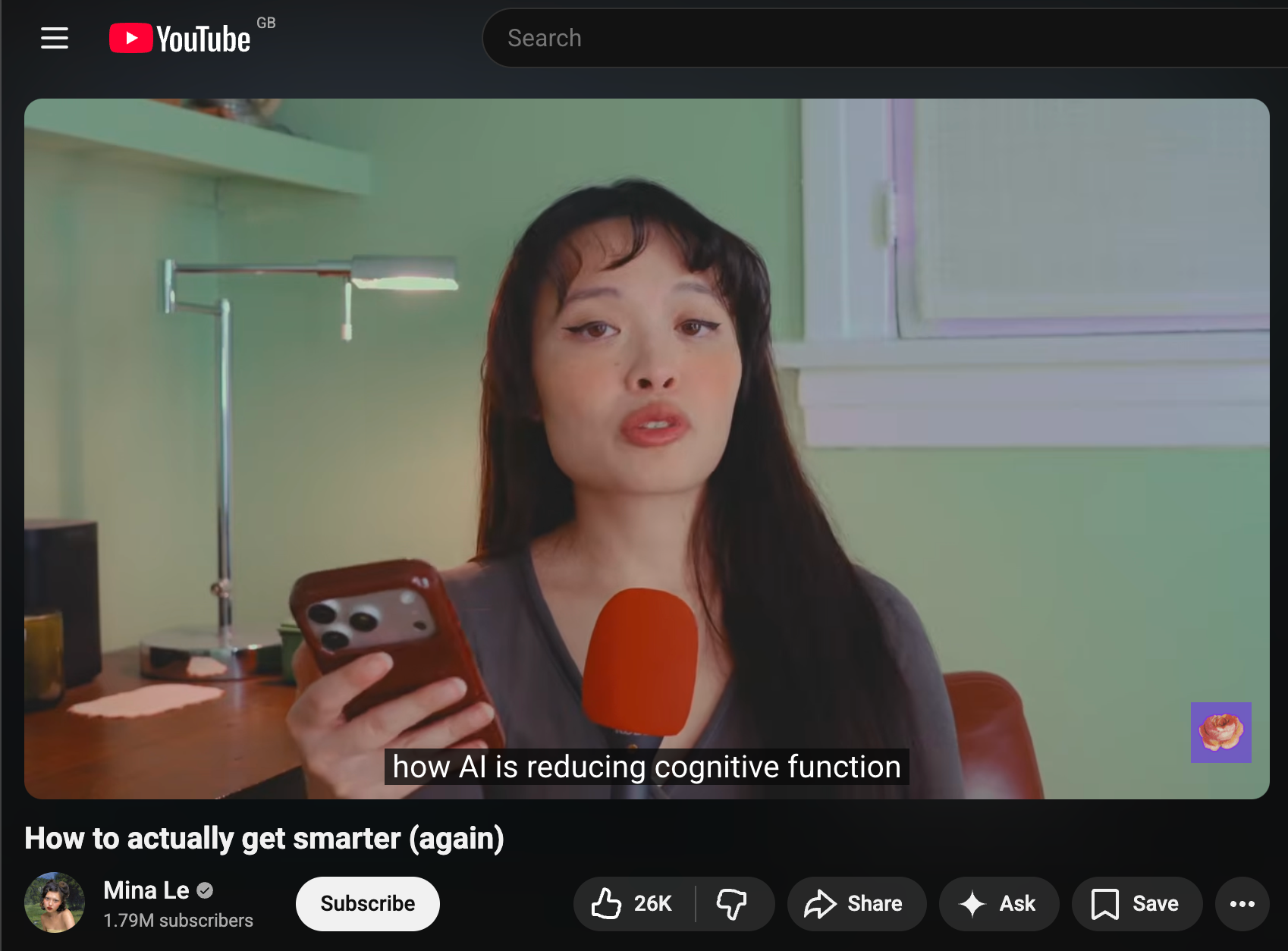
That tension is already reshaping culture. Intelligence itself is becoming aestheticised: something to signal, package and perform. Publishers like IDEA and spaces like Reference Point function as taste signifiers as much as cultural platforms. People like Mina Le and Mickey Galvin are turning theory into lifestyle content.
Are people actually becoming more thoughtful – or just better at appearing intelligent online?
Writer Sanibel recently described this as “smart passing”: consuming enough theory fragments, podcasts and TikTok explainers to simulate intellectual depth without deeply engaging with the material itself. The internet already has a word for this figure: the dilettante.
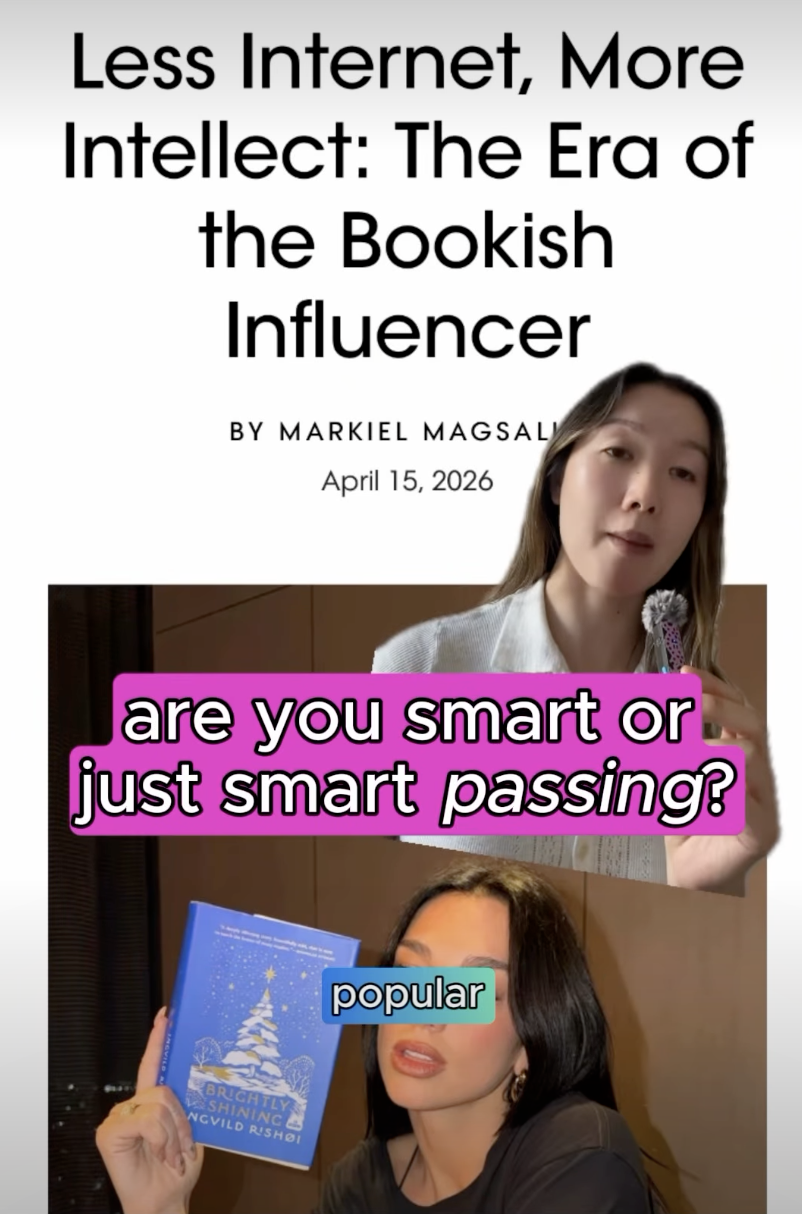
This creates a strange paradox for brands. Consumers increasingly crave signs of intelligence, craft and intentionality. At the same time, they’re hyper-aware when those signals feel performative. The old markers of authority no longer land automatically. Luxury can’t simply look smart anymore; it has to feel culturally convincing.
As we covered in Why Typos Are Chic, research from MIT Media Lab suggested AI tools may weaken memory retention and critical thinking skills. In response, culture has started fetishising imperfection instead. Typos signal humanity. Messiness signals effort. Long-form signals seriousness.
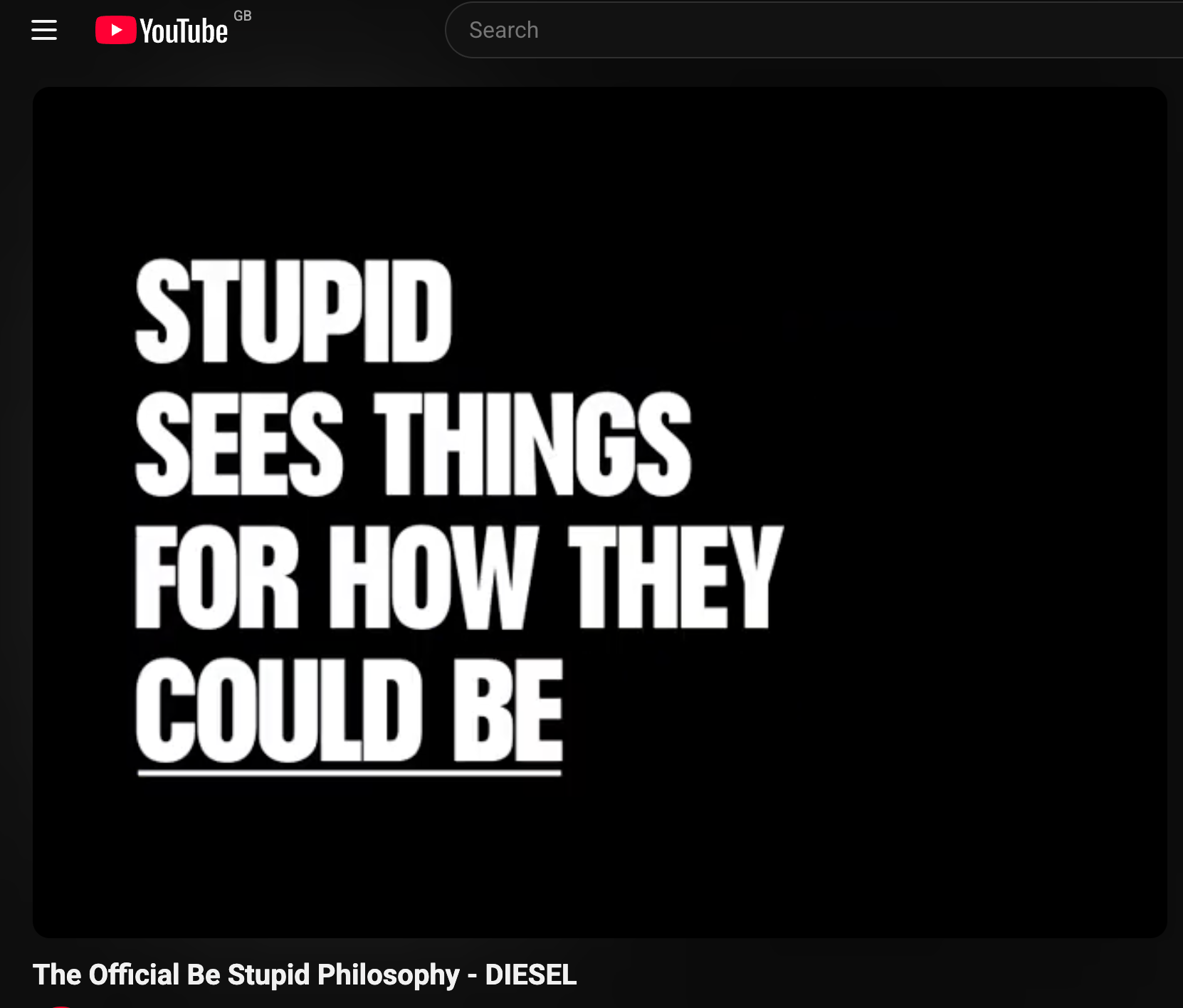
Which brings us back to stupidity. Because stupidity – or at least performances of it – hasn’t always been culturally undesirable. In the 2000s, being unserious was aspirational in some corners of the world. Paris Hilton turned strategic ditziness into a power move, while Diesel’s Be Stupid campaign celebrated irrationality as liberation from optimisation and overthinking.
Today, intelligence has become another branding exercise. Miu Miu runs literary clubs. Coach sells miniature book charms. Press releases increasingly read like academic essays. But maybe the backlash is already brewing.
Across fashion, media and branding, there’s growing fatigue around algorithmic perfection: AI-generated copy, frictionless aesthetics, content engineered to perform rather than resonate. Increasingly, stupidity starts to look less like failure and more like resistance. Not anti-intellectualism exactly, but anti-optimisation. A rejection of machine smoothness in favour of instinct, chaos, humour and awkwardness.
For brands, that may become the real challenge of the AI era: not how to appear smarter, but how to remain recognisably human. Over the coming weeks, we’ll unpack these topics further – alongside reflections from the SEED CLUB workshop we held last week.
| SEED | #8409 |
|---|---|
| DATE | 12.05.26 |
| PLANTED BY | PROTEIN |
