In our FORUM, Have We Reached Peak Merch?, we asked whether merch had finally collapsed under its own weight. When everything becomes a drop, a collab, a limited run engineered for hype, meaning starts to thin out. The tote becomes generic. The band tee loses its story. Identity no longer feels personal and, instead, gets flattened into mass-produced signals.

But what if that wasn’t the end point? What if “peak merch” wasn’t saturation, but mutation? Because recently merch hasn’t looked like it’s disappearing. If anything, it looks like it’s hardening. Darkening. Drifting somewhere more ideological – and a lot less innocent.

Somewhere between defence tech and internet culture, the usual fashion pipeline has flipped. Instead of trends flowing from runway to high street, they’re emerging from tech companies, military-adjacent spaces and developer culture – repackaged as limited-edition drops with just enough irony to feel wearable. The new streetwear isn’t coming from the street. It’s coming from systems. 

Take Palantir Technologies – a company that inspires radically different readings, depending on your tolerance for opacity. It builds software for governments and militaries, including work tied to immigration enforcement during the Donald Trump era, while simultaneously presenting itself as a neutral infrastructure layer or even a public good (it also supported COVID-19 vaccine distribution). That balancing act – between public service and surveillance – is less a contradiction than a strategy.

To critics, it’s a sleek interface for extreme levels of state power. To its most vocal supporters, it’s something closer to a mission. Its stock – PLTR – is discussed in forums with evangelical intensity, and CEO Alex Karp has become a kind of ideological figurehead rather than just an executive.

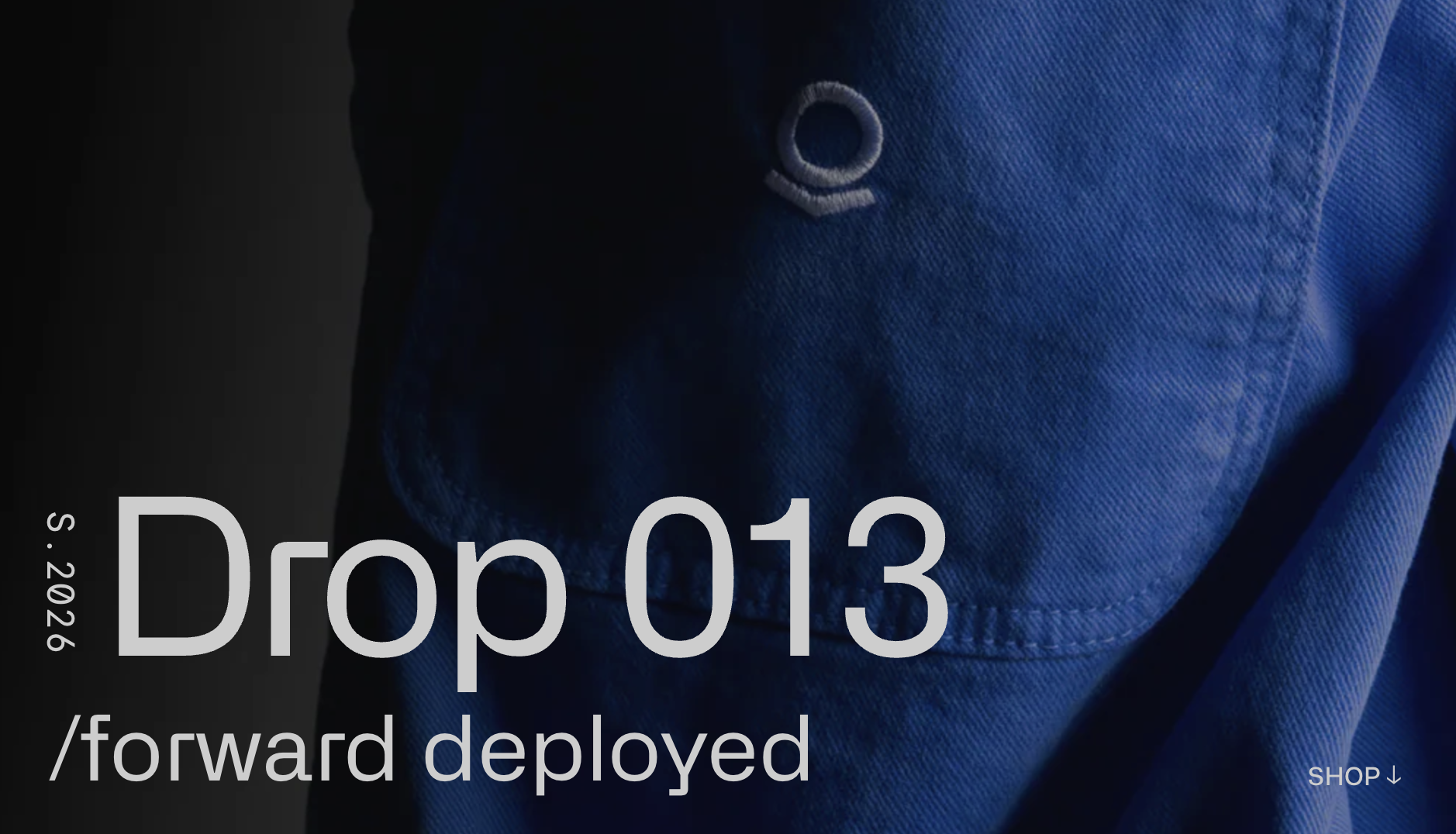
And now it sells clothes. Not as an afterthought, but as an extension of that worldview. Logo-heavy basics sit alongside more considered pieces – chore coats reframed as design objects, not giveaways. The stated ambition to become more of a “lifestyle brand” is less surprising when you realise the clothes aren’t meant to soften the company’s image – they’re meant to aestheticise it. Critics call it aesthetic laundering. Internally, it reads more like narrative control.

What Palantir Technologies is really selling is not clothing, but a wearable proximity to systems most people will never fully see, let alone understand. And they’re not alone. Lockheed Martin has edged into fashion via a licensing deal with Doojin Yanghang, translating defence-sector branding into streetwear formats.

Lockheed Martin x Doojin Yanghang

Meanwhile, the military contractor Anduril Industries operates like a weapons company with a built-in meme strategy – releasing Hawaiian shirts, flight jackets and graphics that oscillate between self-awareness and provocation. Founder Palmer Luckey becomes shorthand for the whole aesthetic: part tech founder, part culture signal.

This is the AI-to-fashion funnel in its clearest form: complex, often controversial systems made legible – even desirable – through clothing. You don’t need to understand the infrastructure. You just need to wear the hoodie.

Anduril Industries

Which brings us back to peak merch. If the last wave was about identity as consumption – proof of taste, proof of experience, proof-you-were-there – this next phase feels more like identity as positioning. The shift isn’t that merch signals allegiance (it always has), but what that allegiance points to. Not scenes, subcultures or shared memories – but systems, ideologies and power structures that are much harder to decode. 

For these companies, merch isn’t really about selling product. Palantir Technologies produces its garments in Montana, leaning into a “Made in America” narrative, with tightly controlled drops — one run of chore jackets capped at just 420 units, gone in minutes. The revenue barely registers. The attention does.

Aesthetically, the jackets borrow heavily from the visual language popularised by Virgil Abloh’s Off-White – industrial cues, the whole knowing-uniform thing, the typography – but without much concern for subtlety or originality. If anything, the familiarity is the point: it makes a complex, controversial company feel instantly legible within an existing fashion code.

The product is just the carrier. What’s being distributed is a point of view – one that becomes easier to wear than to interrogate. Publicly, Palantir says its chore jacket is “not political”. Pretty much everyone else strongly disagrees.

So no, merch isn’t dead. But it has shifted registers. The friendly, memory-based version – the gig tee, the souvenir tote – now sits alongside something more strategic and politically loaded. Merch that doesn’t just say where you’ve been, but quietly suggests what you’re aligned with, whether you’ve fully unpacked it or not.

For brands, the takeaway isn’t to chase darkness for the sake of it. It’s to recognise that merch now operates upstream, shaping perception as much as reflecting it. The question isn’t just what your audience wants to wear – it’s what they’re implicitly agreeing to when they do.
SEED #8408
DATE 07.05.26
PLANTED BY PROTEIN