Generation Tween
As algorithms rip through traditional tween culture, brands are reasserting the importance of the messy, sometimes awkward inbetween.
Even before social media saturated the lives of tweens, there were concerns that this formative period – roughly between the ages of nine and 13 – was collapsing. In the 1998 article Tweens: Ten Going on Sixteen, Kay S. Hymowitz reported how teachers, psychologists and researchers across America were noticing children skipping this crucial developmental stage. “There is no such thing as preadolescence anymore,” declared Henry Trevor, middle-school director at New York’s Berkeley Carroll School. “Kids are teenagers at 10.” Hymowitz added: “Marketers have a term for this new social animal, kids between eight and 12: they call them ‘tweens’.”
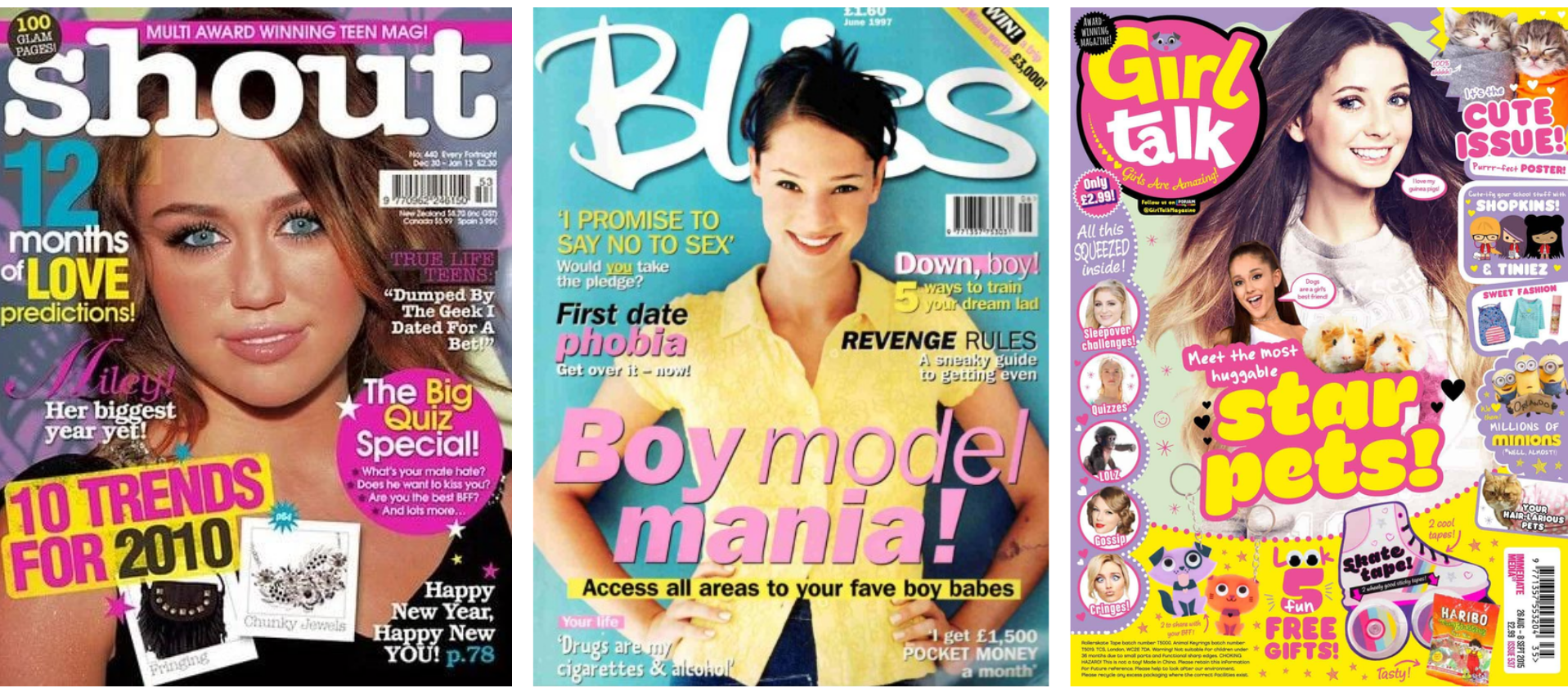
The term “tween” emerged in the 1980s to describe what Nathalie Coulter later called “capitalism’s most valuable customers” – children old enough to shape their parents’ spending habits, yet young enough to remain deeply impressionable. By the 1990s and early 2000s, magazines such as Bliss, Shout, Girl Talk and Elle Girl had built entire editorial worlds around tween aspiration. Today, YouTube lifestyle content, TikTok Shop, sponsored posts and influencer beauty brands have pushed tweenhood into something even more commercialised, but far less mediated.

As tween-targeted TV and film disappears – Disney shut down its UK channel in 2020, while CBBC ended live broadcasting in 2025 – YouTube and TikTok have become default entertainment systems. Dictated by algorithms, young users are funnelled toward the loudest voices and most addictive content, often spiralling into increasingly harmful rabbit holes.
In 2024, research found a fourfold increase in misogynistic content appearing on TikTok For You pages over just five days, with young boys identified as especially vulnerable to radicalisation. When discussing tween culture, it’s easy to focus on girls – perhaps because so much of the market still targets their insecurities with militaristic precision. Lip glosses, moisturisers and “clean girl” routines are sold as shortcuts to popularity and desirability. But as Netflix’s Adolescence demonstrated, tween boys are equally vulnerable online, particularly to extremist rhetoric packaged as self-improvement.

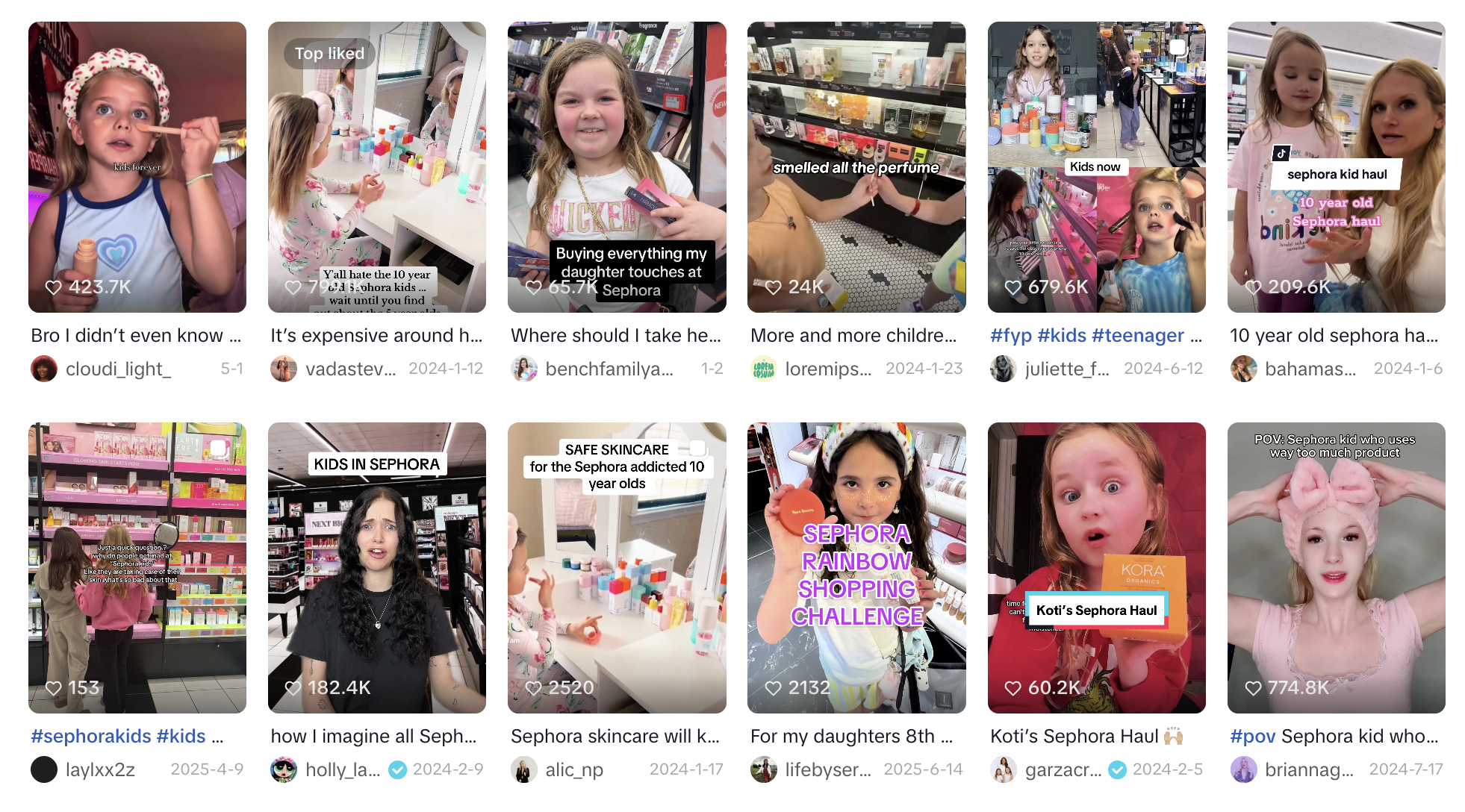
Earlier this year, Italy’s Competition Authority launched an investigation into Sephora and LVMH-owned Benefit over concerns the brands were marketing anti-ageing products to children as young as 10. Regulators accused the companies of “insidious” advertising strategies involving very young influencers. The move followed the rise of “Sephora Kids” on TikTok: endless videos of children displaying luxury skincare hauls and elaborate beauty routines. According to Razorfish, 68% of Gen Alpha own a luxury product by the age of 10. Psychologist Alberto Stefana has labelled the phenomenon “cosmeticorexia” – the compulsive, age-inappropriate use of cosmetic products and procedures. Most unsettling is how often parents appear behind the camera, directing the performance.
After becoming wildly popular amongst tweens, skincare brand Drunk Elephant tried to distance itself from Gen Alpha. Its first-ever brand campaign arrived with the tongue-in-cheek slogan: “Skin so good it should come with a warning. Please enjoy responsibly.”

Tweens have always been interested in age-inappropriate media, fashion and products. Entering secondary school means sudden exposure to older kids, new social codes and the intoxicating performance of growing up. No one seems cooler to a tween than the popular group a year above them. As Anna Wiener wrote in The New Yorker, “The adult world is studied and emulated in a manner that suggests praxis but no theory.” What has changed is the velocity. Smartphones and social media have accelerated imitation into something relentless, all while preserving every awkward phase online indefinitely.
In previous decades, amidst the isles of HMV, magazine racks of W.H. Smith and shopping-centre food courts, tween brands occupied a distinct cultural middle ground. Claire’s became one of the most popular brands in that ecosystem before filing for bankruptcy in 2018, and again in 2025, after failing to evolve alongside Gen Z. Now the retailer is attempting a comeback. Following a rebrand and new investment deals, Claire’s plans to open 7,000 retail spaces across North America, with another 50 stores reopening in the UK.
Discussing the rebrand with The Wall Street Journal, Claire’s chief brand officer Michelle Goad insisted the company wanted to embrace “the messy middle between childhood and adolescence”. “We’re not trying to rush girls into becoming grown-ups,” she said. “We actually want to celebrate girlhood.” Its new campaigns lean heavily into tactile nostalgia: slimes, charms, fidgets, body sprays and sensory-focused products designed to counterbalance what the brand calls a “screen-filled upbringing”.

That idea – preserving tweenhood rather than accelerating its collapse – is something former Seventeen and CosmoGirl editor Atoosa Rubenstein has reflected on too. Speaking to The New Yorker, she described the intense editorial scrutiny teen magazines once underwent. “We wanted to make sure everything in the magazine was right,” she said. “That is gone. These children do not have access to any vetting. No one’s vetting their TikTok videos.”
Meanwhile, traditional teen media continues to disappear. In November 2025, Condé Nast announced Teen Vogue was being folded into Vogue, ending its 22-year run as a standalone publication. The loss of its political desk especially alarmed cultural critics, given the publication’s sharp reporting on topics ranging from Black Lives Matter to Greta Thunberg and Zohran Mamdani. Its final print issue in 2017 featured Hilary Clinton on the cover. While Condé Nast said Teen Vogue will “remain a distinct editorial property, with its own identity and mission,” many aren’t exactly convinced.

Into this gap steps a new proposition. In April, W Magazine announced WYouth – pronounced “double youth” – a biannual print publication led by former Heaven by Marc Jacobs director Ava Nirui alongside editor-in-chief Sara Moonves. Smaller than a standard issue and designed to fit inside a backpack, the magazine aims to revive the tactile intimacy of teen print culture for a new generation. Sofia Coppola and her daughter Cosima Croquet have already signed on as contributing editors.
Whether a dedicated tween publication can truly compete with the algorithm remains unclear. But the idea of media that is intentionally curated, edited and accountable to young readers feels almost radical now. For brands hoping to reach tweens, the challenge is no longer simply creating aspiration. It’s figuring out how to do so without accelerating the collapse of childhood itself. After all, childhood already disappears fast enough.
| SEED | #8412 |
|---|---|
| DATE | 21.05.26 |
| PLANTED BY | PROTEIN |