Why does literary culture suddenly seem so interested in hotness? Recent discourse around the hot literati has sparked debates about who qualifies, whether the category is meaningful at all, and why literary culture suddenly seems so invested in attractiveness. But beneath the discourse sits a broader question: are writers increasingly expected to also be influencers? Have they always been?

The writer’s appearance is not exactly irrelevant to their popularity. Byron’s good looks have endured for two centuries, with fan edits of his portraits still circulating on TikTok. Joan Didion’s image – cigarette, sunglasses, dress – has become almost as recognisable as her syntax. A quick Google search for “hottest authors” reveals lists ranking writers by attractiveness, including Ernest Hemingway, Jhumpa Lahiri, Elif Şafak, Albert Camus and Chimamanda Ngozi Adichie. 

0:00
/0:25

Angharad "the Lord Byron girl" on TikTok

Yet the mainstream attitude toward writers has generally been that they are, or should be, above looks. That belief feels less relevant in an influencer-driven internet where writers are increasingly expected to document and brand themselves online in addition to writing. This pressure is felt across creative fields, and even has a name: influencer creep, coined by Sophie Bishop. According to Bishop, the job of influencer is built on “learning how to constantly accommodate oneself to the means of establishing and maintaining visibility”. One of those ways is to be hot.

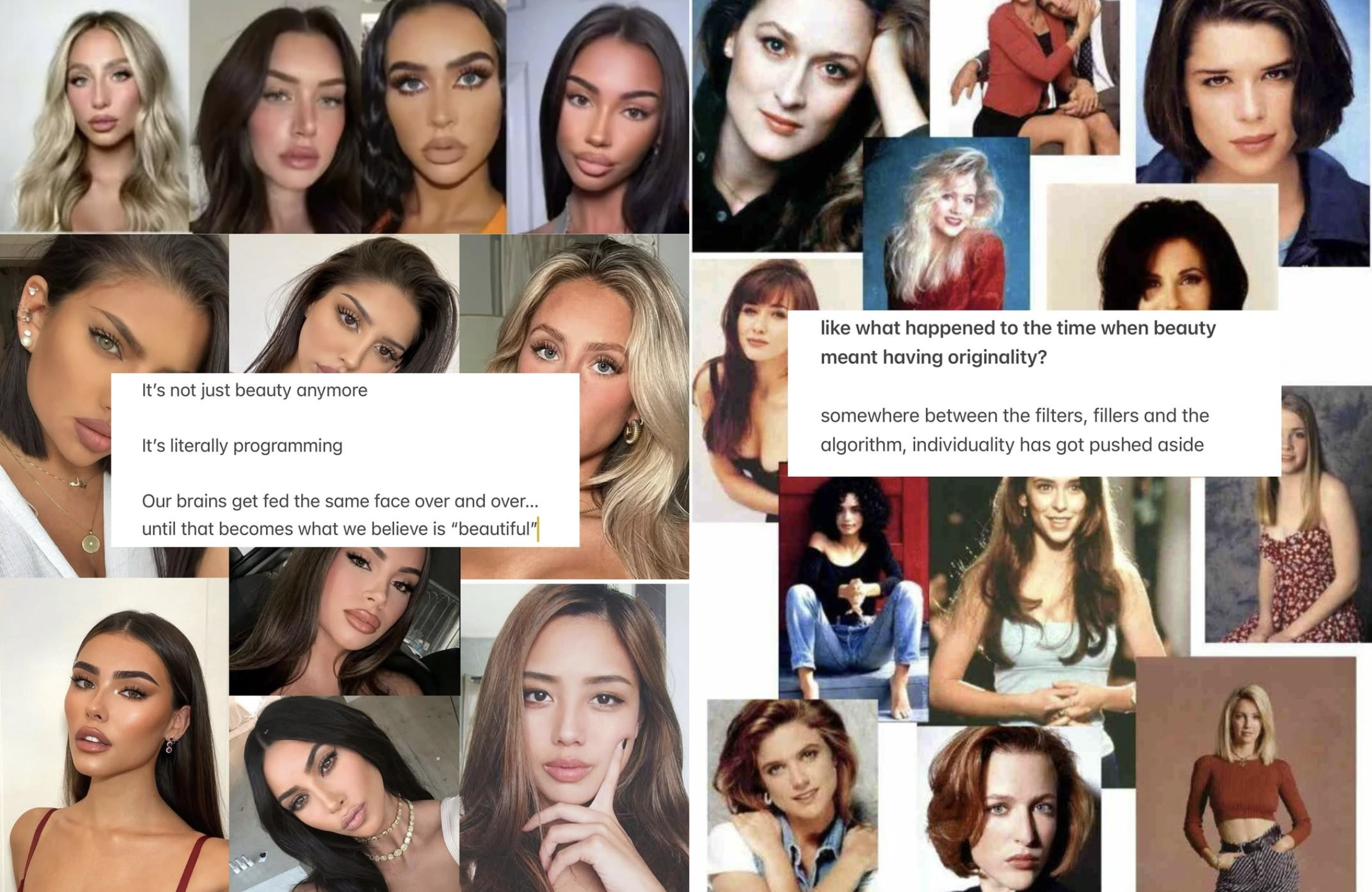
Social media platforms and their algorithms have been instrumental in creating contemporary standards around hotness. Looksmaxxing is the most recent and extreme example of this. Elsewhere, Instagram face – the cyborgian mask of professionally beautiful porelessness and ethnic ambiguity – left a lasting mark on women’s beauty ideals because social media algorithms consistently reward attractive faces with visibility. This has been especially true in highly visual industries like beauty and fashion.

Liv Nevill on Instagram

What feels newer, and slightly awkward, is that people in literary and intellectual fields are now also publicly valorised for their hotness. Writers – along with publishers and agencies – increasingly participate in this economy too, posting face and working hotness into literary presence in order to stay culturally relevant.

So has algorithmic face culture finally come for the belles-lettres? Are expectations around what writers should be like changing in the face of algorithmic media?

Algorithmic face culture is the way digital platforms have made the face the primary currency of visibility (especially for women). The term builds on what Ted Striphas called “algorithmic culture” in 2015: humans increasingly delegating the sorting of culture – people, ideas, objects – to computational systems. The triumph of algorithmic recommendation, coupled with what we know about how social media platforms privilege certain faces, has made writers’ appearances matter more for visibility, sales and reach than they once did.

In 2020, The Intercept obtained internal TikTok moderation documents instructing moderators to suppress users with ugly facial looks and too many wrinkles from the For You page. TikTok later said most of the guidelines were no longer in use. Still, anyone scrolling Instagram or TikTok can intuit the logic: the feed is overwhelmingly made of faces, beautiful ones at that. In a world where algorithmic recommendation may determine whether a book travels online, writers are no longer exempt from face culture.

This clashes with the longstanding belief that literary success should not depend on appearance. After all, pen names historically protected writers from public bias; literature has long been imagined as one of the few creative fields where looks need not matter. A book is words on a page, usually read alone. The words create the visuals. The writer’s face was expected to remain incidental – back-flap material, at most.

In Polyester, Isobel Slocombe calls the phenomenon the “smart girl industrial complex” – intellect performed as social media aesthetic. In EE72, Meena Alexander writes that intellectualism is the new status symbol, pointing to Instagram footage of Rosalia reading Anne Carson at the offices of The Paris Review, Miu Miu’s literary salons and Bottega Veneta's campaign featuring a hot-literati-looking Jacob Elordi.

In a piece on the same topic in The Guardian, Jess Cartner-Morley similarly highlights that smart is the new hot and clever is the new cool, giving recent examples of beautiful women visibly reading – Emily Ratajkowski, Kaia Gerber, Kendall Jenner – Dua Lipa’s book club and FKA Twigs’ keynote at the British Library where she dolefully asked her audience “where are all the thinkers?”.

Rosalia reading "Salon" by Anne Carson, The Paris Review

A specific kind of literary performance is emerging – call it hot intellectualism. It reflects several overlapping pressures: anti-intellectualism producing renewed interest in bookishness, the declining status value of fashion and consumption alone, and the growing desirability of appearing well-read online. The question is whether audiences now expect writers not only to produce literature, but also to perform a lifestyle around it.

Readers have always been curious about writers to a degree: what they look like, where they live, who they sleep with. Author photos, talk show appearances and literary profiles all predate the algorithmic feed by decades. What feels new is the granularity and constancy. Social media users are hungry for a constant stream of granular information about writers, especially those who have an aspirational aura through the beauty of their faces, apartments or possessions. We want to know what the beautiful writer had for breakfast, what tote she carries, what apartment she lives in. 

The writer can now also function as a lifestyle figure. Mindy Seu (who we covered here and here), for example, is a celebrated researcher who studies the history of the internet. She has also modelled for JW Anderson and Helmut Lang. A Vanity Fair profile of her asks the reader “how many internet nerds do you know land soft-focus photoshoots in niche lifestyle publications?” 

It seems like everyone is taking note that clever is the new cool. Hot intellectuals can do brand deals now and the old stigma of selling out has largely disappeared. Which leaves writers in an awkward position: the work still has to be the work, but the writer is increasingly also the campaign. What comes next is presumably more of this – more crossovers, more agencies, more writers folded into lifestyle culture. Intellectualism itself has become aesthetically marketable. The question is whether the writing can keep up with the demands of the image.
SEED #8411
DATE 19.05.26
PLANTED BY IDIL GALIP