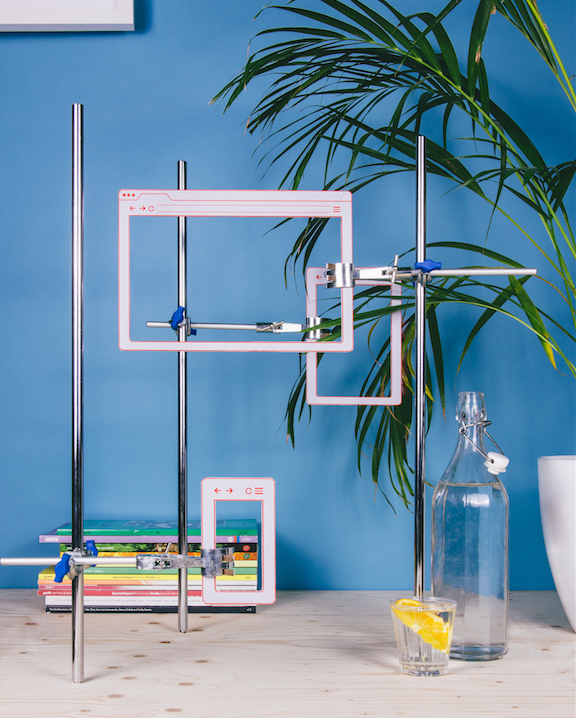
A new wave of apps are bringing digital interaction into the real world. Rather than looking at your computer to see the next stage in the evolution of the internet, you should be looking out of the window.
First published in Protein JOURNAL #14, this piece examines the burgeoning fusion of the virtual and physical world. Chayka explores the apps Recho, which enables someone to leave a sound in a specific location for another to find later; Slight, which allows users to write a digital message and pin it to a physical spot; and Hi, where people can “create textual portraits of the places around them”.
As a result, he predicts a future where physical experiences are intensified by virtual ones, with this emerging technology creating a more physical internet. As Alexi Gunner’s Surveillance Chic, Mariella Agapiou’s Fourth Spaces and Tyla Jurgen's Rewilding The Internet demonstrates, 12 years on, Chayka’s prediction has become entrenched in reality.
The blurring of the line between physical and virtual is an oft-cited consequence of the internet. From finding a date to calling a taxi and communicating with friends, we now live as much of our lives through online portals as we do offline. But the inherent promise of the post-millennium internet, that the physical and virtual will become integrated, has failed, for the most part, to come to fruition.
Recently however, new technology has made that promise a little more achievable, as users are able to finally break out of their screens and bring digital interaction into the real world. The Internet of Things, a term coined by the British technology pioneer Kevin Ashton in 1999, refers to everyday objects and appliances which are connected to, and controlled via, the internet and thus made digitally interactive, such as Nest thermostats and smoke alarms.
This confluence of the real and the virtual is already being heralded as the future of technology, but there’s another, similar development on the horizon, the Internet of Places. With the technology available in everybody's pockets today, people could create their own content and leave it for others to discover. This kind of geographic Tumblr could be described as a real-world internet and it has become possible because of the proliferation of smartphones and data plans: we passively carry internet connections around with us all the time.
Designers and developers are creating apps that cross the physical-virtual divide by connecting digital information, such as text, photos and audio, to real-world locations. The idea comes from Åsmund Sollihøgda, one of the creators of Recho (a combination of ‘recording’ and ‘echo’), an app that allows users to leave a sound in a specific location for someone else to find later.
Protein AGENCY provides insight, foresight and strategy for global brands that's rooted in culture and the collective knowledge of SEED CLUB - our decentralised research community of 450+ global experts.