What happens when constant surveillance gets dressed up as a fashion flex?
Nadia Lee Cohen; Travis Scott for Erewhon; Alexa Chung Ring cam fits; Cold Culture
The smart glasses market has truly heated up recently with both Snap and Meta launching flagship products into the space. Last month, Evan Spiegel unveiled Snap Specs, chunky statement frames promising “a new era in computing”. A few weeks ago, Meta announced its Starfire model in collaboration with Kylie Jenner, featuring a Kylie-voiced AI assistant alongside a built-in camera.
In both cases, the vibe has noticeably shifted. Wearables are no longer positioned as state-of-the-art gadgets for nerds, but as credible fashion accessories for tastemakers.
Snap Specs
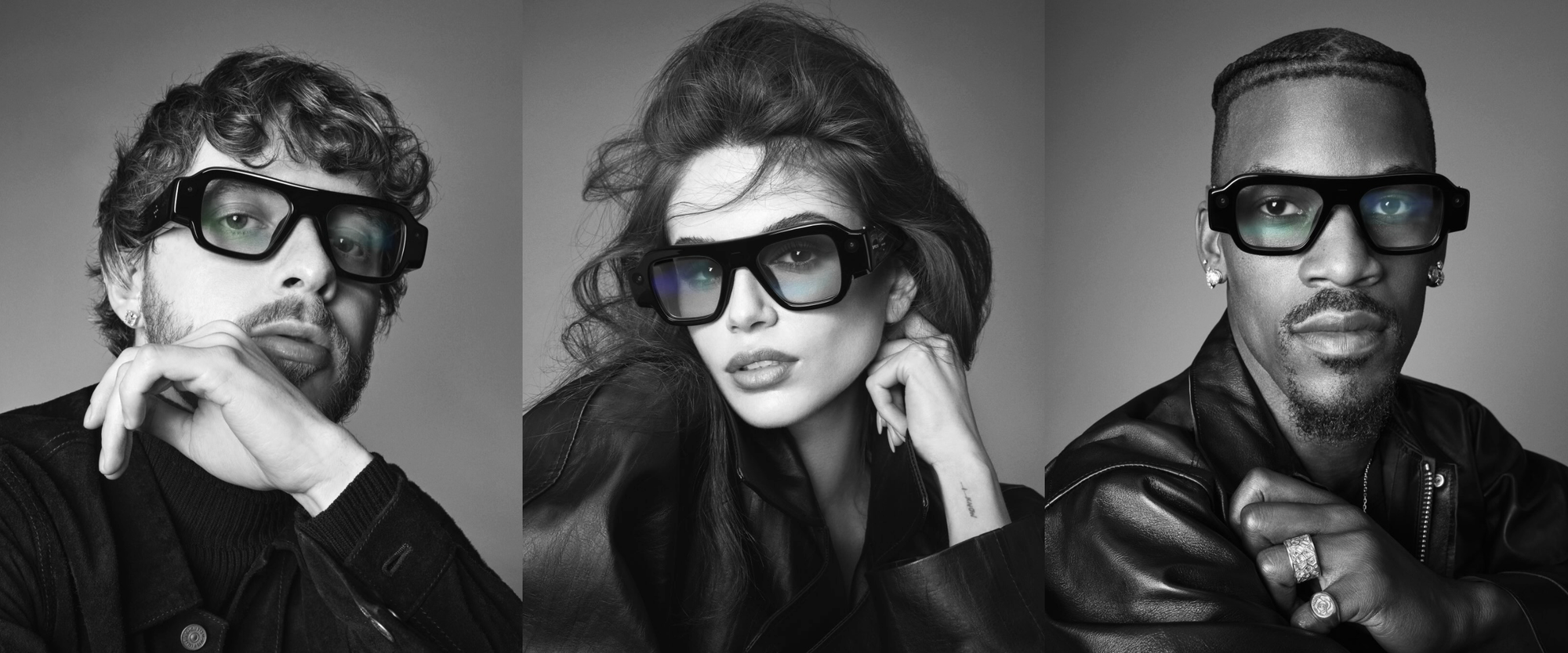
Snap invested in artful black-and-white images of models and celebrities wearing the Specs, shot by esteemed fashion photographer Steven Meiselt, to establish a sense of cultural currency. In contrast to Meta’s previous smart glasses, which leaned into the Wayfarer silhouette favoured by the Silicon Valley crowd, the Starfire edition is slim, oval and sparkly – intentionally designed for the kind of customer who might otherwise flinch at the idea of wearables. The marketing strategy has followed suit, with Starfire positioned for shelf placement alongside regular sunglasses rather than in the gadget aisle, and the fashion press invited to review the product alongside tech journalists.
Despite the tech industry’s fervent attempt to shed the stigma around augmented smart glass tech, public pushback and suspicion persist. Surveillance paranoia is nothing new. But as Meta, Snap and, soon, Apple push us towards a future where everyone is wearing a hidden camera with built in facial recognition (potentially tracking and filming others without their knowledge), that paranoia is intensifying.
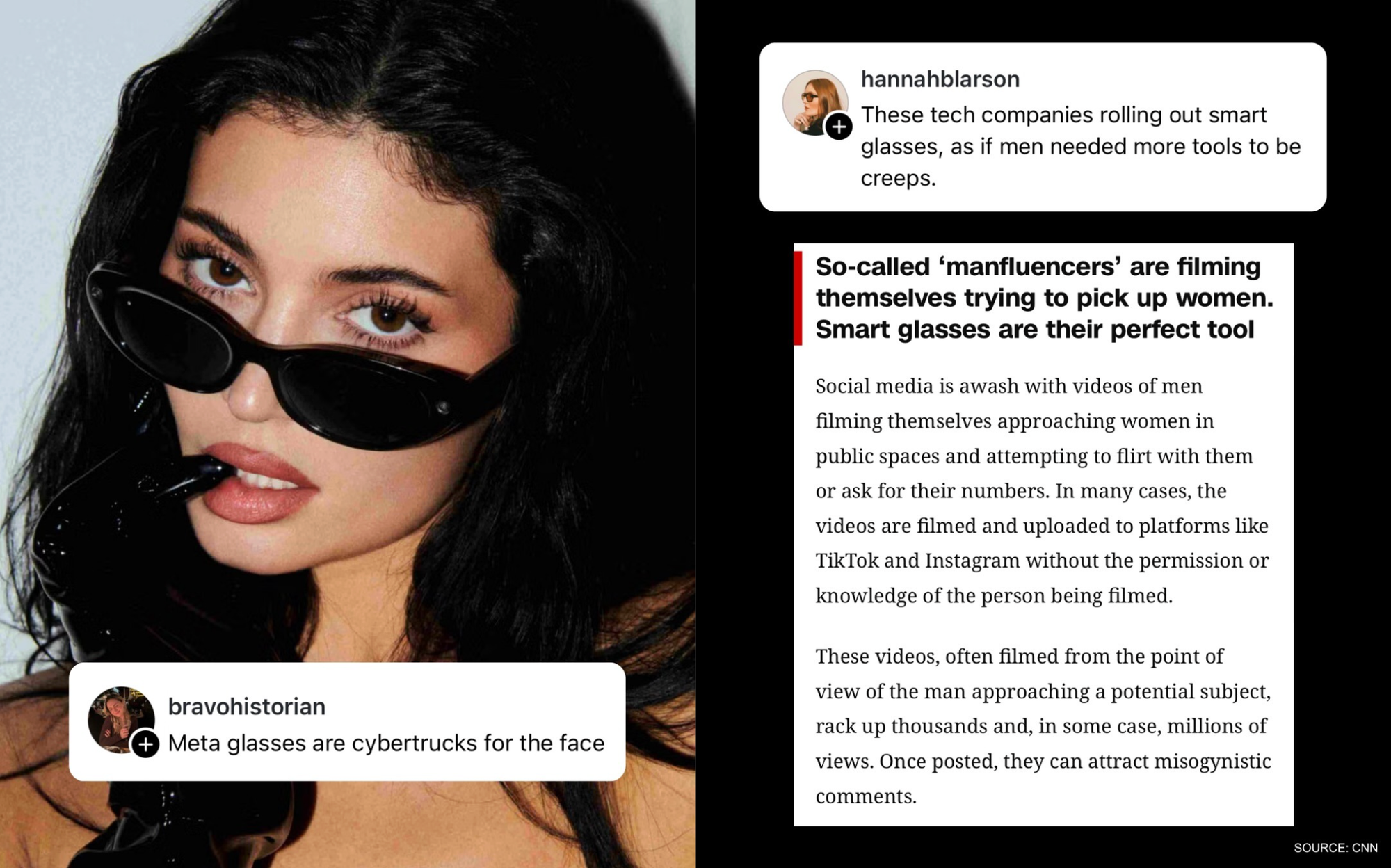
In the wake of Meta’s glossy launch campaign for the Starfire glasses, criticism has flared online. Commentators have dismissed the frames as a “hyper-surveillance state styled by celebrities”, “Cybertrucks for the face”, while others have flagged them as yet another tool that could enable creepy men to covertly film women in public.
@diet_prada
Meta has previously been warned by civil rights groups that facial recognition in smart glasses could endanger abuse survivors, immigrants and LGBTQ+ people. And by normalising the tech through the stylish sheen of tasteslop, whether by paying fashion influencers or hiring hotshot photographers, the company is effectively attempting to legitimise the arrival of a surveillance state.

The unease has intensified to the point that a cottage industry of anti-surveillance solutions has emerged. This ranges from Italian fashion start-up cap_able’s knitted clothing, whose patterns are engineered to thwart surveillance technology, to CV Dazzle, a makeup and hairstyling concept devised by technologist Adam Harvey to camouflage wearers from facial-recognition algorithms.
Cap_able Design
Meanwhile, more and more live venues and clubs are adopting no-photo policies in an attempt to curb incessant content capture, encourage people to stay in the moment and protect attendees’ privacy. It is a policy that will surely become more difficult to enforce as augmented glasses become more mainstream.
Artists, too, are finding inventive ways to spotlight surveillance culture's steady creep into everyday life. Most recently, trip-hop duo Massive Attack replicated Palantir's facial recognition software at their live shows, using custom tech to pick out audience members in real time and display fictional data about them, confronting people with just how much Palantir allows companies and governments to harvest.
Protein AGENCY provides insight, foresight and strategy for global brands that's rooted in culture and the collective knowledge of SEED CLUB - our decentralised research community of 450+ global experts.