Artist Corporations

An interview Yancey Strickler on his latest project – a new legal framework for artists – and what it reveals about the future of the online world.

Yancey Strickler – co-founder of Kickstarter and Metalabel – is back with his next big idea: Artist Corporations, a new legal structure designed to reflect how artists and creative collectives actually operate today.
At its core, the idea is simple: creative work has already changed, but the systems around it haven’t kept up. So A-Corps have been designed to reflect what already exists in practice – groups of artists forming, dissolving and re-forming across projects, platforms and time zones. Recently passed into law in Colorado, they move beyond the rigid frameworks of traditional LLCs by offering a more fluid model for shared ownership, collaboration and revenue between people working as networks rather than isolated individuals.
The proposal arrives as the internet itself continues to fragment. Public feeds are losing their grip, attention is scattering and culture is increasingly produced inside smaller, semi-private spaces – group chats, invite-only channels and creator-led micro-networks rather than open platforms.
In that context, A-Corps sit somewhere between law and culture: not just a technical update, but part of a broader shift in how creative life is organised online. They point to a post-platform reality where new kinds of structures are being built to match the way people actually collaborate – and the new, more hidden architectures of the internet where that work increasingly happens.
Protein: Your work around Artist Corporations starts from this idea that artists have been trying to work inside structures that don’t really fit how creative people actually live or collaborate. When did that disconnect first become clear to you?
Yancey Strickler: For me, the Artist Corporations work began from two things happening at once. One was seeing the accumulated experience of friends. I was talking to a friend who helps a lot of blue-chip artists, and he was sharing how people kept hiring lawyers over and over again to build essentially the same custom structure for $20,000, and they all ended up trapped in complicated administrative burdens they regretted. There was this sense that people were solving the same problem repeatedly in a very inefficient way.
At the same time, I’m part of a small writing collective called the Dark Forest Collective. There are about 18 of us, and at the time we had sold six figures worth of books in less than a year, but we had no legal structure underpinning us. We were basically just operating through Metalabel splits and shared money systems. But as the stakes got bigger, I realised we needed some kind of formal structure.
Was there a moment where you realised the existing options just weren’t going to work?
I started looking at forming an LLC, which is the most vanilla, basic option available, and trying to make an LLC reflect how our group actually worked felt impossible. I was going to have to hire a lawyer, it was going to be complicated and it didn’t feel natural.
Thinking about those two experiences together – and also thinking about my early experience with Kickstarter, where we were one of the first public Benefit Corporations (not to be confused with B Corps) – I started wondering: could we create a new legal template that better reflected how creative people actually work? Could there be a structure that gave creative people some of the rights traditional corporations get, but that creative work historically hasn’t had access to?
What does that shift in framing change about how you think about creative work today?
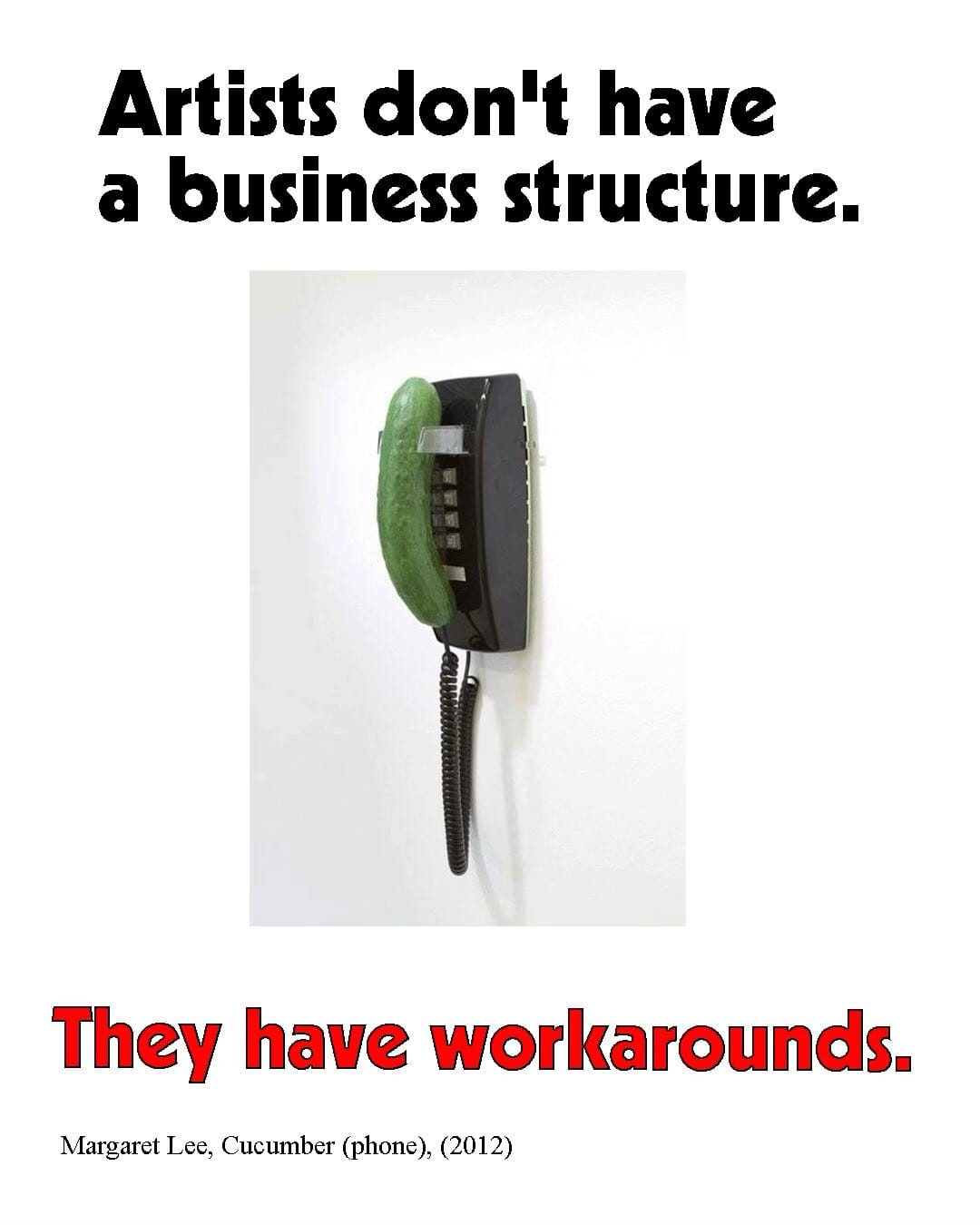
What’s important is that we’ve always approached this from the perspective that creative work is work. Artists aren’t charitable cases. Creativity isn’t some luxury category that deserves protection because it’s special. Our argument is that this is a workforce that has historically been under-equipped and pushed to the margins.
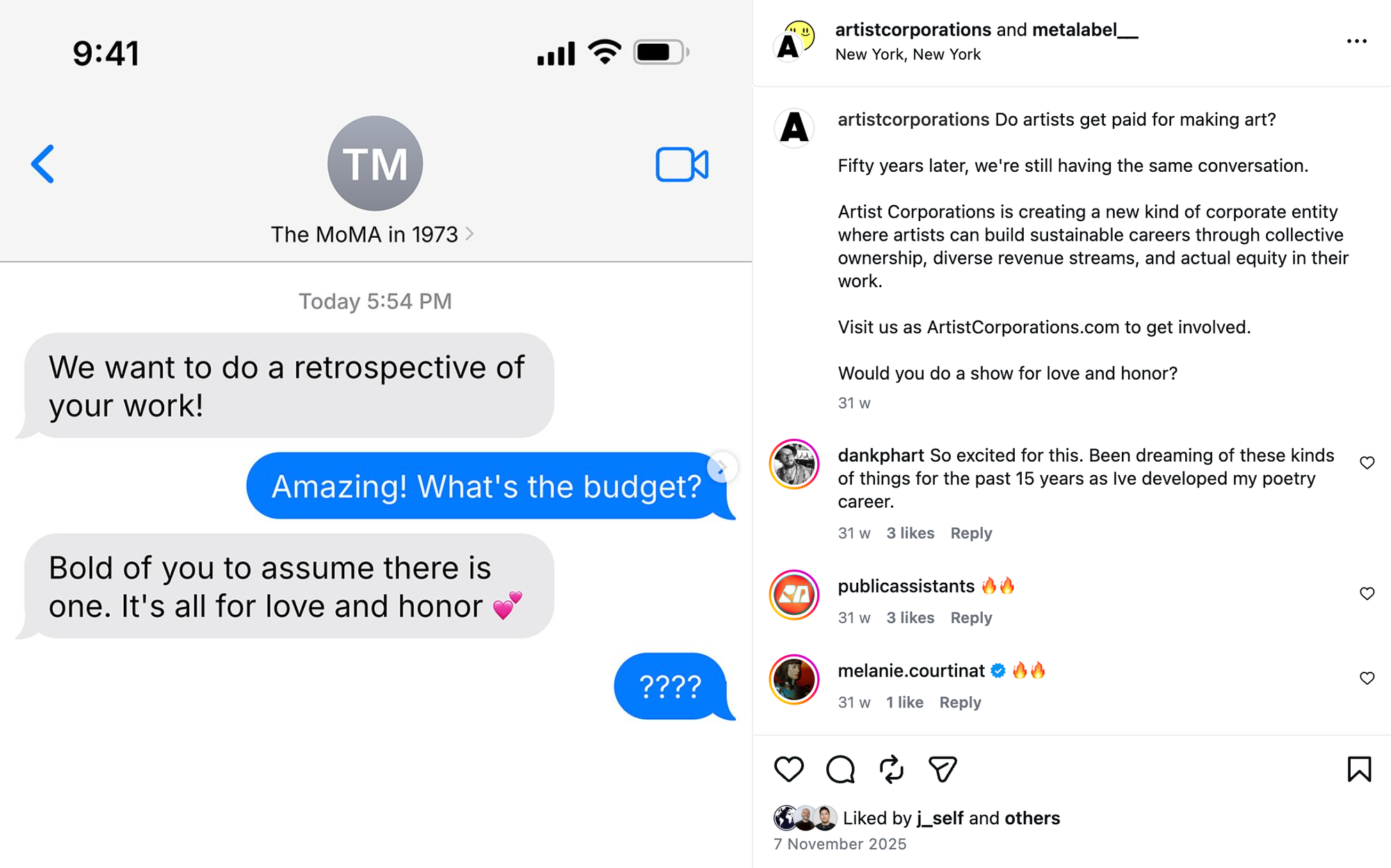
At the same time, the world has changed. There are far more creative workers now than ever before, and they have enormous economic, cultural, local, and political impact.
This law is really about recognising something that already exists and empowering it. It doesn’t cost taxpayers money. Ideally it creates economic growth and stability. I think that framing – approaching this as an entrepreneurial project rather than a charitable one – is what made bipartisan support possible.
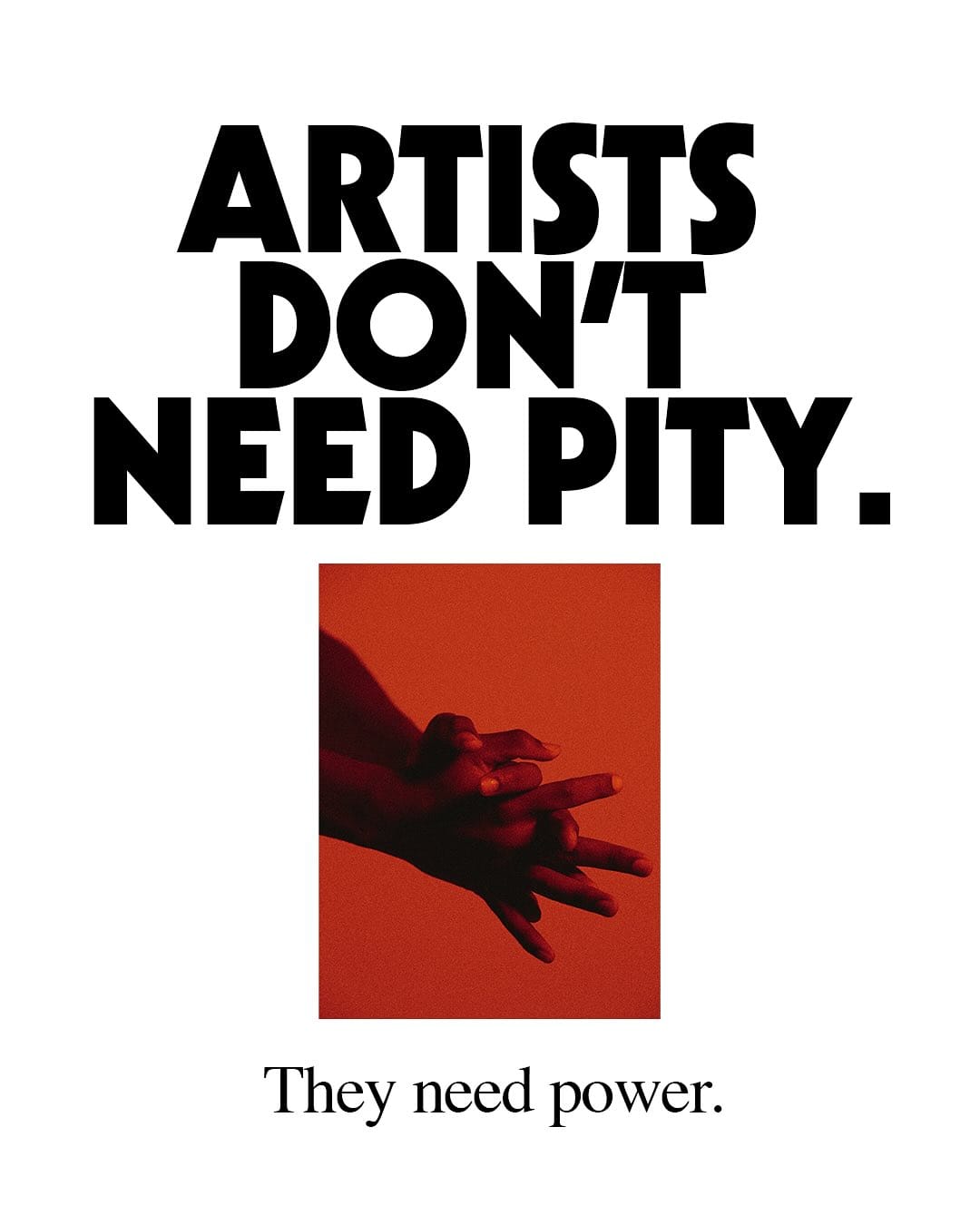
It reminds me of something you said – that “artists don’t deserve pity, they deserve power.” Are you approaching this from a more unsentimental or business-minded perspective? Like: stop treating artists as fragile exceptions?
A little bit. I think about the people whose support we need. What are their concerns? What matters to them? How do those concerns overlap with ours?
Rather than trying to change people’s beliefs entirely, I try to meet them where they are and say: “The thing you care about – economic growth, entrepreneurship, stability – we care about that too.” Personally, my taste leans toward less commercial work. I don’t naturally think about art in terms of financial value. But I also recognise that the broader world does – corporations, investors, institutions all do. And creative people often lack the tools, education, or agency to navigate that terrain, so they end up disadvantaged.
There’s also a longstanding attitude in creative communities – one I share emotionally – that money and art should remain separate. That engaging with economics somehow contaminates creativity.
I understand that instinct, but it doesn’t serve us well. That doesn’t mean I want every artist to become a capitalist. I don’t think that’s the goal. I just want creative people to feel secure – not structurally less stable than someone who pursued a traditional career path.
Passing the law is only the beginning. For laws to matter, people have to use them, understand them, and access them. There’s still a huge amount of work ahead. Long-term, this is about creating stronger economic foundations and rights for creative people as a class.
How much resistance did you face while trying to make this a reality? Was it ideological resistance, or more just bureaucracy and inertia?
There was definitely some resistance. A lot of it came from established lawyers, because their argument is basically: “We can already build custom LLCs for this.”
And technically, they’re right. An entertainment lawyer can design a structure that does almost anything. But the problem is that those systems are expensive, complicated, and inaccessible to most creative people.
So within the legal profession there was skepticism about whether this was necessary at all. Within the broader creative industries, the response was more like: “We already have ways of doing things. We’ll see if your system works.”
Which is fair enough. The strongest resistance really came from the question: “Why isn’t the existing system good enough?”
I remember speaking to the head of a major label, and they said: “Our artists don’t need someone like you. We already provide everything they need.” And my reaction was: okay, but what about all the creative people outside your system? What about independent creators?
That’s where this comes from. And over time, as people actually begin using A Corps, there will inevitably be disputes, edge cases, and things we wish we’d done differently. That’s normal. My philosophy was to create the minimum viable company structure. Don’t overbuild. Start with something foundational that future generations can improve upon. Because it absolutely will need to evolve.
Do you think the modern internet creator economy made something like A-Corps inevitable? A lot of creative people today are simultaneously artists, creators and tiny media companies.
Absolutely. The entire profession of being a creator is enabled by technological infrastructure that emerged over the last 20 years. Before that, becoming a writer, musician, or artist usually required passing through gatekeepers. Indie culture existed, but it was less visible and often not economically sustainable. The internet changed that through direct distribution and network formation.
To me, networked groups of people are becoming the defining social structure of the 21st century – politically, culturally, economically, all of it. Everything we’ve done through Metalabel Studios – Metalabel itself, Artist Corporations, DFOS – comes from taking those networks seriously.
We don’t see online creative communities as hobbies or side projects. We see them as one of the most important forms of human organisation emerging right now. And the question becomes: what happens when you give those groups real tools? Shared ownership, governance, legal rights, money, infrastructure. That’s really what all this work is exploring.
It sounds like your work – from Kickstarter to MetaLabel to DFOS to Artist Corporations – is all part of the same broader project.
In retrospect, yes. Every project started from genuine curiosity, not from some master plan. But over time I realised they’re all digging into similar questions and operating from similar beliefs. So now I do see them as part of a lineage, even though that wasn’t intentional at the beginning.
Speaking of DFOS – for people who haven’t gone deep on it yet – how do you describe what it is today, and what it’s becoming?
DFOS – the Dark Forest Operating System – is basically a shared private internet. Imagine a private desktop shared by a group: friends, collaborators, a community, an audience. Inside it are apps you use together – chat, blogging tools, shared folders, collaborative money systems, project coordination tools.
It’s really an operating system for creative groups. It came out of five years of working this way ourselves using Slack, Notion, Discord, Mailchimp and dozens of disconnected tools stitched together. We wanted one coherent environment with shared boundaries.
Underneath it is a protocol built on decentralised identifiers and open data models that keep your data portable and private. Unlike Slack or Discord, where you adapt yourself to the platform’s fixed tools, DFOS is designed to be modular and open-ended. Communities can shape their own environments.
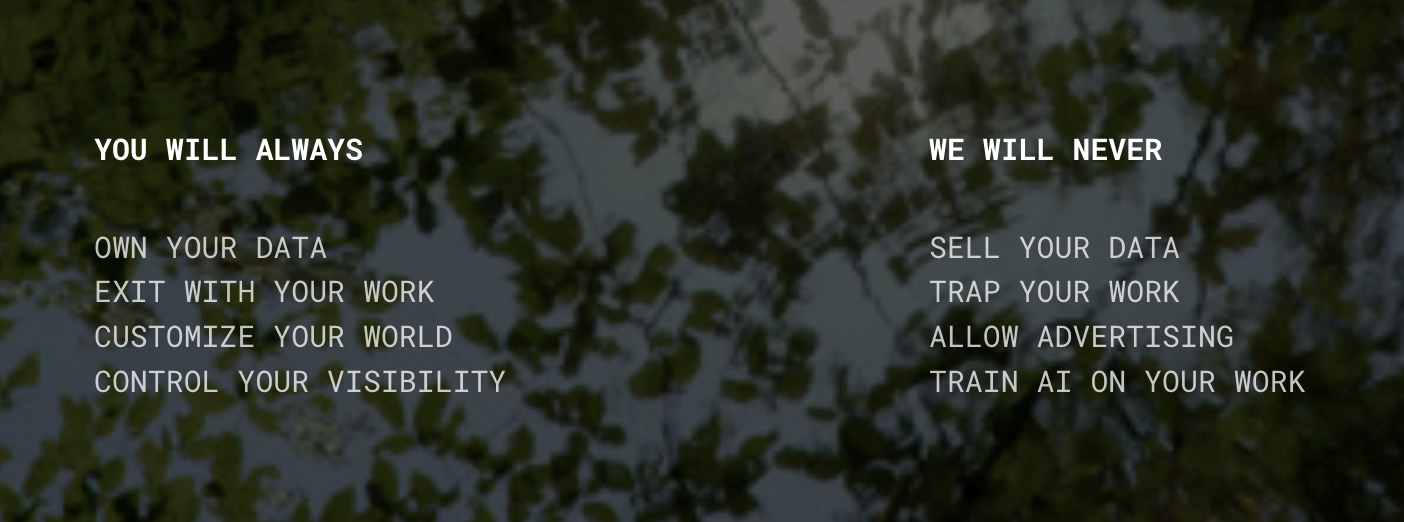
We opened it publicly just a few weeks ago after living inside it privately for six months. Already we’re seeing record labels, writer collectives, musicians, art communities, and festivals using it. Sonar Festival in Barcelona is using DFOS for part of its community infrastructure. Long-term, I’d love to see it become infrastructure for an independent underground – a network of private creative networks.
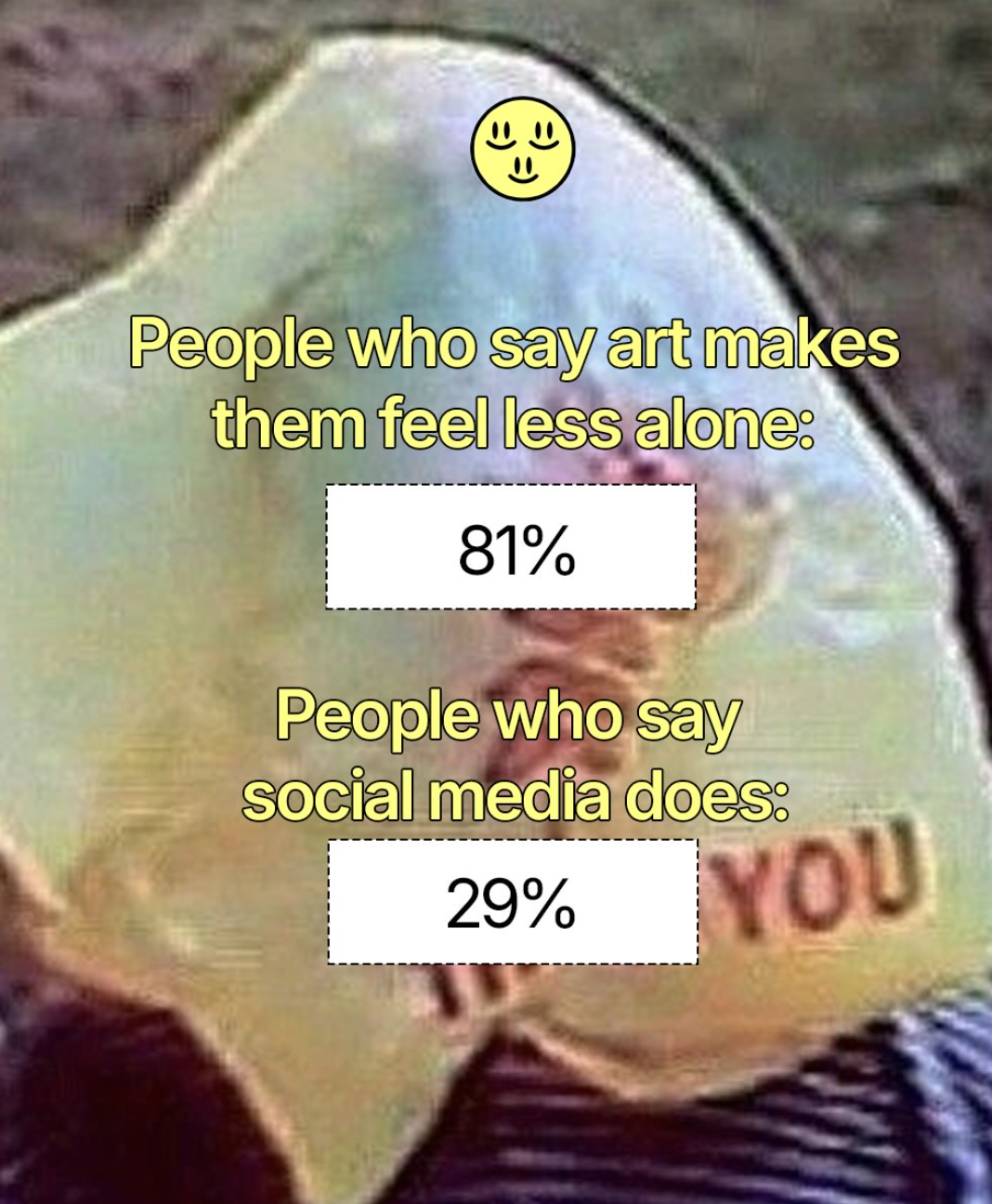
As AI, surveillance, and platform extraction increase, it’s becoming increasingly risky to share everything publicly online. But the need to connect and collaborate doesn’t disappear. So I think more creative activity will happen in private spaces, with occasional moments of public visibility. That creates a fundamentally different creative economy.
Back in 2019, when you wrote “The Dark Forest Theory of the Internet,” a lot of those ideas weren’t mainstream yet. Looking back, what do you think you got right – and what surprised you?
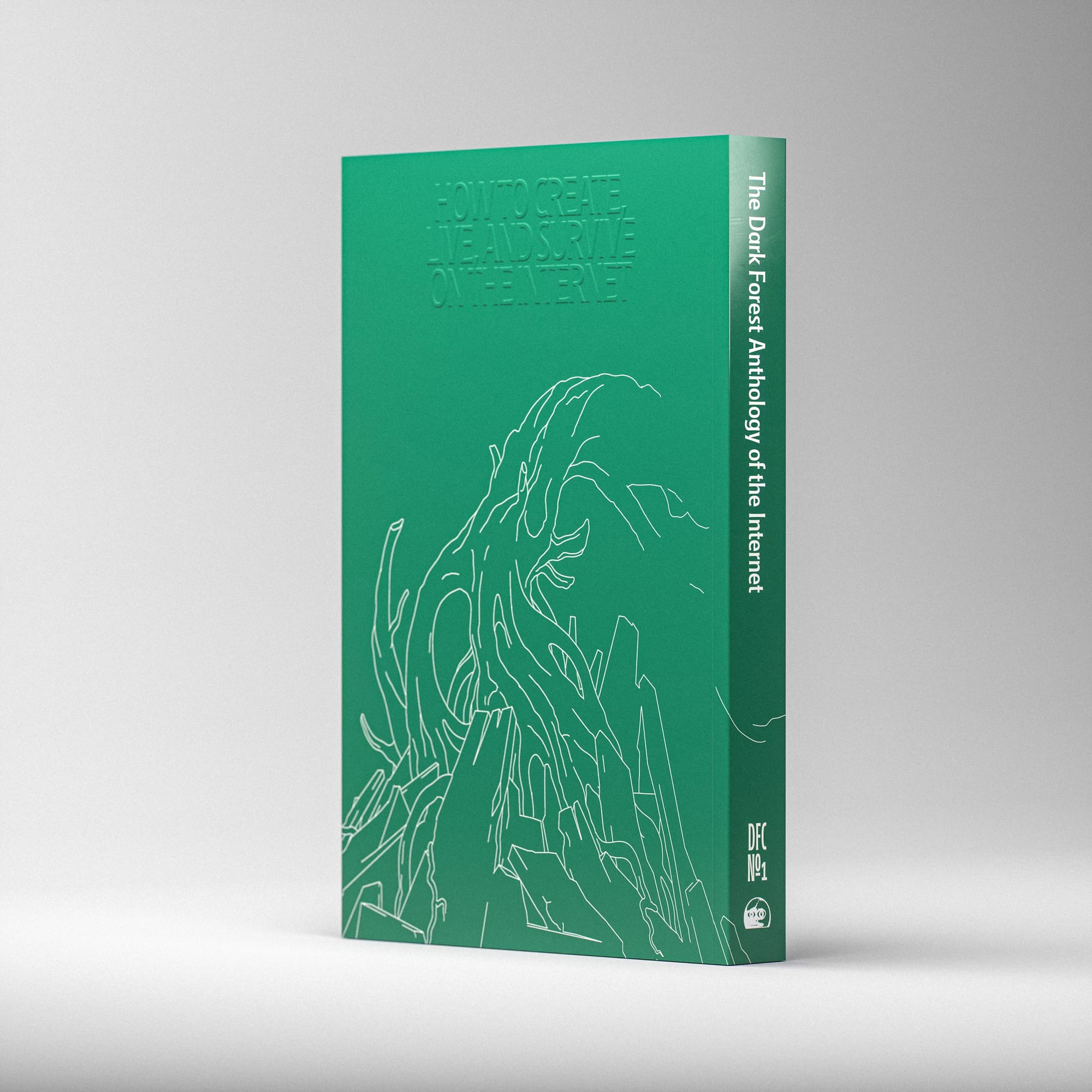
That essay was really me trying to understand my own emotional relationship with the internet – which has always felt like my first home. I used the metaphor from Liu Cixin’s “dark forest” to describe spaces where it feels unsafe to be seen.
That feeling has definitely spread. What surprised me is how improvised and fragmented our solutions still are. People clearly want privacy and intimacy online, but we’re all cobbling together messy stacks of tools to achieve it.
As a builder, I think “shared private internets” is actually a huge category that hasn’t been properly defined yet. The core challenge is: how do you preserve the connective power of the internet while also maintaining meaningful control over visibility and identity?
That’s what DFOS is trying to explore. When I wrote the essay, I was mostly expressing a feeling. I didn’t yet know what to build in response. What I’ve realised since then is that people still deeply want connection – they just want it in smaller rooms, among trusted groups, with what I call a “minimum viable audience.” That’s where many people feel safe enough to actually be themselves.
A lot of people seem confused about how to use social media now. Posting online can feel performative and stressful. And with AI and the rise of “dead internet theory,” it feels like some of your ideas have become more relevant.
I think the “dead internet” idea is directionally correct. Public internet spaces are increasingly filled with insincere, programmatic content. But people aren’t logging off entirely – they’re just shifting their meaningful interactions elsewhere. They’re in group chats, smaller networks and private spaces. And there’s a huge difference between actively talking with people and passively scrolling.
If AI continues advancing, it’s easy to imagine the web browser itself eventually becoming obsolete. Our digital lives may shift toward streams of information we selectively participate in, with very different interfaces than we’re used to now. We’re still extremely early in that transition. That’s why we think so much about protocols, identity systems and durable data structures – because the interfaces may change radically.
Do you feel optimistic?
I do. I believe in human ingenuity. I believe in people’s desire for meaningful experiences and meaningful relationships. I don’t think the internet as we currently know it can fully be “saved.” I think we’re transitioning into something else. AI will trigger internet-scale shifts in how people interact and organise. I can easily imagine that within five years, the way we use technology will feel dramatically different from today.
As for our projects: yes, I think DFOS could become a meaningful alternative network for creative communities. And I think A Corps could absolutely become mainstream economic infrastructure within a decade – to the point where people forget they were ever invented.
But this is a very long-term project. Honestly, I think of it as a centuries-long project. This first decade is really about establishing the foundation. Over time, the goal is for this to become durable public infrastructure for creative people. So there’s still a long way to go – but it’s a very good start.
| SEED | #8419 |
|---|---|
| DATE | 16.06.26 |
| PLANTED BY | PROTEIN |
