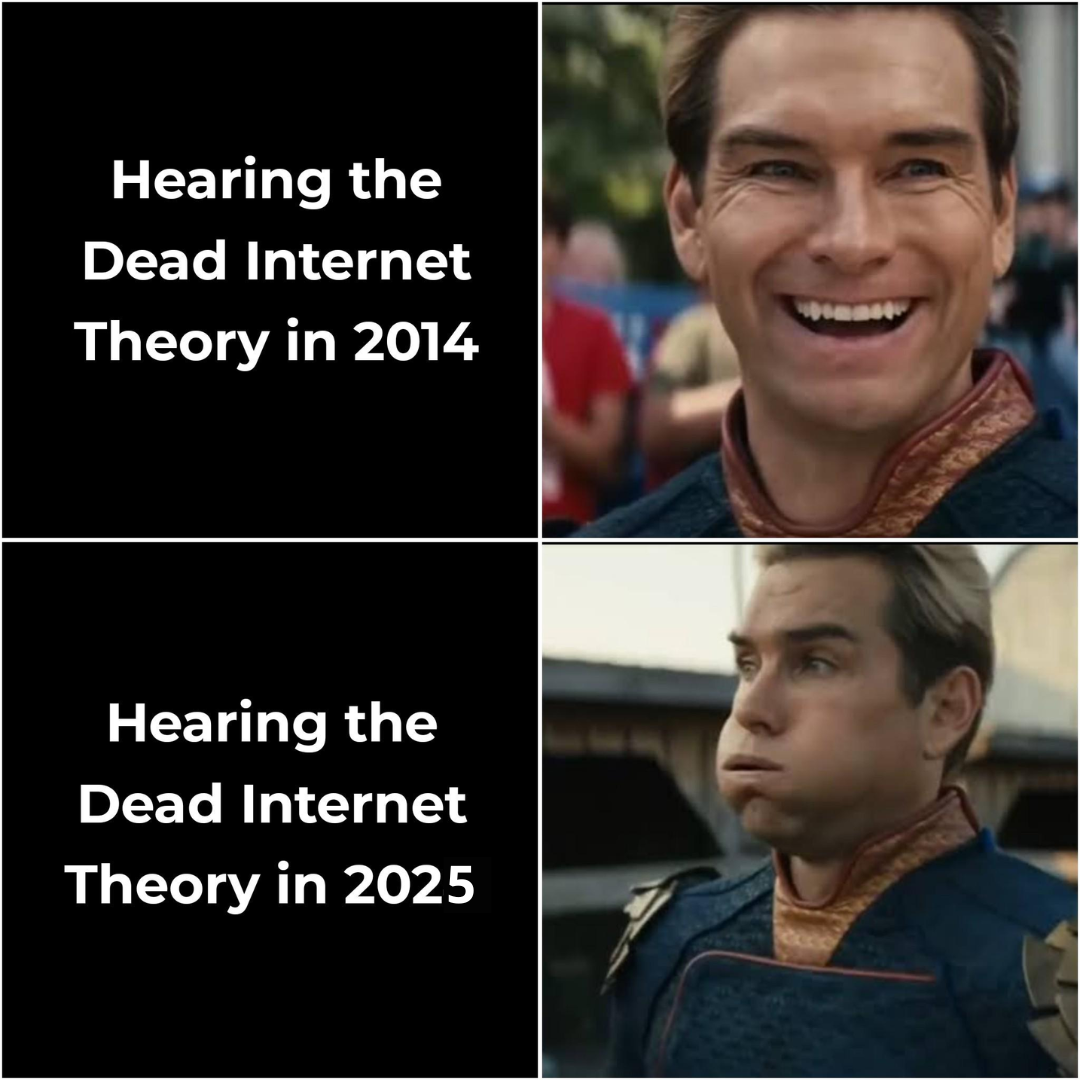
Four years ago, on the fringes of the message-board internet, many started to argue that no, most users on Facebook and other social media platforms were AI bots. In fact, the internet made by real human beings had died back in 2016 or 2017. In a widely read article in The Atlantic, this idea was called a “conspiracy theory” that was probably “wrong” but “feels true”.
Then, at the end of December 2024, Meta told the Financial Times that was, er, the plan for the future:
Meta is betting that characters generated by artificial intelligence will fill its social media platforms in the next few years as it looks to the fast-developing technology to drive engagement with its 3 billion users. The Silicon Valley group is rolling out a range of AI products, including one that helps users create AI characters on Instagram and Facebook, as it battles with rival tech groups to attract and retain a younger audience.
We expect these AIs to actually, over time, exist on our platforms, kind of in the same way that accounts do,” said Connor Hayes, vice-president of product for generative AI at Meta. “They’ll have bios and profile pictures and be able to generate and share content powered by AI on the platform . . . that’s where we see all of this going,” he added. Hayes said a “priority” for Meta over the next two years was to make its apps “more entertaining and engaging”, which included considering how to make the interaction with AI more social.
The admission went viral. Sleuths discovered what they believed to be these new AI users, only to realise that they had been created by Meta over a year ago. One was “Liv,” a supposed “proud Black queer momma of 2 & truth-teller.” Her Instagram profile was filled with her non-existent children, whose number and appearance differed in each AI-generated image. Alarmed by the backlash, Meta pivoted, and claimed their hopes for AI profiles was just some speculative dream for the future.
This has been the direction of travel for some time. Protein first covered it in 2013 and again in 2017 when Lil Miquela first appeared. Real humans have been posting less and less, turning the “scroll” into a passive medium populated by so-called “creators” (many of who will be, or already are, AI generated).
“Engagement” data has long been manipulated by fake clicks and reads to boost advertising revenues. The question of just how much any of this is “real” is a looming one, and for Meta, certainly an existential one. They cannot monetise “connection” if nobody wants to connect.