Why is luxury and architecture so obsessed with concrete? And what does this reveal about our changing feelings towards rawness and polish?
Conical Intersect, Gordon Matta-Clark, 1975
Concrete Culture
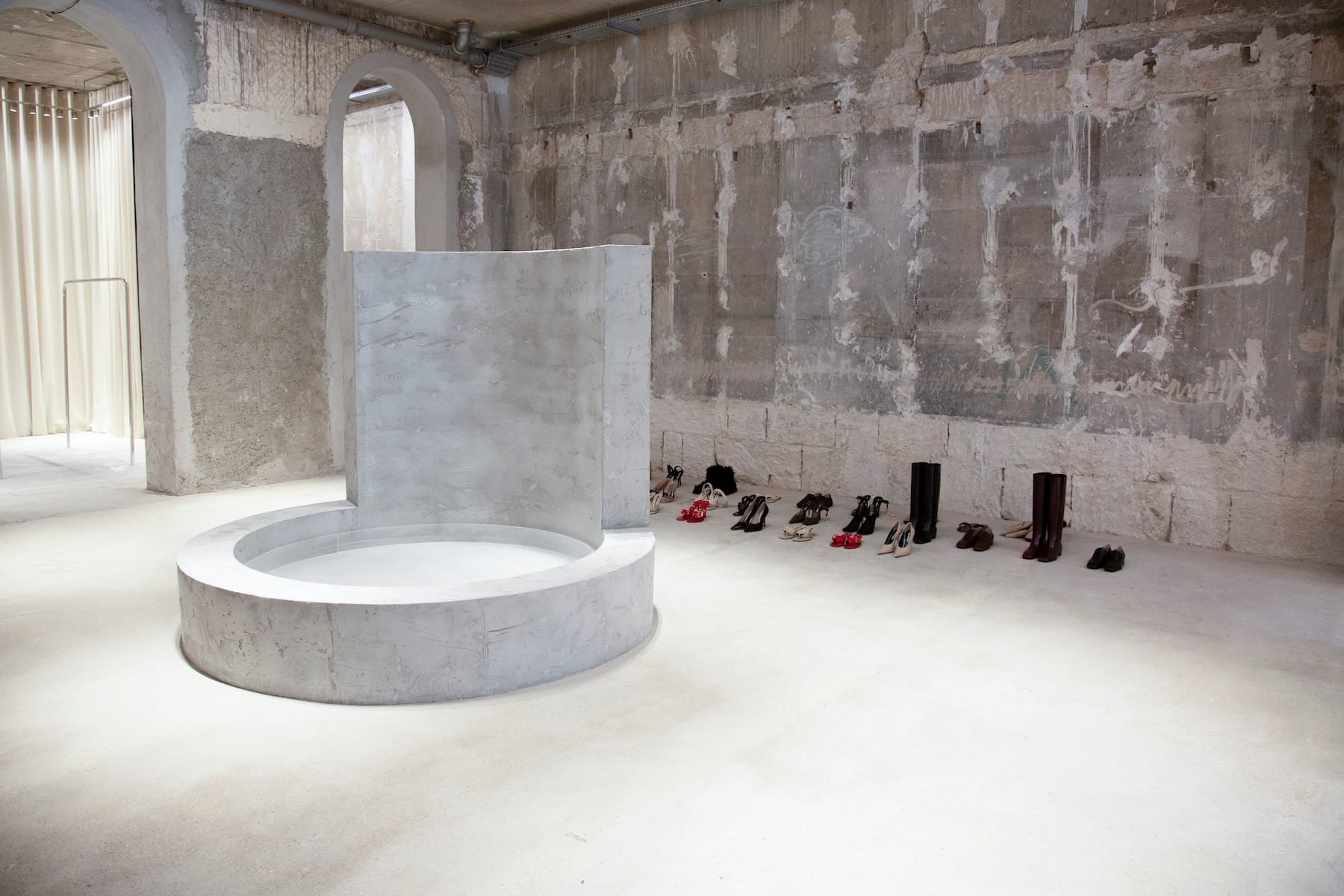
On the famed Parisian shopping street Rue de la Paix, luxury shoe designer Nina Christen has opened a seemingly unfinished store. To many it might look like it’s still under construction: a composition of rough concrete walls and breeze blocks, and devoid of any of the plush furniture you might expect to find in a high-end boutique.
Rather than installing a new interior, Christen and artist Azadeh Shladovsky uncovered the original materiality of the building, including arches that had been hidden beneath false walls. They then built a sparse landscape of stripped-back structures that work interchangeably as benches, tables and podiums. Christen describes the store’s lack of finish as a ‘radical and daring gesture’, connecting its imperfections to the handmade irregularities of her shoes, explaining that this is part of what luxury means to her.
Nina Christen showroom, Rue de la Paix, Paris
Versions of this raw room cropped up all summer in the brand briefs I’d seen for showrooms and concept stores: concrete floors, exposed pipes, battered plaster, and gaping walls that suggested an attempt at demolition. It was everywhere, from café counters to bedside tables.
IKEA’s BESTÅ storage system offers light grey, textured doors that mimic the visual effect of concrete. Their KONSTRUNDA collection features a £45 side table with stainless steel top, bringing another industrial material into the bedroom. Brutalism – which comes from the words for ‘raw concrete’ in French – has become so legible, it can now be constructed via multi-step flat-pack instructions.
Its ubiquity kept bringing me back to ‘Aesthetic Stagnation’ and ‘Why Are There No New Aesthetics?’ from Ruby Justice Thelot, in which he laid out how industrialisation, financial risk, algorithmic recommendation, and the weight of the cultural archive all favour forms that can be easily recognised and reproduced.
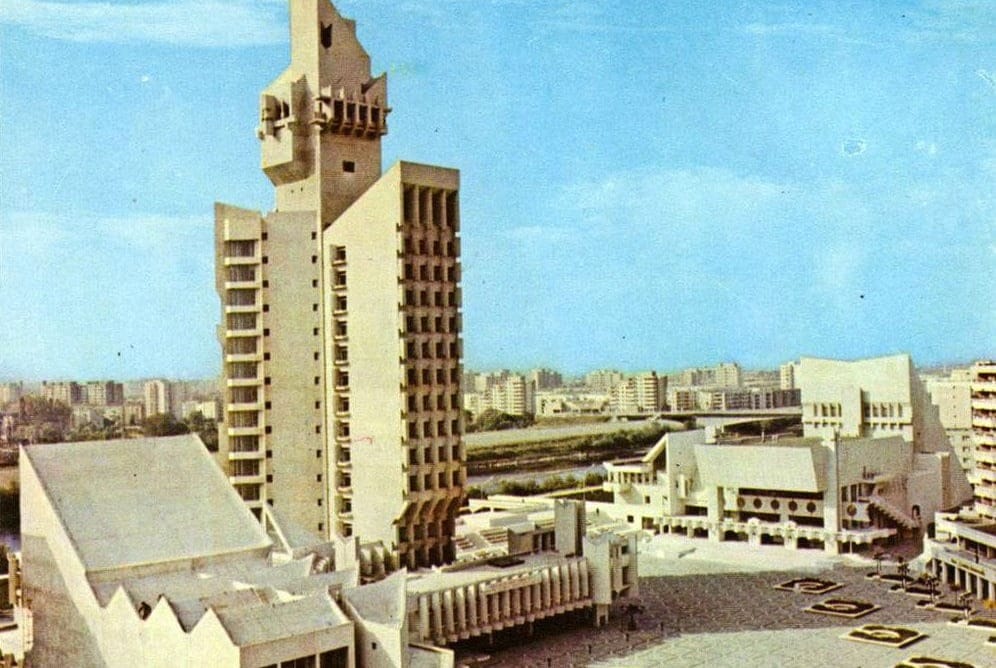
Palatul Administrativ (Administrative Palace) Satu Mare, Romania, build between 1972 and 1984
I think about these Brutalist design choices differently because I was born in Romania in 2000 and grew up around many of the materials that make up the references in this SEED. Houses could remain in bare brick for years while a family waited for enough money to complete a further stage of construction. Concrete was part of the everyday landscape, sometimes connected to the complicated inheritance of socialist building, sometimes simply revealing depleted budget, delay or change in circumstance. Seeing those same signs move through luxury retail, Instagram feeds and soft furnishings makes me think about why we are so attracted to faked rawness.
Making The Invisible Visible
Brutalism began as an architectural approach concerned with the material honesty of buildings, but has now shifted to a veneer. When Reyner Banham tried to define New Brutalism in 1955, he was interested in a ‘clear exhibition of structure’ and the value of materials ‘as found’. This was not about concrete being pleasing to the eye, but the fact that, by leaving construction visible, it provided a commentary on the conditions under which the building had been produced.
Protein AGENCY provides insight, foresight and strategy for global brands that's rooted in culture and the collective knowledge of SEED CLUB - our decentralised research community of 500+ global experts.