The economics of aesthetics, cultural debris, and how to visualise the future without just regurgitating the past.
Matières Fécales rethinks forms, aesthetics and ideology within fashion
I’d like to propose five conditions for aesthetic innovation:
New aesthetics exist most visibly in new media.
New aesthetics emerge through synthesis.
New aesthetics require a philosophy.
New aesthetics must be actively sought by audiences.
New mass aesthetics require a shared vision of the future.
My argument is simple:
The industrialisation of culture disrupts the cycle of innovation and risk-taking.
The past and its artefacts weigh on the future.
New aesthetics exist, but mostly in new media.
When it comes to the industrialisation of culture, there are three main factors:
Economics influences mainstream aesthetics more than audience taste.
Mass media, for the most part, has been subsumed by finance.
In the attention economy, the critic must meet the audience where they are, and that leads to a debasement of the commons and of the audience.
Revenue Versus Risk
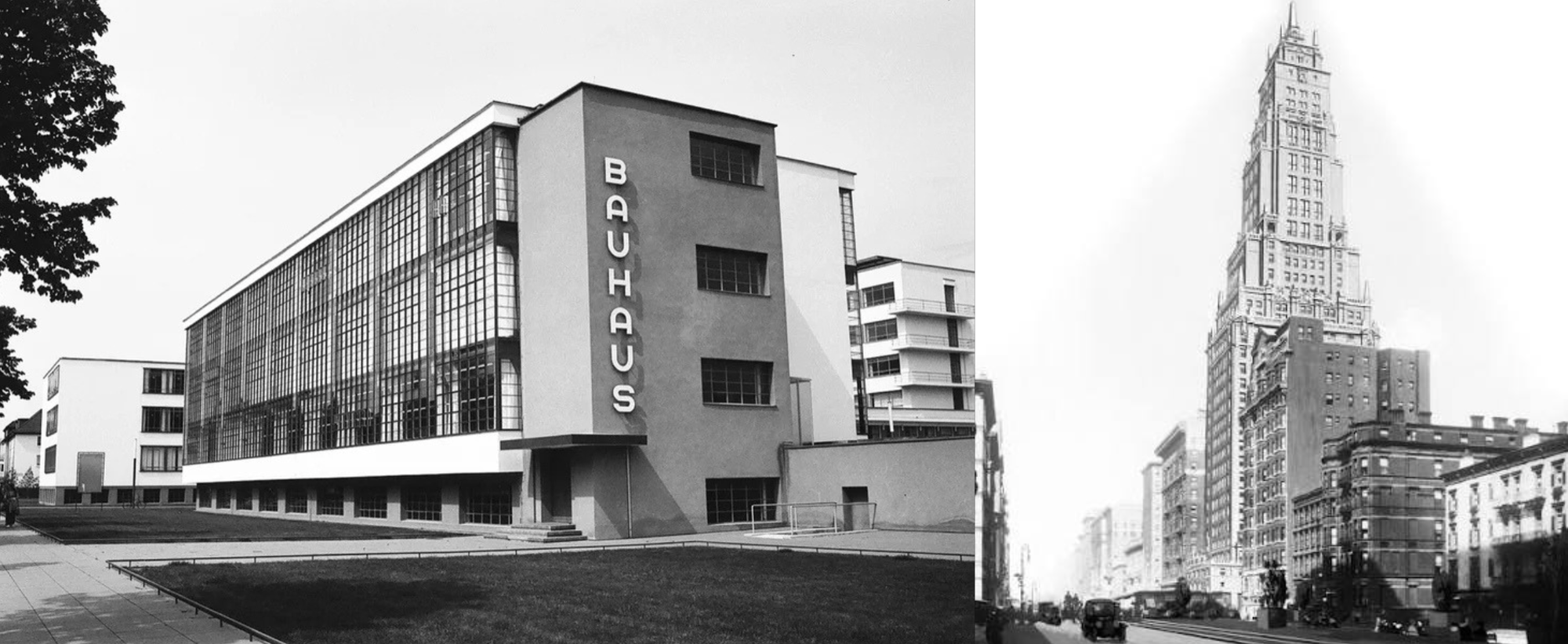
Studying the Bauhaus architects of early 20th century Germany, it quickly becomes evident that they weren’t simply imagining a world in which buildings would be bereft of ornamentation, they were designing buildings that would be in service to the people who occupied them. A radically novel philosophy which allowed a radically novel aesthetic to emerge.
Following this movement, post-war America saw the so-called Rothscrapers emerge as a prominent style of building in urban areas. The Rothscraper has a very distinct form – a kind of staggered skyscraper constructed of sheets of metal and curtains of glass – which sharply rose in popularity largely because its architect, Emery Roth, was known for one particular thing: making buildings that make money.
Bauhaus Building, Dessau (1925); The Ritz Tower, Manhattan (1926)
In this contemporary era, the person most responsible for architectural decisions shifted from the architect to the real estate developer; someone who designs not for architectural splendour or function, but to return cash to whoever has invested in constructing the building. This was something the pragmatic Rothscraper was particularly good at, and fortunately for such developers, as cost became an ever more pressing concern, the price of building materials favoured by modernists also started to decrease: glass, aluminium and steel all experienced price deflation. Meanwhile, labour costs for ornate neoclassical buildings, requiring extensive manual handwork, remained at a premium. The new style, spearheaded by Roth, was not only informed by a new philosophy and aesthetic, but also underpinned by economics.
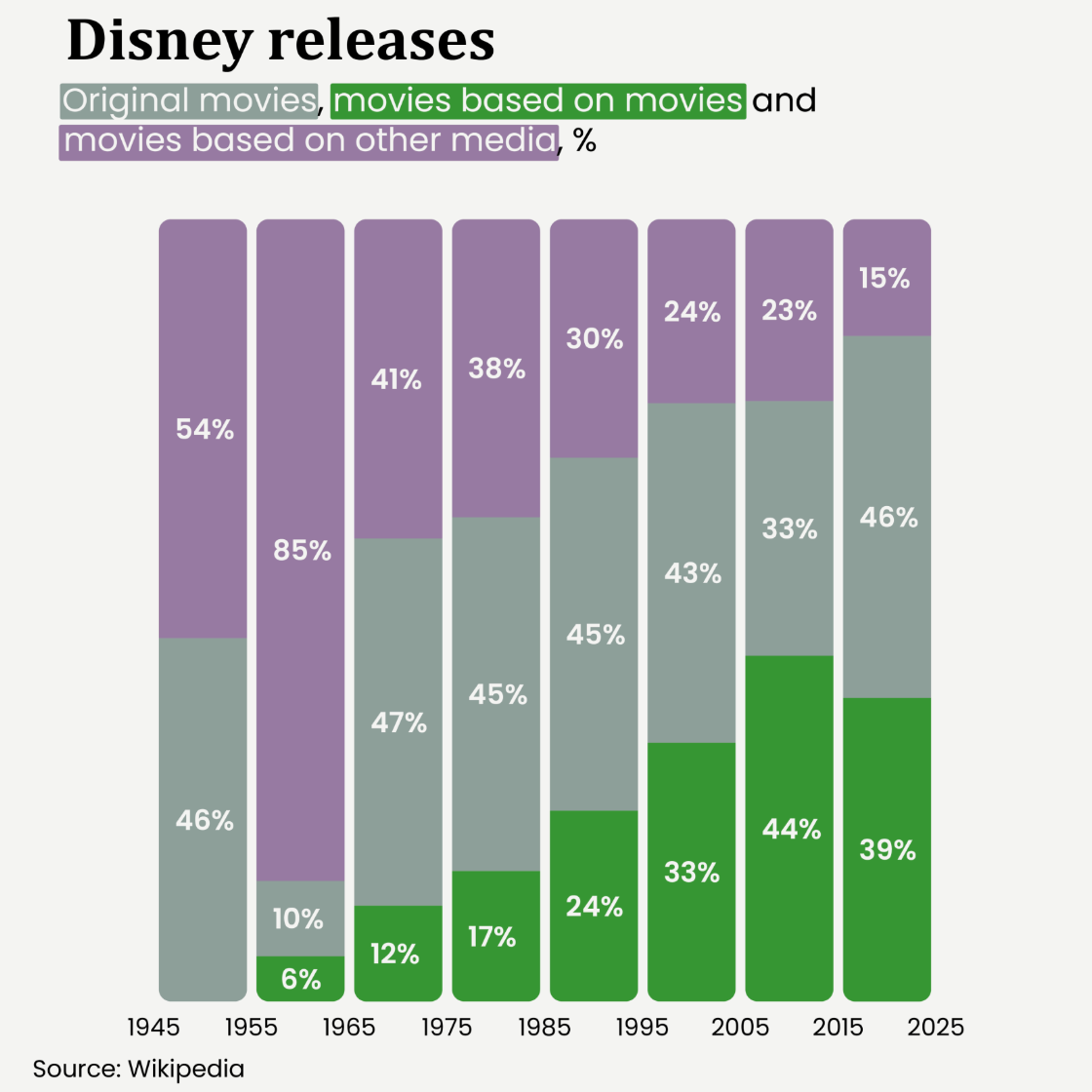
This ethos also crept into cinema. Over the last 50 years, film sequels have reached the top 10 of box office sales. Previously, original ideas were prioritised, pushed and funded, but as return on investment took precedence for studios, franchises became the safe bet. If you take a look at the box office last year, nine out of 10 were sequels.
In my essay ‘Mining the Future’, published by Artforum, I write about this from the perspective of science fiction, whereby many of the sci-fi films produced today are basically retellings of breakout stories from the ‘60s and ‘70s. Original sci-fi content enables us to see a new vision of the future, but if we’re still making, and re-making, an endless loop of Star Wars, Star Trek and Dune in 2026, then this projected future is in fact backwards looking, stuck in the imaginings of the past.
Protein AGENCY provides insight, foresight and strategy for global brands that's rooted in culture and the collective knowledge of SEED CLUB - our decentralised research community of 450+ global experts.