


Everywhere I look today, someone is selling me a habibi something. It's in the names of parties, the styling of pop stars, the typography of fashion brands, the description of food items (lest we forget the Dubai Chocolate Labubu meme), the curated nostalgia slop for Y2K Arab pop; the list is painful and long. Netflix’s adaptation of Love is Blind, named Love is Blind, Habibi, definitely exists in the upper echelons of this universe. One of the Arabic language’s most endearing terms has become an all-purpose identifier for seemingly anything. The commercial stamina of the habibi universe is quite impressive, if nothing else.
This linguistic ubiquity is the most literal expression of a broader cultural appetite for general Arab vibes. The much-discussed global breakthrough of Arabic pop has thrown a new constellation of artists into the spotlight, from Palestinian-Chilean singer Elyanna to Lebanese-Egyptian-Canadian Zeina and Egypt's masked sensation TUL8TE. And the Palestinian Saint Levant, of course.
The whole thing is drowning in post-9/11 PR psychosis: we’re not the terrorists you've seen on television, we’re sexy, rich and ready to party.
In 2023, Elyanna became the first artist to perform a full Arabic-language set at Coachella, a milestone understandably celebrated as a major moment for representation. Just two years earlier, Universal Music Group launched Universal Arab Music with ambitions to bring the region's sounds to global audiences. This growing investment in either SWANA or MENA music, depending on your sensibilities, and collaborations with Western labels and entertainment companies are being sold as proof that the world is finally ready for Arabic music. Which it has been, for decades.
The first time I intentionally watched Jad Shwery's 2009 music video Funky Arabs was in an undergraduate media studies seminar. It opens with a disclaimer assuring viewers that every person appearing in it is an Arab (or Lebanese Arab). In brief, the video is a parade of shiny cars, hot people, bottle service, and a very-of-the-time effort to convince the world that Arabs know how to have fun. An airport security scanner reveals kinky accessories instead of explosives. The whole thing is drowning in post-9/11 PR psychosis: we’re not the terrorists you've seen on television, we’re sexy, rich and ready to party. I watch it now and laugh out loud; it’s a really good music video.
In all its reductive iterations, the habibi fantasy encased an entire region of vastly different countries, traditions (in many cases non-Arab), dialects and histories inside a glass display.
In an interview at the time, Shwery explained that he wanted to counter the international media's portrayal of Arabs as incomprehensible terrorists. Singing in English, he also hoped to reach audiences outside the region. Also in 2009, Lebanese-Canadian heartthrob Karl Wolf, released Yalla Habibi, another fusion of old school pop, expensive vehicles and general luxury vibes. By 2022, ‘Habibi, come to Dubai’ had become a goofy meme and catchphrase, popularised by Greek-Moroccan TikTok creator Andreas Koudourakis, and immortalised in a genuinely abysmal dance track by Albanian producer Drinche. The projected habibi fantasy had been fully realised.
This habibi memeification coincided with a broader economic shift across the Gulf. Dubai, having spent decades diversifying its economy, welcomed 14.36 million international visitors in 2022 alone, while Saudi Arabia was pursuing its own ambitious economic diversification, including major investments in tourism and entertainment, as outlined in its Vision 2030. The habibi universe revolves around the flow of capital to and from the Arab world, and the creation of an internationally marketable image; a fantasy produced through an interplay of mutual commercial and political interests, but that largely caters to a foreign gaze. In all its reductive iterations, the habibi fantasy encased an entire region of vastly different countries, traditions (in many cases non-Arab), dialects and histories inside a glass display.
The 2000s saw pop boom across the Arab world, fuelled by Gulf money and the explosion of satellite music television. Saudi-owned Rotana became the industry's dominant force, controlling much of the production and distribution of Arabic pop. Stars of the time, Amr Diab, Haifa Wehbe, Nancy Ajram, raised an entire generation on music that was arguably more provocative, both sonically and sexually, than anything their protégés are producing today. Their output has since acquired renewed appreciation, courtesy of the previously mentioned lazy Y2K nostalgia shtick, and a new streaming-ready generation of artists hungry for references.
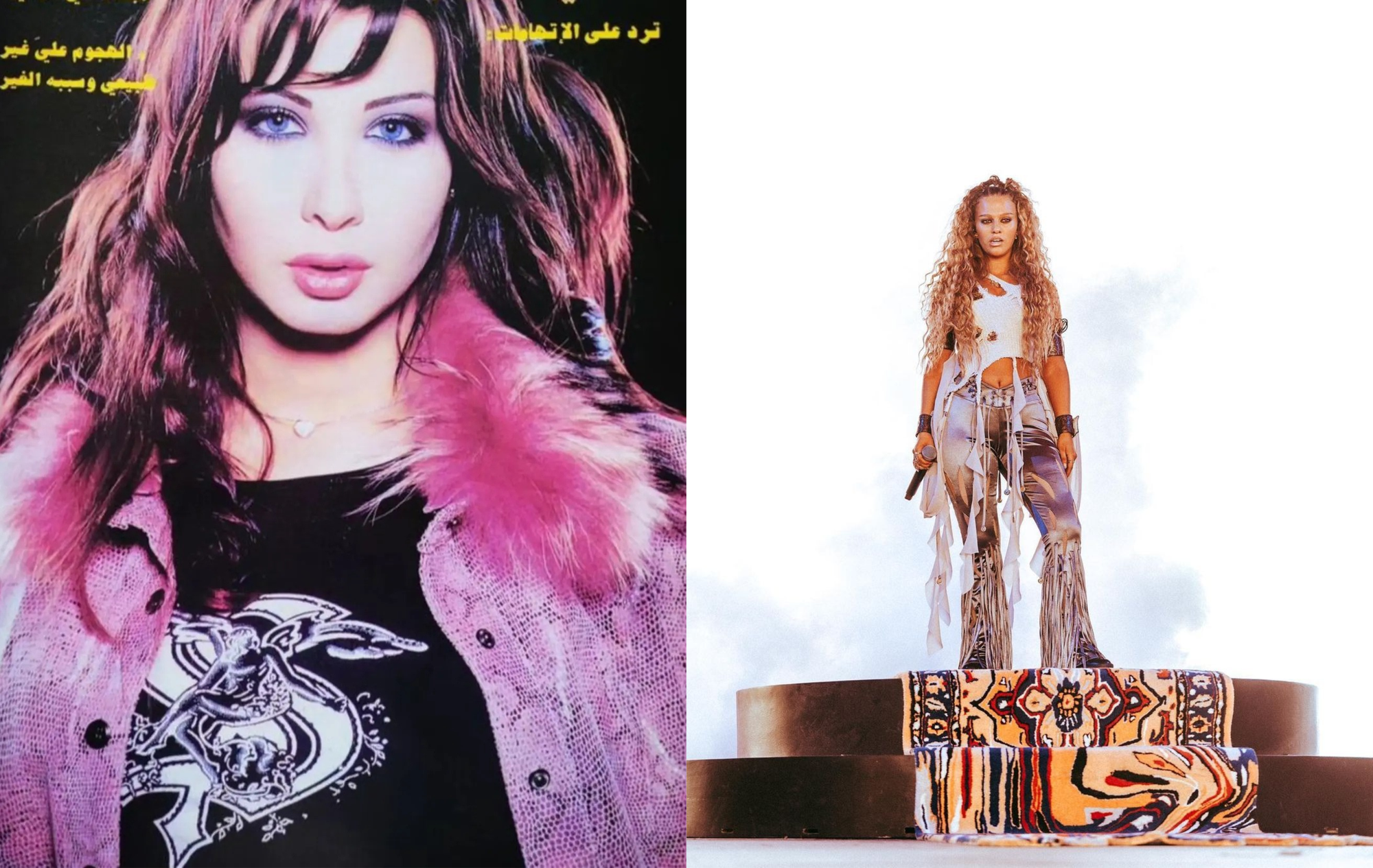
Arab music’s presence in Western pop culture is long-standing, particularly in American hip-hop and R&B sampling. Due to the money being pumped into music in the Gulf, Arabic music is transcending its role as a source for exotic-sounding hooks for Western producers; there is suddenly so much appeal in being Arab. And this is not a debate of cultural appreciation vs. appropriation, nor is it a way to diminish the achievements of this newer generation of Arab artists. They have captured new international audiences, supported by an expanding infrastructure and economy for Arabic music, and that’s worth recognising.
If you’ve been paying attention, we have been in the trenches of habibification for more than a couple of years now.
In July 2025, Dazed MENA ran a viral piece titled 'Aestheticised, Algorithmised and Appropriated: Welcome to the 'Habibification' of House Music,' looking into the newfound obsession with Arab aesthetics in global electronic music. The writer, Mai El Mokadem, lists Keinemusik's sold-out parties in Egypt, Adam Port's recycling of Amr Diab, and Peggy Gou's habibi merchandise as manifestations of a phenomenon El Mokadem dubs ‘habibification’: a process through which working-class sounds and aesthetics are rebranded as exclusive cultural experiences, pricing local audiences out of music events in their own cities while sidelining the artists and communities who built these scenes from the ground up. It’s an age-old tale of gentrification, but the habibi of it all serves as a Trojan horse for oppressive commercial interests shrouded in identity politics.
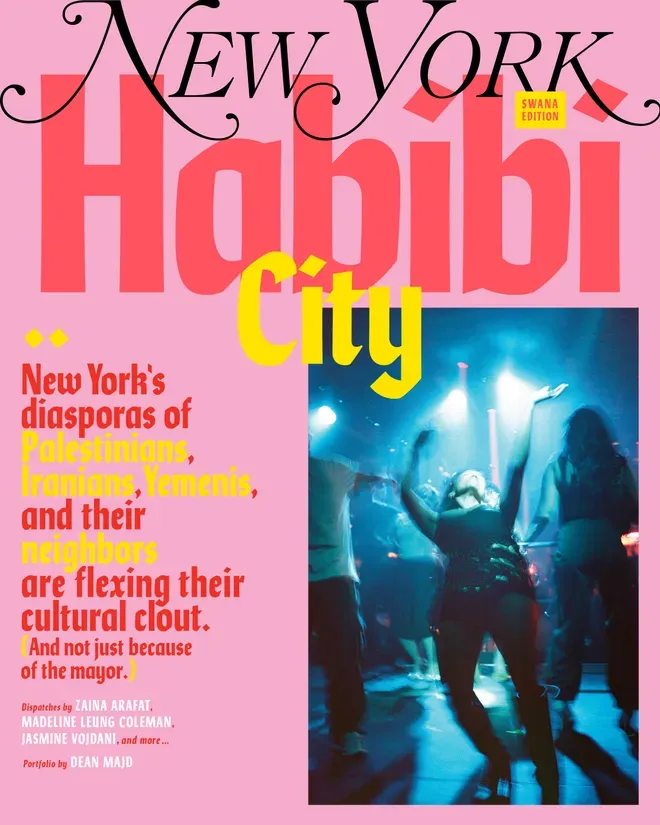
So where does all of this leave the habibi universe? Social media was set ablaze when New York magazine published its August 2026 feature package entitled Habibi City, documenting the city's flourishing SWANA cultural scene against the backdrop of Zohran Mamdani’s historic mayoral victory. Specifically, ‘How New York’s diasporas of Palestinians, Iranians, Yemenis, and their neighbours are flexing their cultural clout.’ The framing is a minefield, and the stories about cultural spaces and communities built through grassroots organising, especially in solidarity with Palestine, attracted predictable backlash. The ensuing Instagram discourse oscillated between passionate defences of the importance of representation, sharp scepticism about the material value of cultural clout amid an ongoing genocide in Gaza, and Zionist outrage straight out of the Hasbara machine over the celebration of ‘jihad chic’. A mess by all means. There’s definitely a more incisive, layered, and considerably more psyop-pilled essay to be written about this farce. But in the name of cultural intelligence, this is not it.
The ongoing celebration of Arab cultural visibility, whether well-intentioned or co-opted (I would go for the latter), fails miserably at being an adequate measure of progress on the ground, for the people back home it supposedly represents.
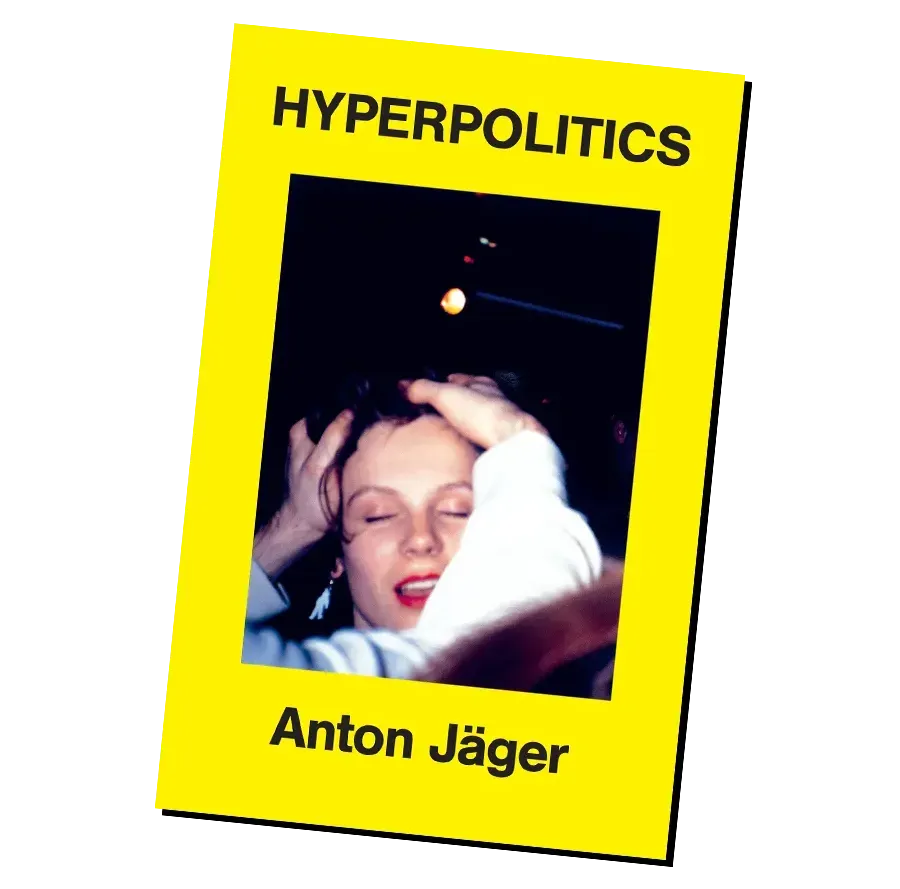
This is all happening at a moment when the expanding Verso Books catalogue continues to enchant the global left with offerings like Anton Jäger’s Hyperpolitics. Jäger’s slim, immensely popular book looks at the condition of extreme politicisation without the institutional structures necessary to translate it into lasting change. Critics have taken issue with its generalisations and lack of empirical detail, and have warned of its tendency towards fatalism. While there might be greater awareness and visibility of politics, there’s little idea of what to do with this information. ‘Politics matter’ is the sweeping chronically online thesis of the 2020s. We live in the age of the hypervisible, hyperpolitical, hyperaware, hyperrepresented, etc. No word has been spared from the prefix. What musing is there left to do on the politics of representation and visibility?
Palestinian writer Abdaljawad Omar’s sobering answer is in his July 2026 essay for Equator, titled Gaza and the Problem of Moral Stupidity. Revisiting Edward Said's decades-old demand for the Palestinian ‘permission to narrate’, he makes it clear over a lengthy and rich run of text that this permission has, in many respects, already been granted. Hence Habibi City. Hence this essay, on this platform. The ongoing celebration of Arab cultural visibility, whether well-intentioned or co-opted (I would go for the latter), fails miserably at being an adequate measure of progress on the ground, for the people back home it supposedly represents.
I just watched Michigan’s newly elected senator Abdul El-Sayed call JD Vance 'habibi' in his victory speech, joking that Vance has to swear him into office in January. The crowd went ballistic; it’s effective ragebait. The Instagram Story right after captioned the video with 'Habibification 4.0 to WW3 pipeline'. I had a good laugh.
If you’ve been paying attention, we have been in the trenches of habibification for more than a couple of years now. This seemingly fourth iteration of it also includes El-Sayed’s new Habibi PAC, a political fundraising committee set up to support other candidates and build influence within the Democratic party. Consider this essay the first scratch on the surface of the habibi psyop. The world knows how to say habibi by now. Surely there’s something more interesting to say.
| SEED | #8461 |
|---|---|
| DATE | 10.11.26 |
| PLANTED BY | HADI AFIF |
