Our recent BRAND BRIEFING explores how the temperature is being turned up across culture. If cool is indeed dead, then we're now living in The Age of Heat.
Every six months, we distil our recent SEEDS into one pressing cultural theme. Planning our autumn BRAND BRIEFING, one force kept rising to the surface: heat. It’s the defining condition of the world right now, but is more expansive than you might think. As the SEED 'Rings of Fire' explains, we’re using heat as a lens to map out three cultural zones:
Environmental heat: the literal, physical warming of the planet.
Discursive heat: the turning up of rhetorical and ideological temperature.
Affective heat: the bodily and emotional intensity that heat evokes.
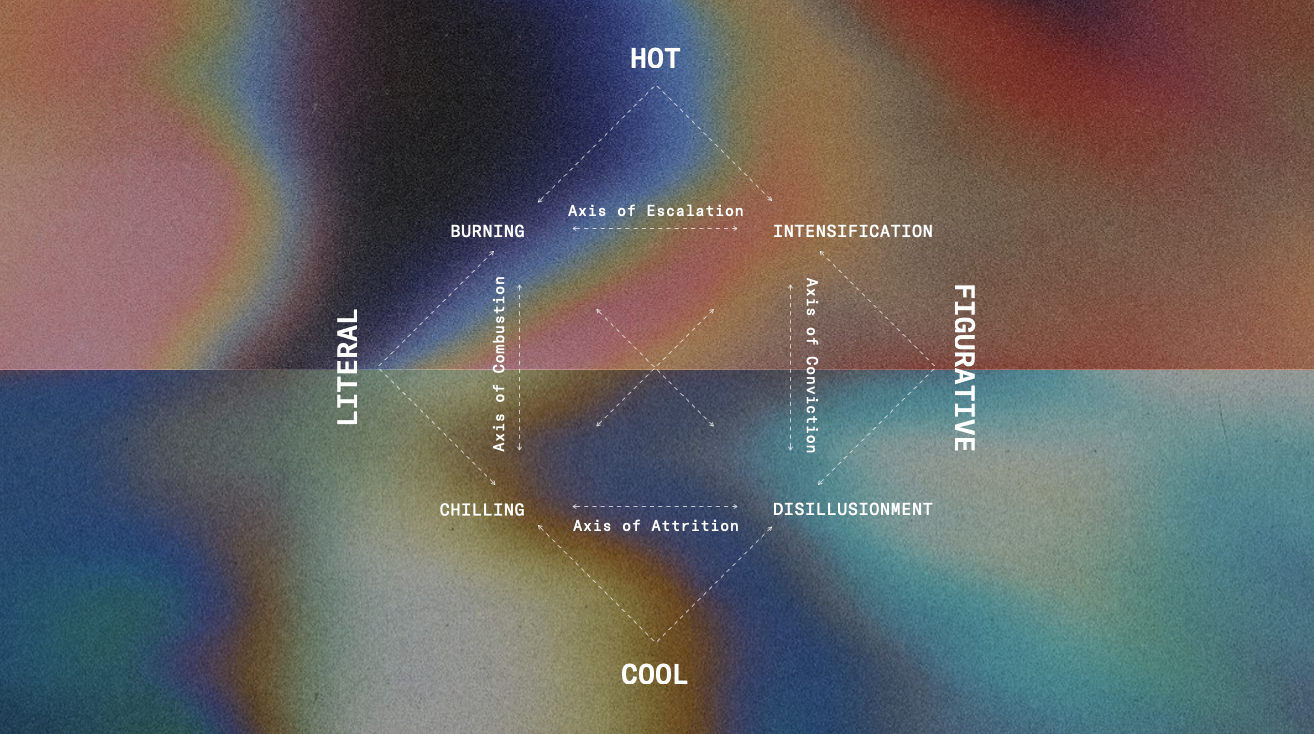
‘Hot’ and ‘cool’ are two words that have long been used to make sense of the world. They work both literally (burning and chilling) and figuratively (intensification and disillusionment), making them a cultural barometer and a dialectic at once.
The Heat & Meaning Matrix
Hot And Cool Societies
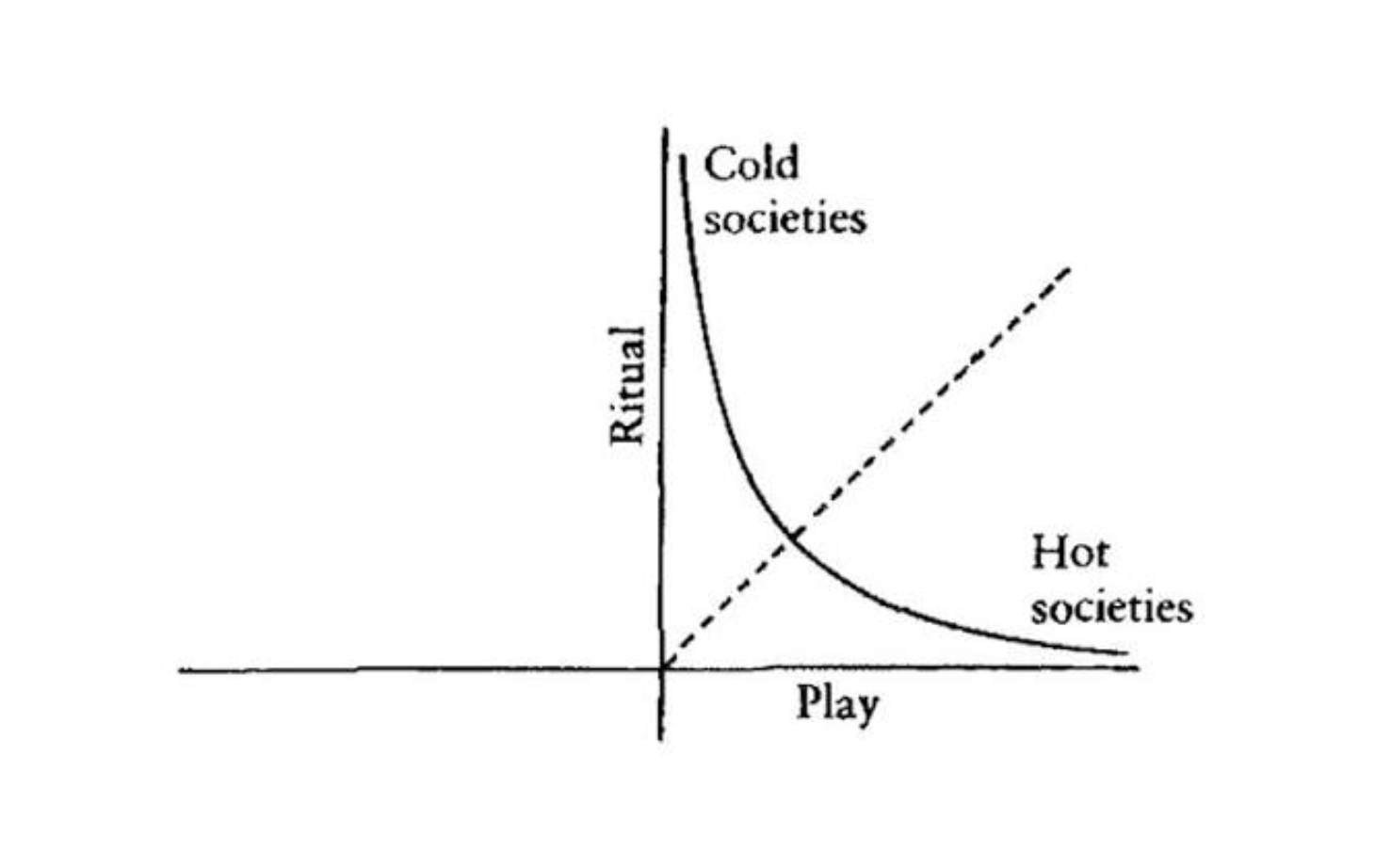
Anthropologist Claude Lévi-Strauss used hot and cool to describe societies. Cool ones preserve tradition and absorb change slowly. Hot ones embrace contradiction and run on social tension.
Giorgio Agamben's 1978 philosophical concept, drawing from Claude Lévi-Strauss, differentiating hot and cold societies.
Hot And Cool Cultures
Hot and cool have also been used to connect temperament with temperature. Sun-soaked Mediterranean cultures are seen as expressive, passionate and physical, while cooler Northern European ones are thought of as restrained, private and reserved. As Rosana Vitiello put it, via Philip Teale's Substack Heatmaps:
‘The Mediterranean is a region of extremes: beauty and hardship, romance and treachery, and its cities run the full emotional spectrum. Whether or not people feel more here, they certainly show more.’
Hot And Cool Media
Media theorist Marshall McLuhan used hot and cool to measure how much sensory involvement a medium demands. Hot media (e.g. photography, radio, print) delivers detailed information and asks little involvement from us to understand its meaning. Cool media (e.g. phone calls, television) offers less so, inviting greater involvement and interpretation.
We even have hot and cool girls. The hot girl is desirability and the male gaze. The cool girl is low-maintenance and aloof. But proving that linguistic homogenisation is alive and well, being hot is a prerequisite for being cool, and both point to the same nebulous, aspirational ideal.
The Death Of Cool
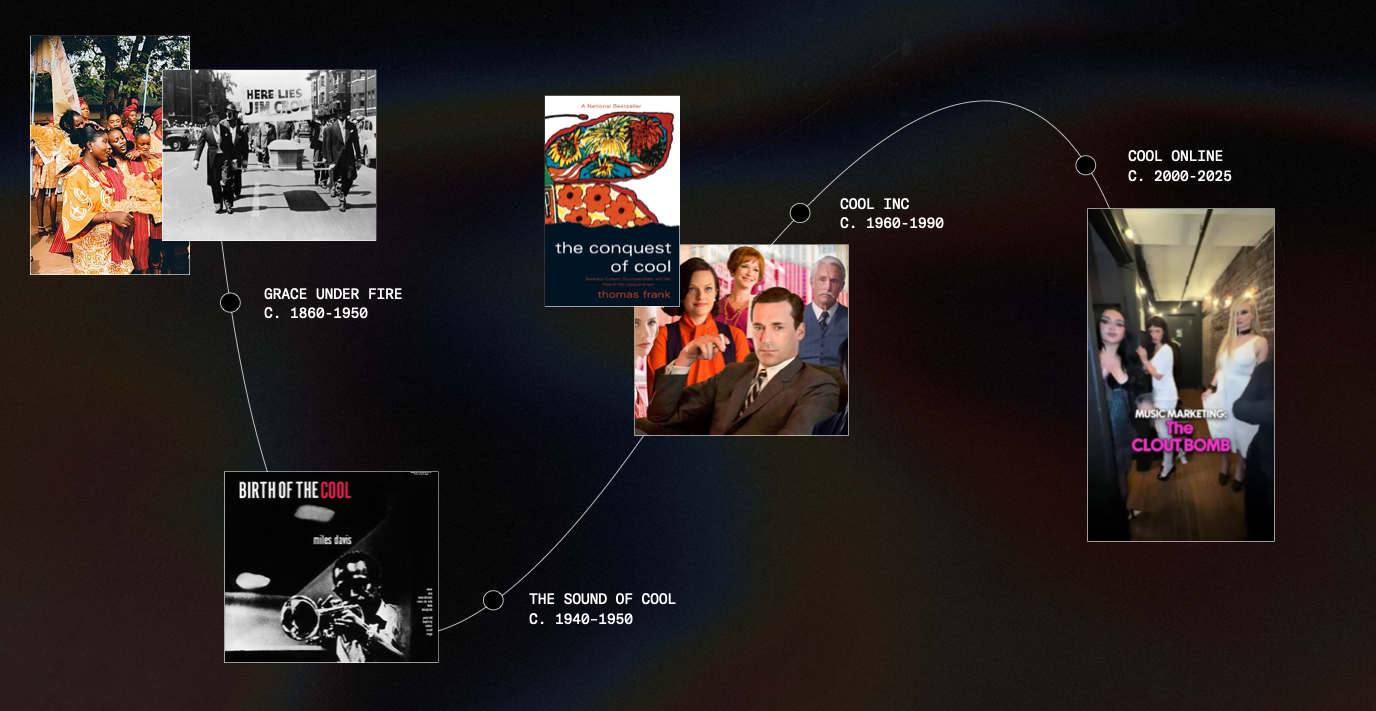
A Brief History of Cool
Grace Under Fire: Cool started as a spiritual ideal in West Africa in the 1860s. The Yoruba concept of ‘itutu’ meant composure, grace under pressure and quiet strength. Transported across the Atlantic through the slave trade, it took on a harder edge. Under Jim Crow, composure stopped being purely spiritual and became about survival.
The Sound of Cool: By the mid-20th century, that coded restraint found its voice. Jazz, and in particular the cool jazz’ movement led by figures like Lester Young, Miles Davis and Thelonious Monk, translated withheld emotion into sound: understated phrasing and relaxed tempos. Miles Davis's 1957 compilation Birth of the Cool gave the sensibility its name.
Cool Inc.: Once cool had a name and a sound, it became something else: a product. As Thomas Frank argues in the book The Conquest of Cool, this wasn't simply a case of corporate America co-opting an authentic countercultural aesthetic. American business underwent its own cultural revolution in the sixties, one that ran parallel to, and in many ways anticipated, the wider upheavals of the decade. Ad-men and marketers lifted the aesthetic of cool – detachment, effortlessness, implied rebellion – and sold it back as a consumer good
Breaking The Ice
Cool always depended on scarcity, but algorithmic circulation and infinite exposure has dissolved that. The instant something cool surfaces online, it's stripped of themystery that made it desirable in the first place. Cool and clout have become maximally accessible. Which is why coolness is changing. As Elizavetta Federmesser has argued in a SEED: cringe is sublime. And as fellow SEED CLUBBER Edmond Lau puts it:
‘When the world’s on fire, we huff the copium through irony, detachment, and nihilism. But eventually the bit isn't funny anymore and suddenly, sincerity in all its cringe, sweaty, hopeful earnestness starts to feel intriguing.’
The Age Of Heat
If indeed cool has died, or at the very least has evolved into something that more closely resembles cringe or earnestness, we’d like to propose that we are now living in The Age of Heat.
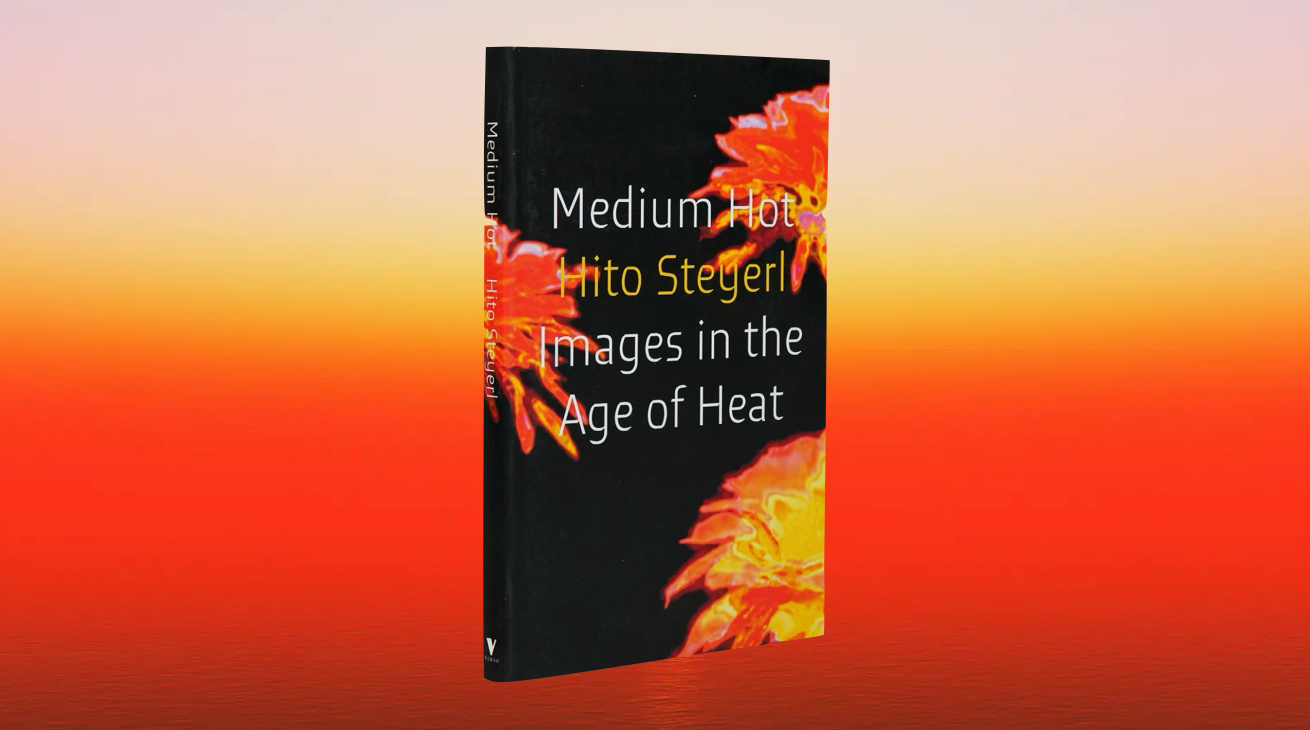
It’s an argument made by artist Hito Steyerl in her book, Medium Hot: Images in the Age of Heat, a riff on Haskell Wexler’s 1969 film Medium Cool, itself a nod to McLuhan’s hot and cool media. Steyerl suggests the shift from a cool past to a hot present mirrors the intensifying rate of climate change. Heat as a feeling – urgency, outrage – and heat as a physical byproduct of computation become synonymous.
Scroll your social feed at a frantic pace and everything runs hot. Our attention spans overheat. The feverish feed and the overheating server are the same system wearing two faces.
What This Means For Brands
TEAM MEMBERS can watch the full BRAND BRIEFING below, which includes relevant case studies, analysis and clear strategies for brands to put into action. If you're an AGENCY client, please contact your account manager for access or request a DEBRIEF.
Protein AGENCY provides insight, foresight and strategy for global brands that's rooted in culture and the collective knowledge of SEED CLUB - our decentralised research community of 500+ global experts.