Looking back at 300 years of magazines to look ahead to its next evolution.
Set back from Fleet Street, tucked in next to the 17th century St Bride’s Church, stands St Bride Foundation. The red-brick Victorian building first opened its doors in 1894 as an educational and recreational hub for the Street of Ink’s teeming print and press industry. It introduced printers to the latest technologies and housed a well-stocked library, alongside laundry, baths, and the first swimming pool in the City of London. Today, the foundation’s workshops keep traditional techniques alive, and its shelves are still an essential resource for publishers. It also hosts events, such as Stack’s recent Reading Magazines talk series, presented as part of London Design Festival, and supported by Fleet Street Quarter.
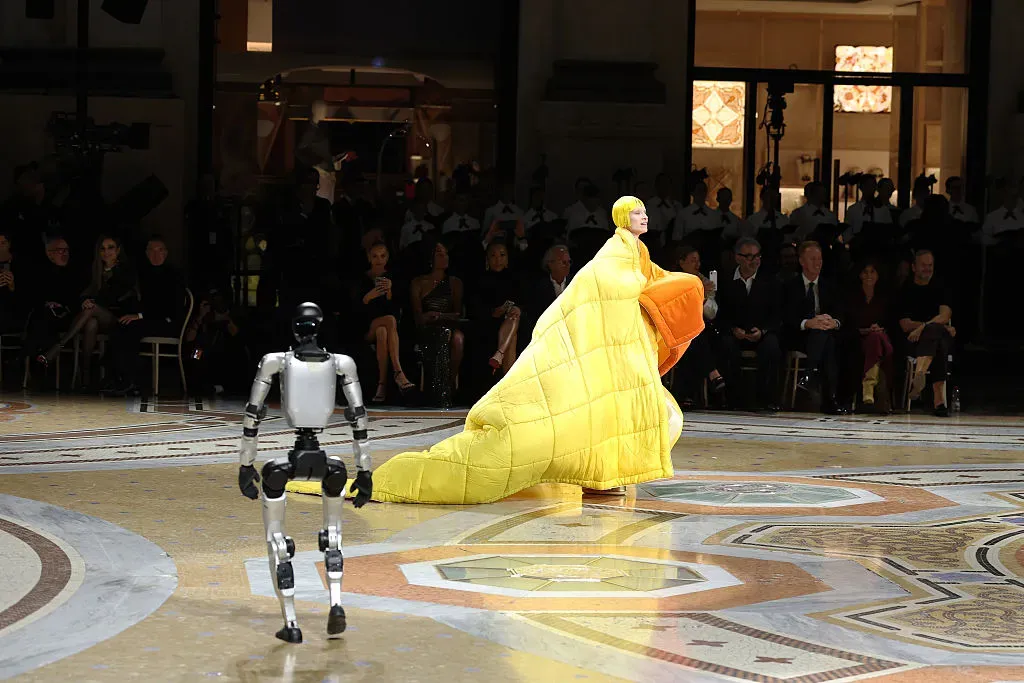
As we explored in Make Zines, Not Content, the magazine business is fast becoming a content, rather than editorial one, which Chloe Malle’s appointment as American Vogue’s head of editorial content (as opposed to editor-in-chief) last year epitomised. Of course these publications need to find ways to survive, but it’s a shame this results in things like whatever Vogue World is. The latest iteration, hosted in Milan this month, was sponsored by Eli Lilly, the American pharmaceutical giant who boasts weight-loss jab Mounjaro as one of its products.
A vision of the future that's stuck in the past – Vogue World 2026 in Milan
There’s a bright cohort of independent magazines however, that are forging their own path and devising new ways to keep printed matter fresh, often leaning into the absurd, provocative and unexpected. Magazines such as The Fence, Erotic Review, Elastic and Pilot, whose editors, art directors and designers all spoke at Reading Magazines, along with media historians and veterans of the printed page.
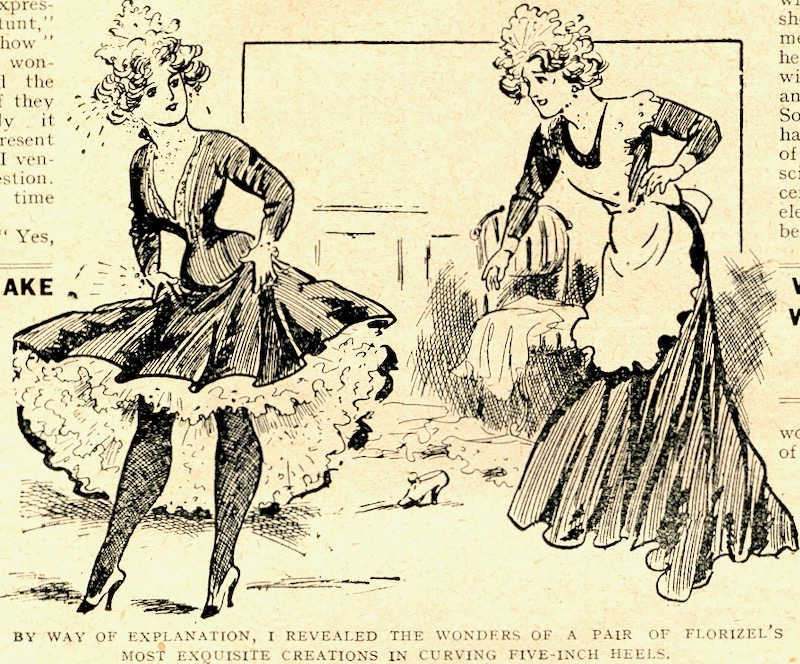
In 1731, the first periodical which identified itself as a ‘magazine’ launched. A compilation of cheap copy and controversy, The Gentleman Magazine became the blueprint for burgeoning magazine business; refashioning stories from stiff broadsheets into delicious tidbits. Tracing the evolution of the format from this point, historian Tony Quinn laid out how magazines quickly became an essential medium for challenging the status quo and expanding perspectives. For example, ‘Amber the Actor’ was a series in the Edwardian magazine Photo-Bits that discussed themes of gender-fluidity: the male-presenting hero, named Amber, would embark on a series of adventures dressed as a woman.
'By way of explanation, I revealed the wonders of a pair of Florizel's most exquisite creations in curving five-inch heels.' – Amber the Actor in Photo-Bits, 1910/1911
Magazines reached their peak in 1955, with the Radio Times boasting weekly circulation of 8.8 million copies. But ironically, the Radio Times' success was also its downfall, pointing to the mediums that would eclipse print media.
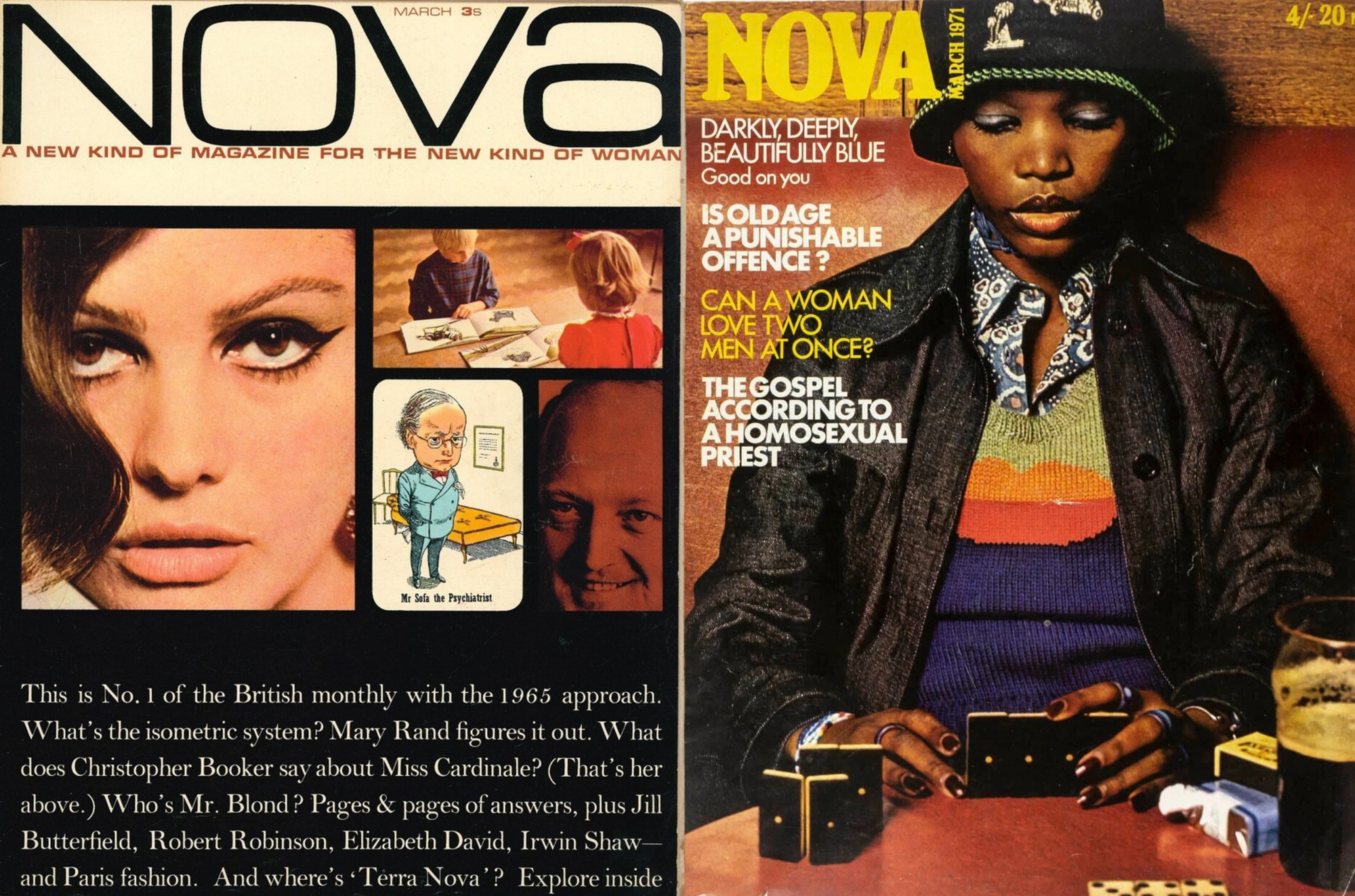
Despite declining readership, the radical nature of magazines persisted. As Dr Sharon Maxwell shared, Nova was a groundbreaking feminist publication that burned bright and fast. Launched in 1965, in the depths of the decade’s social and political movements, Nova positioned itself as a publication ‘For women who have more to think about than what to have for dinner’. Its blend of intelligence, wit, defiance and decadence set the tone for cultural magazines to come: a cutting-edge concoction of fashion and politics, art and academic. But Nova came too early and the culture wasn’t ready for it. Being ahead of its time was both the magazine’s greatest asset and challenge. It printed its final issue in 1975 but helped to pave the way for titles such as Cosmopolitan and The Face (which making another come-back apparently). The spiky sentiments and commercial success of magazines in the ‘80s was due to the work done in the ‘70s, Maxwell explained.
'A new kind of magazine for a new kind of woman'
By the 1990s, a razor-sharp editorial approach was commonplace. Scott King was an art director at i-Dduring this decade, a position he can now see as prestigious, but at the time, he lamented not being part of London’s YBA (Young British Artists) scene, whose members included Tracey Emin, Sarah Lucas and Damien Hirst. But this helped King recognise how adverts could function as artwork, citing Dan Graham as an inspiration: an artist who paid for ad space in magazines to present his work, rejecting the standard ‘white-cube’ gallery.
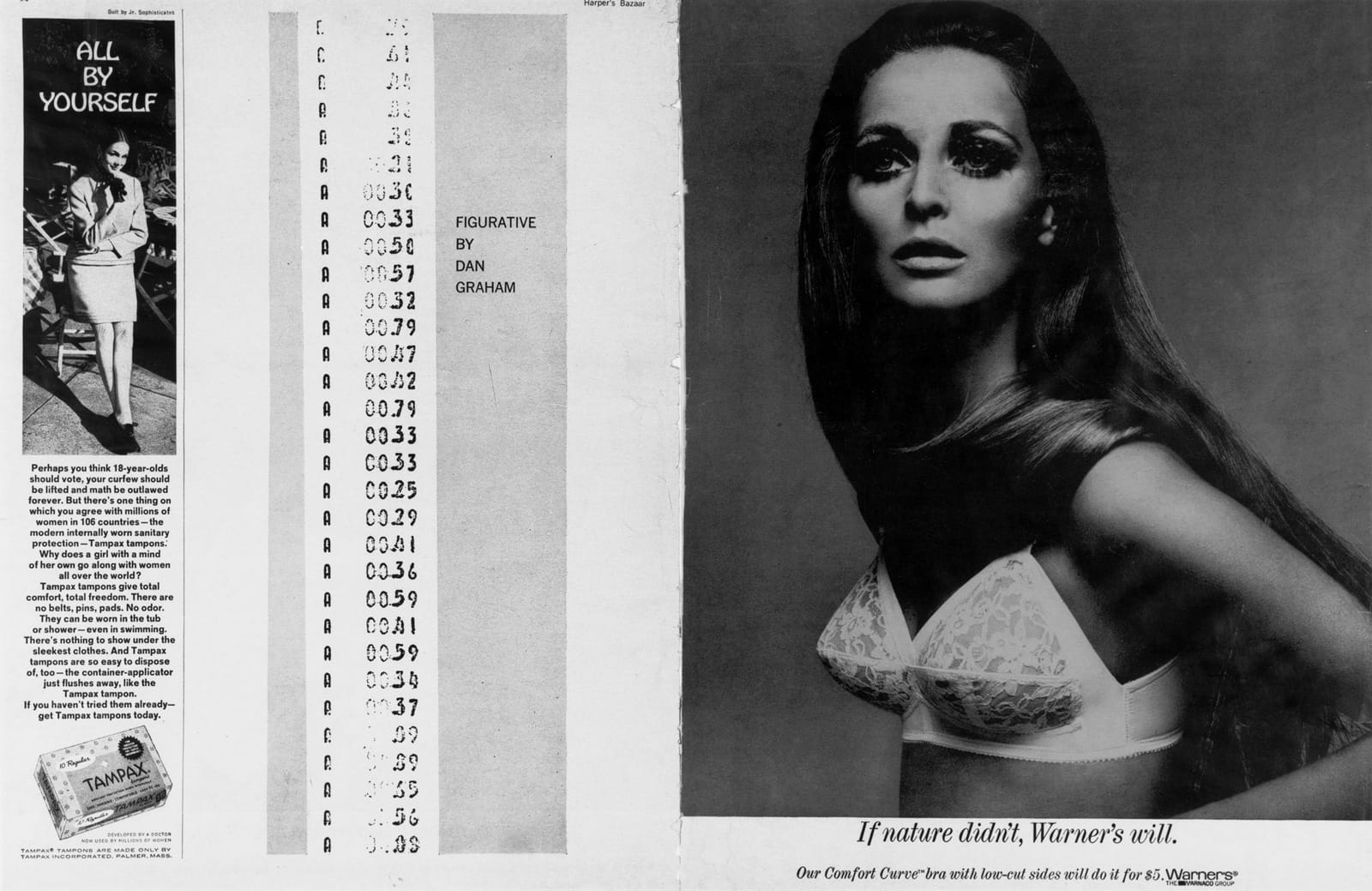
In 1968, Graham’s piece, Figurative, was published in Harper’s Bazaar, placed between ads for Tampax and a Torpedo bra. Figurative is a strip of paper with a column of numbers stamped down the right-hand side. Placed amongst these commercial images, it provoked readers to consider the economic structures that propped up art and culture.
Harper’s Bazaar, March 1968
The second half of the Stack event shifted the focus to contemporary magazines. Charlie Baker and Mathias Clottu of The Fence underlined how important understanding magazine’s history is for them however, often reappropriating elements from the archive to inform their work. Reflecting King’s ideas from 30 years earlier, they shared how The Fence now includes adverts, which Clottu designs to align with the rest of the publication’s visual language.
Protein AGENCY provides insight, foresight and strategy for global brands that's rooted in culture and the collective knowledge of SEED CLUB - our decentralised research community of 450+ global experts.