A simple ‘x’ at the end of a message is not simple at all.
Digital kisses – a single or multiple 'x' – can be a sign of warmth, politeness, lust or sarcasm. They can end an argument, spark an office romance or enrage you with their passive-aggressive application.
Text kisses are an essential part of the British lexicon, yet a quirk that bewilders many outside the UK. Of course, expressions of affection vary across cultures, but despite each technological development offering a more universal way to communicate our loving feelings – someone’s name in your BBM bio, an extensive catalogue of emojis, story likes – written kisses have persisted as Britons’ preference.
A kiss is fraught with potential meaning, as are the quantity and absence of them. A text sent with a kiss, yet not returned with one, can be read as icy, or that romantic feelings are not reciprocated. If kisses are reduced – you send ‘xxx’ but you only receive ‘x’ back – your mind begins to race with what horrendous act you’ve committed to offend your correspondent.
Then there’s the issue of capital ‘X’ versus lowercase ‘x’. Some believe a capital kiss is actually rude; you’ve not taken the care to change the brash, default big ‘X’ that follows punctuation to the cute, considered small ‘x’. This then raises the question of why you’re using punctuation at all in your texts (exclamation and question marks aside); ending a text with a full stop can be taken as particularly offensive. Science has spoken on this, with one study finding messages ending with full stops were perceived as being less sincere. On top of this, some see a single kiss as potentially patronising. The beloved UK quip, ‘U ok hun? x’, is emblematic of this.
Although ‘x’s are referred to as ‘kisses’, their meaning is not so literal. Kisses are not only sent to those you’d actually kiss, on the cheek or elsewhere. They’re broadly used with people you’re friendly enough with to hug hello and goodbye – a standard valediction. To quote national treasure Gemma Collins explaining the meaning of offering someone a cup of tea, ‘It’s like a hearty gesture’.
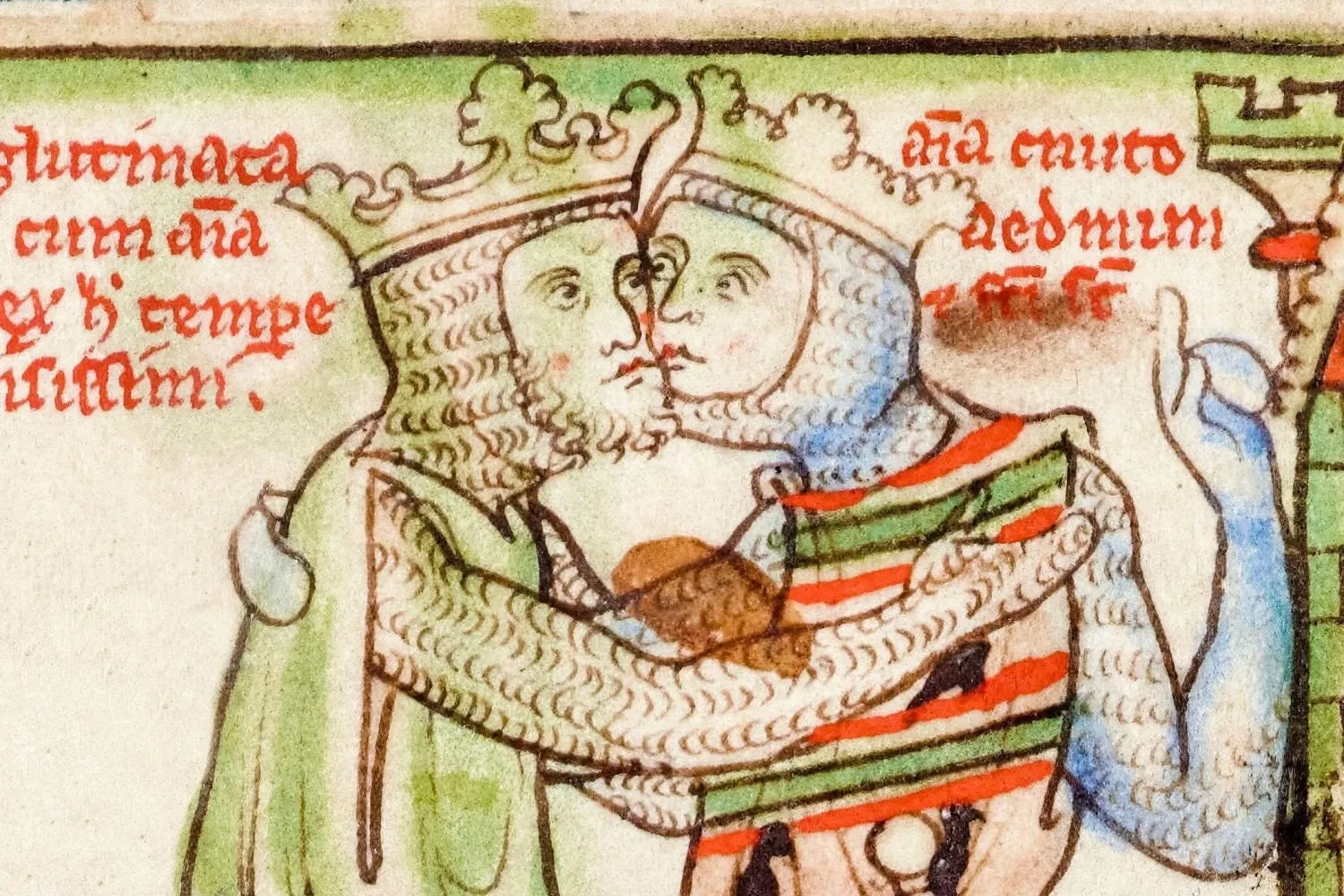
A medieval manuscript illumination depicting the peace agreement between King Edmund Ironside and Cnut the Great in 1016.
A Brief Kisstory
A mark of protection: In Paleo-Hebrew, ‘x’ is the letter ‘taw’, which is described in the Book of Ezekiel (593-571 BCE) as a symbol placed ‘upon the foreheads’ of faithful Jews to spare them from the coming judgement.
The cross of Christ: In early Christianity, the Greek letter Chi (χ) – pronounced as 'Ch' – was combined with the letter Rho (P) – pronounced as 'R' – to create an abbreviated symbol for the name of Jesus Christ: a Christogram.
Holy kisses: A kiss on the mouth was a common religious greeting in the Middle Ages, used to wish peace upon one another. Holy books were, and continue to be, kissed when opened and closed as a sign of respect and devotion.
The feudal kiss: A kiss of fealty was a gesture in medieval Europe which sealed the bond of loyalty regarding a legal agreement, often between feudal lords and their liege subjects.
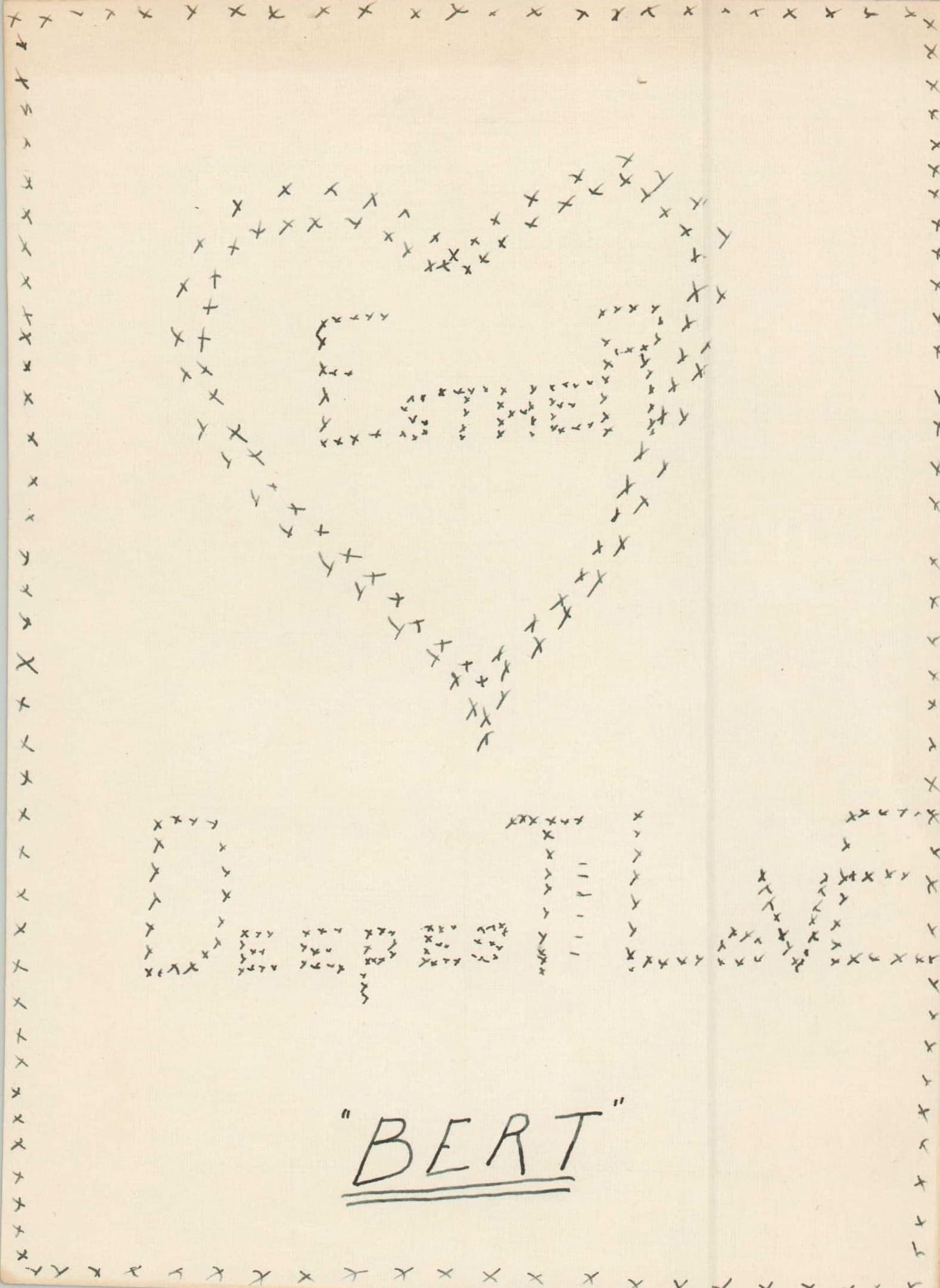
Love letters: The first recorded use of an ‘x’ as a kiss is attributed to British curate and naturalist Gilbert White in a 1763 letter which ends: ‘I am with many a xxxxxxx and many a Pater noster and Ave Maria, Gil White.’ ‘X’s had evolved from symbolising a blessing to being a sign of a physical kiss.
Sealed with a kiss: The acronym SWAK became popular amongst soldiers writing letters home during WWI. Standing for ‘sealed with a kiss’, it was also thought to echo the sound of a passionate kiss, similar to the Middle English ‘swack’ meaning ‘a hard blow’.
A letter from Esther Lossin to Wilbert ‘Bert’ Wichtendahl who served in the US military during WWII. They married at the end of the war in 1945 and remained together for 58 years.
The Professional Pucker
Women and girls face constant scrutiny about how they talk online. A seeming lack of warmth or enthusiasm could result in them being labelled cold or arrogant. As a result, studies show that women, compared to men, use more exclamation marks in their digital communication on average. Punctuation used as a way of tenderising their tone to avoid potential misunderstanding. Kisses could also be considered a form of punctuation, with many women sharing how their texts feel blunt or naked without them.
Women’s words in a professional setting face a special kind of analysis. Their emails – often softened with quantifiers, apologies and carefully, fully formed sentences – are criticised as passive and low on confidence. In contrast, the terse and nonsensical emails their male colleagues send are taken as strong and direct.
Protein AGENCY provides insight, foresight and strategy for global brands that's rooted in culture and the collective knowledge of SEED CLUB - our decentralised research community of 500+ global experts.