What does a new wave of care and repair services reveal about our relationship to clothing and consumption?
Make Do and Mend
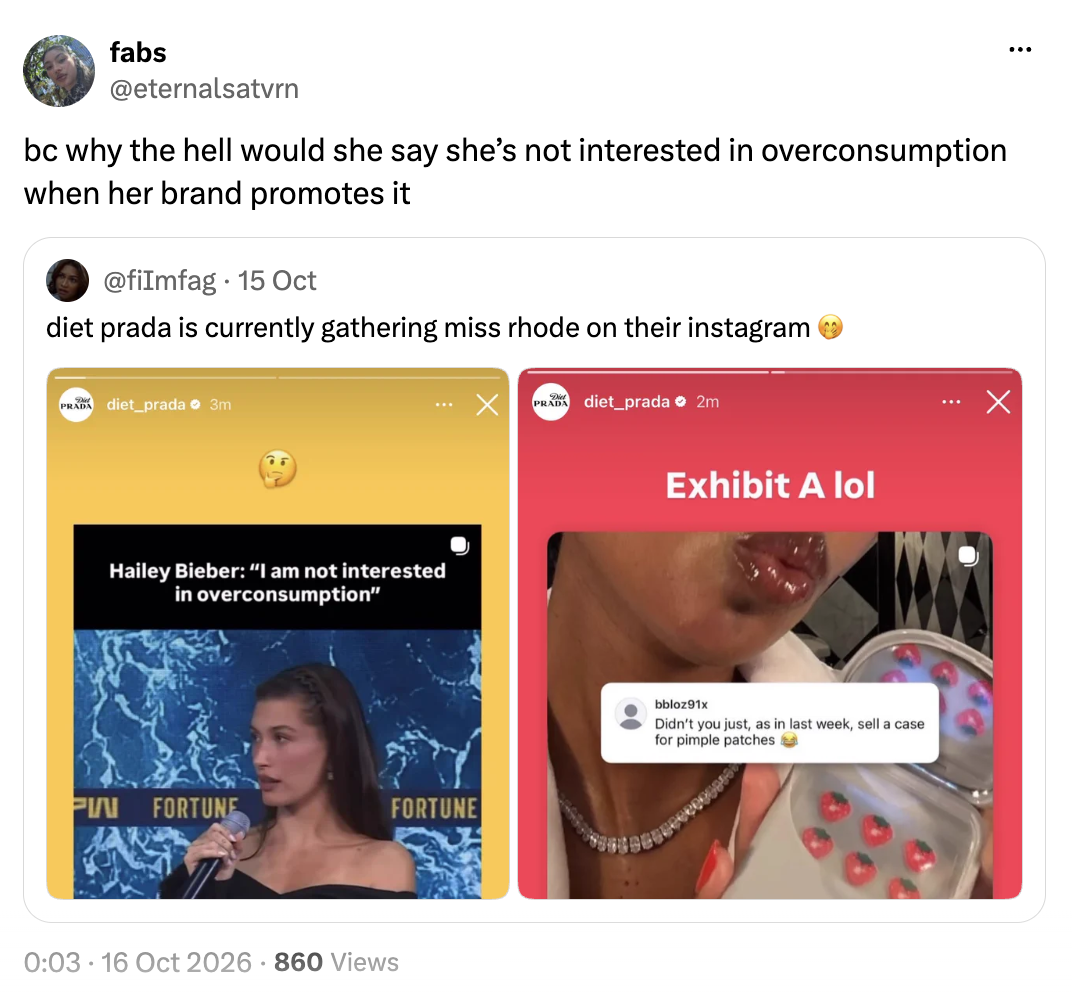
‘I really am not interested in overconsumption,’ Hailey Bieber said during Fortune's Most Powerful Women Summit last month. Her statement instantly sparked a heated discourse, with many noting the hypocrisy of her advocating for conscious purchasing while promoting endless product releases and brand collaborations. One Instagram user commented ‘Didn't you just, as in last week, sell a case for pimple patches,’ while another wrote, ‘I'm not interested in overconsumption… girl then explain this,’ referencing Bieber’s brand Rhode’s lip gloss holder phone case.
Bieber’s statement and the subsequent discussions reveal something telling about our relationship with consumption today. Whereas once, flexing your hauls of clothes and beauty products was coveted (think early YouTubers such as Zoella), now, demonstrating your restraint and considered purchasing practice are virtues to proudly flaunt, even if your alleged control isn’t necessarily true.
This shift has occurred largely because fast fashion has made mounds of clothing excessively cheap and available, and when anyone can get anything, value is found in taking care of what’s already out there. The popularity of resale app Vinted (which has surpassed Zara and H&M as France’s top fashion retailer) and culture’s obsession with so-called archival fashion epitomises this.
Lauren Sánchez Bezos in a skirt suit from John Galliano’s spring 1995 collection
We can also draw ties between this and the pushback against social media’s quick and dirty thrills, with people opting for slower (or cooler) forms of media and entertainment, such as chess clubs, literary salons and film clubs, with this becoming something of a premium. AI’s offering of instant, perfect (albeit sometimes uncanny) images has also made visible wear and marks of craft a luxury.
What’s now following the mainstream rise of secondhand shopping is a new set of clothing care services. Last month, buy now, pay later platform Klarna launched its Care & Repair service in the UK and France. Customers can select an item from their order history that’s in need of cleaning or mending, and Klarna will match them with a local specialist.
While Klarna’s own research found only 14% of UK shoppers have used a brand-backed repair service before, the brand’s intention to prolong the life of clothing is less about sustainability and more about extending the customer lifecycle. Brands and payment platforms are competing to own what happens to items after checkout, because that’s where the next sale starts.
Protein AGENCY provides insight, foresight and strategy for global brands that's rooted in culture and the collective knowledge of SEED CLUB - our decentralised research community of 500+ global experts.