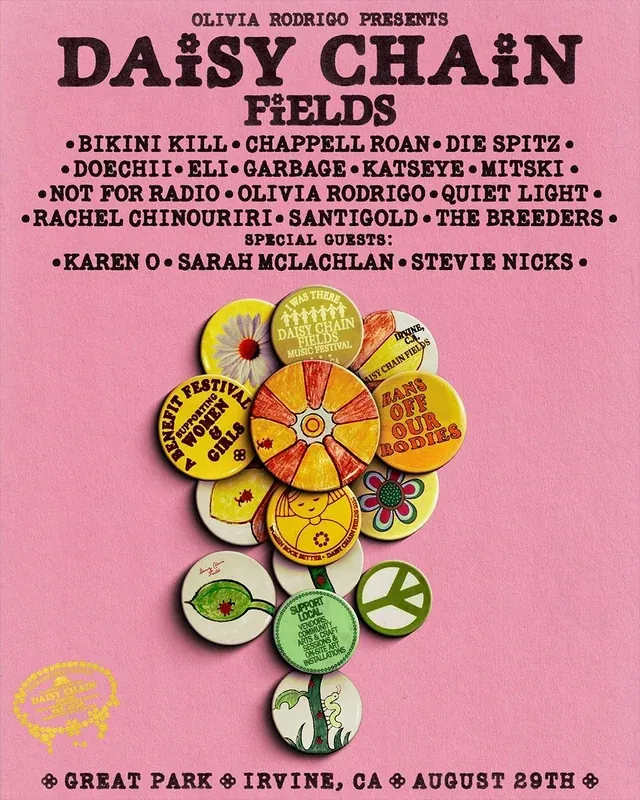
At the beginning of summer, Olivia Rodrigo announced her inaugural Daisy Chain Fields festival: a one-day event which will take place in Irvine, California on 29th August, acting as a final curtain to festival season. The all-female line-up boasts heavyweights including Chappell Roan, Stevie Nicks and Katseye, alongside rising stars such as Rachel Chinouriri and Quiet Light. In line with this, all net profits will be donated to organisations supporting and advocating for women and girls, and interwoven with the performances will be education resources, community-led art experiences and fan pop-ups centred around female rights and empowerment.
Daisy Chain Fields’ refreshing approach to the festival formula prompted SEED CLUB to reflect on the evolution, and creeping corporate takeover, of these experiences. And ultimately, how brands can bolster cultural events without taking the spotlight away from why people are actually there.

Sophia Epstein shared how surreal it’s been to watch once indie, grassroots festivals convert into corporate entities: "Reading & Leeds festival become 'Pepsi presents Reading & Leeds', 'Debenhams presents Camp Bestival', 'Klarna presents Latitude', 'Audi presents Wilderness', all the logos incorporated into the festival’s logo.” The identities of these events defined by sponsorship rather than spirit.
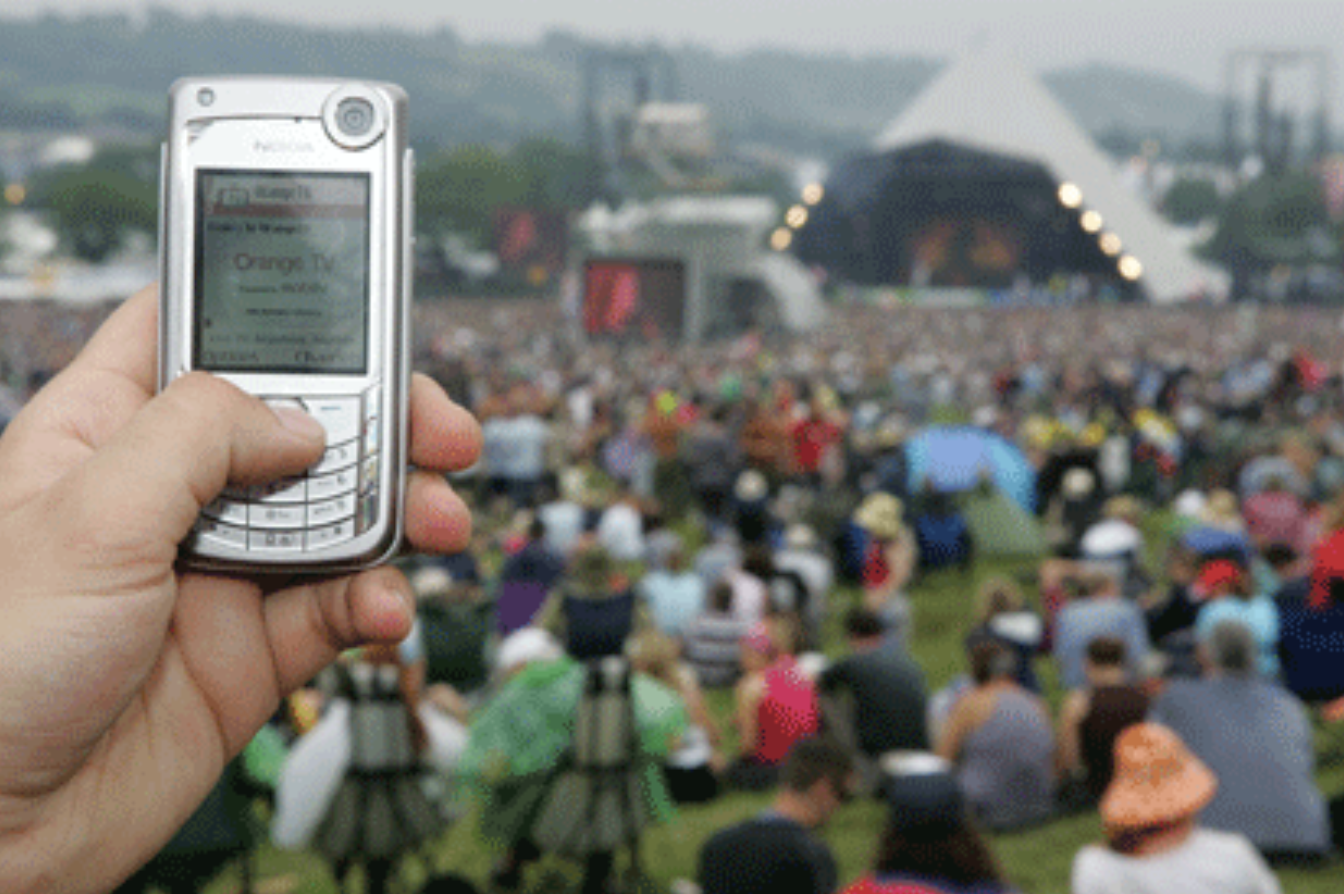
Looking back on the early days of brands’ involvement in the festival circuit, both Epstein and fellow SEED CLUBBER, Andy McAllister outlined how the presence of telecom brands served a truly useful function. For example, McAllister recalls his experience of Orange at Glastonbury 2000, which installed a phone charging station that was open to anyone, not just those with an Orange SIM. “This was in the days when Orange were still owned by Hutchison Whampoa,” McAllister explains, “and had all these cool extra touches, like fish tanks in their retail shops, and a feng shui consultant who made sure all the spaces had positive energy, before the nightmare of mergers and takeovers that led to it becoming EE.” The experience wasn't shoe-horned or overpowering, it blended in while acting as infrastructure to support the existing ethos of the festival.

Over the years, Glastonbury has continued to resist being dominated by brand sponsors, instead hand-picking partners who align with their unique character, such as Barbour, Land Rover and Co-op. But their collaboration with telecom companies is still crucial to prevent Worthy Farm from becoming a dead zone. Musing on what this means for brands, Epstein considered, “Maybe it hinges on usefulness rather than attempting to show how ‘cool’ you are.” Offering another example of this strategy, she pointed to skincare brand CeraVe at this year’s Cross the Tracks, which handed out free suncream to attendees. It was something considered and relevant, which she says “almost made up for the huge signage”.
But for McAllister, Heineken’s sponsorship of Sonar Lisboa last year did not make up for the huge signage. “Not only was the audience forced to drink shite beer all weekend, as that was the only drink you could buy at any of the bars,” he said, but the obtrusive branding “stood out like a sore thumb” and “didn’t match any of the rest of the decor at the festival.” Rather than tailoring the brand experience to the festival and amplifying what’s already there, Heineken’s generic and bold approach ended up making people feel like the brand was being forced down their throat, quite literally.
Both to avoid such clashes and to boost their affiliation with culture, some brands have taken matters into their own hands. Premium fashion marketplace Revolve has been hosting their own festivals since 2015, which take place on a private estate near the Coachella site, but is positioned as far more exclusive. H&M has also ridden the Coachella buzz. In the days leading up to Coachella 2025, they staged a 5,000-person party in Downtown LA, with performances from Robyn, Doechii and Jamie XX. But this wasn’t the retailer's first attempt at inserting themselves into the music scene. In late 2024, as the aftershock of brat summer still reverberated, they put on shows with Charli xcx in a giant east London warehouse and New York’s Times Square.


Drawing attention to how the aesthetic aspect of festivals has eclipsed the musical in some cases, Nic Allum argues how these particular festivals have become “more of a brand and content convention or fair (both corporate and creator brands) with music as a backdrop and performances staged for content capture more than they are for crowd interaction.” Designing brand experiences that look good online but fall flat IRL and lack any cultural grounding is a shortsighted strategy.
Instead, Ana Raucea outlines two methods that brands might consider.
- The first is “High Adrenaline/High Utility”: brands underwriting a luxury or thrill attendees might not otherwise access. Schwarzkopf offering a free styling suite at Primavera Sound 2025 exemplifies this. Free of charge, Schwarzkopf stylists refreshed festival-goers' hairstyles, while touch-up stations let people do so themselves.
- The second is “Radical Seclusion”: providing people with a space to escape the noise and get a flavour of the local scene. At this year’s Primavera Sound, the festival’s official ticketing partner, Fever, collaborated with design studio Naked Space to create an immersive, sensory environment. One section included listening stations where attendees could lounge on cloud-like forms, put on a pair of headphones and tune into any stage in real time. Another served up cuisine from Barcelona restaurant Mesa Lobo and wines from nearby vineyards. And to top things off, each day a DJ from Barcelona’s underground scene took to the decks: artists that weren’t billed on the official line-up but defined the city’s sound.


Fever House, Primavera Sound, 2026
Raucea is also the author of the SEED, The Pop-Up Problem, which considers why brand experiences have started to feel so hollow. She writes, “The pop-up has become a box to tick: proof that a brand showed up in culture, regardless of whether culture noticed.” Brands who simply slap their name onto a festival, without considering how they can actually align with the ethos of the event, risk being labelled as inauthentic or try-hard. And perhaps some companies have no reason to be there at all. Enter British management consultancy EY, which asked revellers at Portugal's NOS Alive festival to “fEel the vYbe”.

That said, Allum highlights that Daisy Chain Fields might cut through the sponsorship-saturated landscape, but the festival is still produced by C3 Events, which is majority-owned by Live Nation Entertainment. This week, it came out that a UK regulatory body is warming up to investigate the event and ticketing behemoth, which follows a New York jury ruling that Live Nation runs a monopoly in the US, enabling it to charge inflated and unfair prices.
Joe Muggs shared how he’s “watched one grassroots festival, The Big Chill, be completely destroyed by Live Nation (of course) taking it over and ravaging it with branded or experiential BS that meant nothing to its core audience.” Muggs does offer some hope however, identifying how brands can show up at festivals in ways that feel genuinely uplifting. Gilles Peterson's We Out Here is what he defines as “the epitome of how a small-medium festival can keep its spirit and identity”, with brands such as Monkey Shoulder and Carhartt acting as true collaborators and supporters.
So, if you're a brand planning a festival sponsorship or pop-up, make sure you consider why you're doing it, who you're doing it for and what you're adding, rather than extracting, from people's experience.
| SEED | #8429 |
|---|---|
| DATE | 21.07.26 |
| PLANTED BY | PROTEIN |