Heat is no longer background noise – it’s shaping culture.
Summer 2025 felt like the first summer we struggled to “brand”. Even the conversation around the song of the summer felt shakier than ever. But this year is arguably easier to pin down. Not because we’ve converged on a defining track, aesthetic or movement, but because we’re converging around something else: heat.
Heatwaves have already disrupted key moments in the European summer calendar, from the French Open to Fête de la Musique. Across the Atlantic, FIFA was prompted to swiftly reverse a decision to ban reusable water bottles at World Cup stadiums, which would have forced fans to buy water on-site. The tournament has also sparked discussion around mandatory hydration breaks, an unprecedented measure underscoring how seriously football now has to take heat risk. Not all events are so adaptable, though. In the Netherlands, the country’s biggest hard dance festival was cancelled mid-event due to a “code red” heat warning in June, with tens of thousands of campers evacuated overnight.
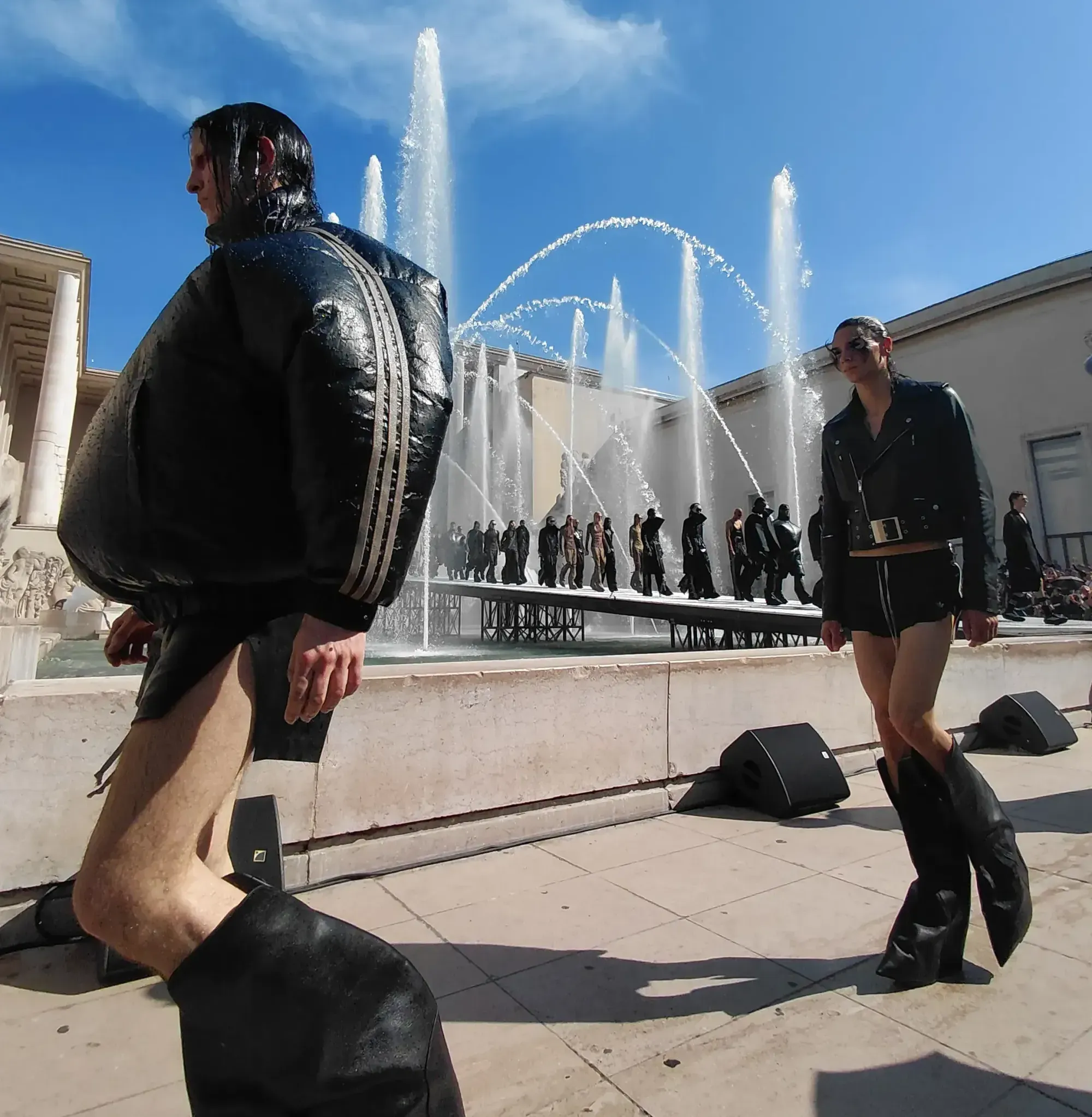
Rick Owens SS27
Responding to heat disruption is becoming a key constraint for everyone to consider – not just companies staging events, but product-focused brands too. One sector where the full spectrum of disruption is especially visible is fashion. Paris Fashion Week Men’s SS27 saw houses scrambling to keep guests cool with mist machines, chilled towels, parasols and iced Evian on silver platters, often rescheduling runway times while models sweated through wool, fur and latex.
A more proactive response came from Rick Owens, whose show incorporated fountains and mist into the staging itself, sending models out in adidas ClimaCool looks with built-in fans and ice vests. This kind of built-in adaptation is already being explored by designers in places like Singapore, where experiments with jade, biomimicry and airflow modularity are being used to engineer thermal regulation directly into clothing.
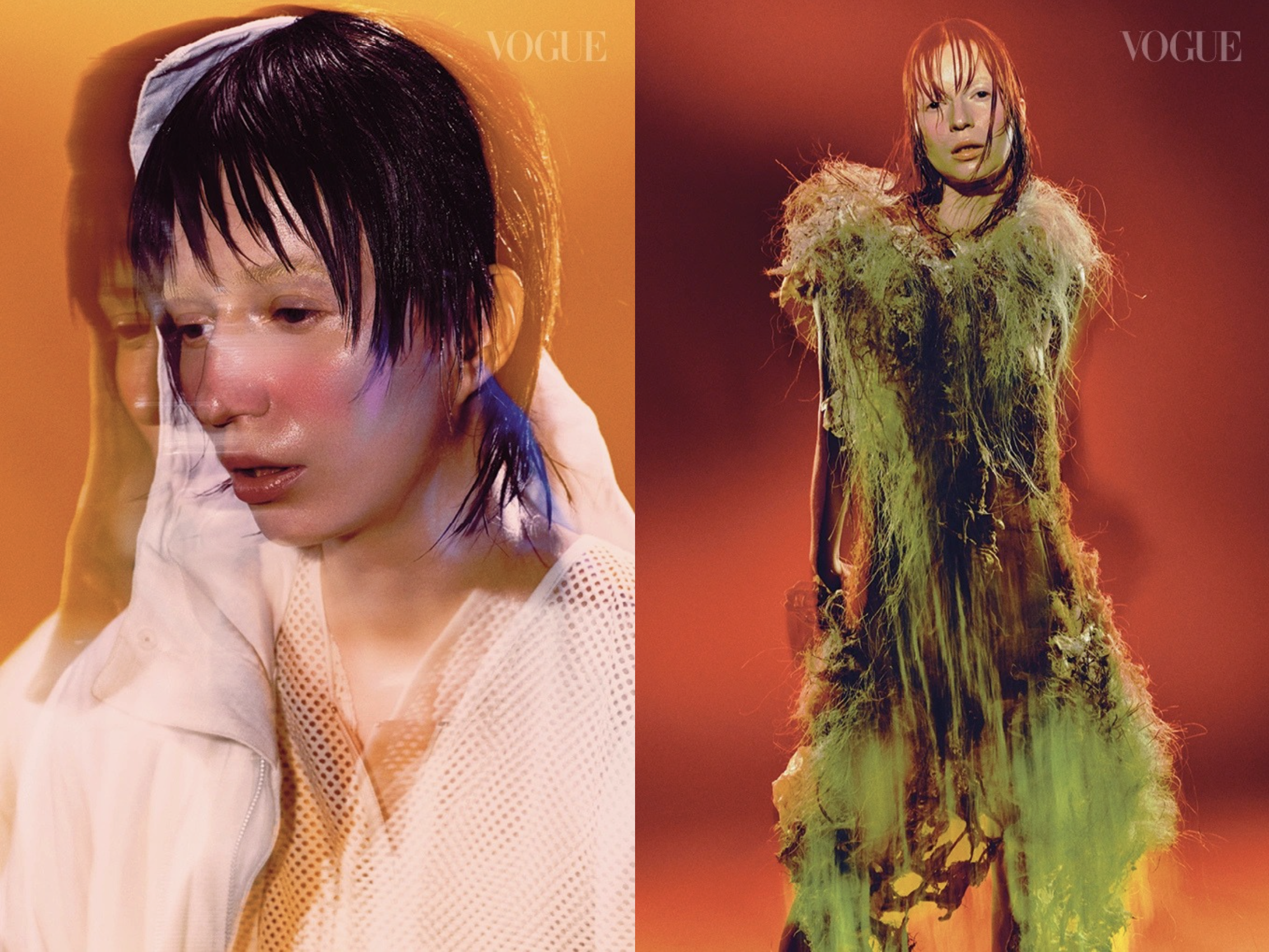
Jaimus Tailor; Buj Studio
It’s the kind of apparel you might associate with science fiction, like the stillsuit from Dune, a full-body technical garment designed for desert survival. The franchise, buoyed by Denis Villeneuve’s adaptations, has helped fuel the rise of “desertcore” online – aesthetic references drawn from Dune’s otherworldly costumes as well as the palettes and silhouettes of MENA dress traditions.
Protein AGENCY provides insight, foresight and strategy for global brands that's rooted in culture and the collective knowledge of SEED CLUB - our decentralised research community of 450+ global experts.