Published in 2015, our Age REPORT asked “What does it mean to be old today?”, considering how traditional stereotypes were disintegrating, and neat demographic divisions blurring. 11 years on, the question has become even more pertinent as culture splinters between those trying to prevent aging and those repositioning it as a luxury.
In light of the extreme measures people are taking to achieve “longevity”, and refreshed narratives around what it means to grow old, we explore what defying age means today and why brands should embrace the wisdom, freedom and vitality it brings.
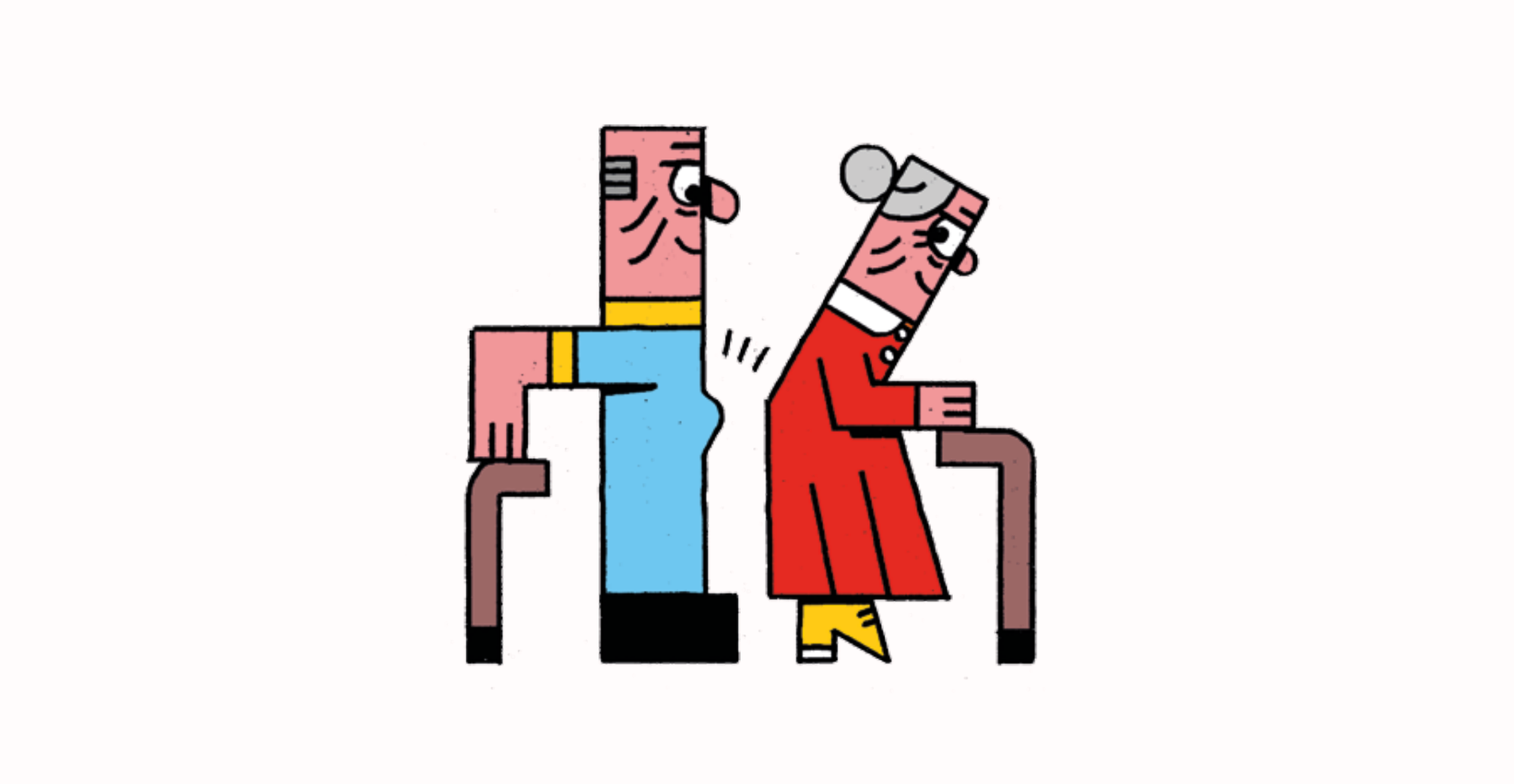
Illustration by Jay Wright from Protein's Age Report
By 2030, 1 in 6 people in the world will be 60 years or over, the age that was marked as the point of retirement for decades. Making up a significant portion of this cohort will be Gen X, which encompasses those born between 1965 and 1980. Sandwiched between the Baby Boomers and Millennials, Gen X is often referred to as the “forgotten generation”. As SEED CLUBBER Noelle Weaver points out, it’s a generation frequently conflated with Boomers. She also observed how some older Millennials – born between 1981 and 1996 – are even being labelled as “old”.
According to studies from World Data Lab and NIQ, Gen X is the generation who will hold the top-spending spot across all consumer categories until at least 2033, and which makes up around one-third of total spending within the beauty industry. Sophia Epstein also pointed out how much wealth Baby Boomers still possess, owning 31% of US wealth, despite making up only 20% of the population. Yet still, brands are dying to curry favour amongst Gen Z, and increasingly, Gen Alpha, as reflected in this year's Sephora Kids chaos.
The extent to which people are pursuing anti-aging – or in some cases, reverse-aging – is unprecedented, largely attributed to how widely accessible such substances and practices have become. GLP-1s such as Ozempic, which 1 in 8 people in the US are now taking, are the most potent example of this.
The deathly pale golden boy of biohacking and aging prevention is Bryan Johnson. The self-proclaimed "rejuvenation athlete"’s strict regime is not just about defying aging, but part of his “Don’t Die” philosophy, which has seen him inject his 17-year-old son’s blood into his body, amongst other desperate measures to halt the passing of time.
But on the other end of the spectrum is a far more reassuring and refreshing approach to aging. Instead of erasure, it’s being embraced, especially in fashion: Maggie Smith for Loewe in 2023, Christopher Walken for Saint Laurent in 2025, and Gillian Anderson closing for Miu Miu in 2026 – figures whose faces express a life well lived.
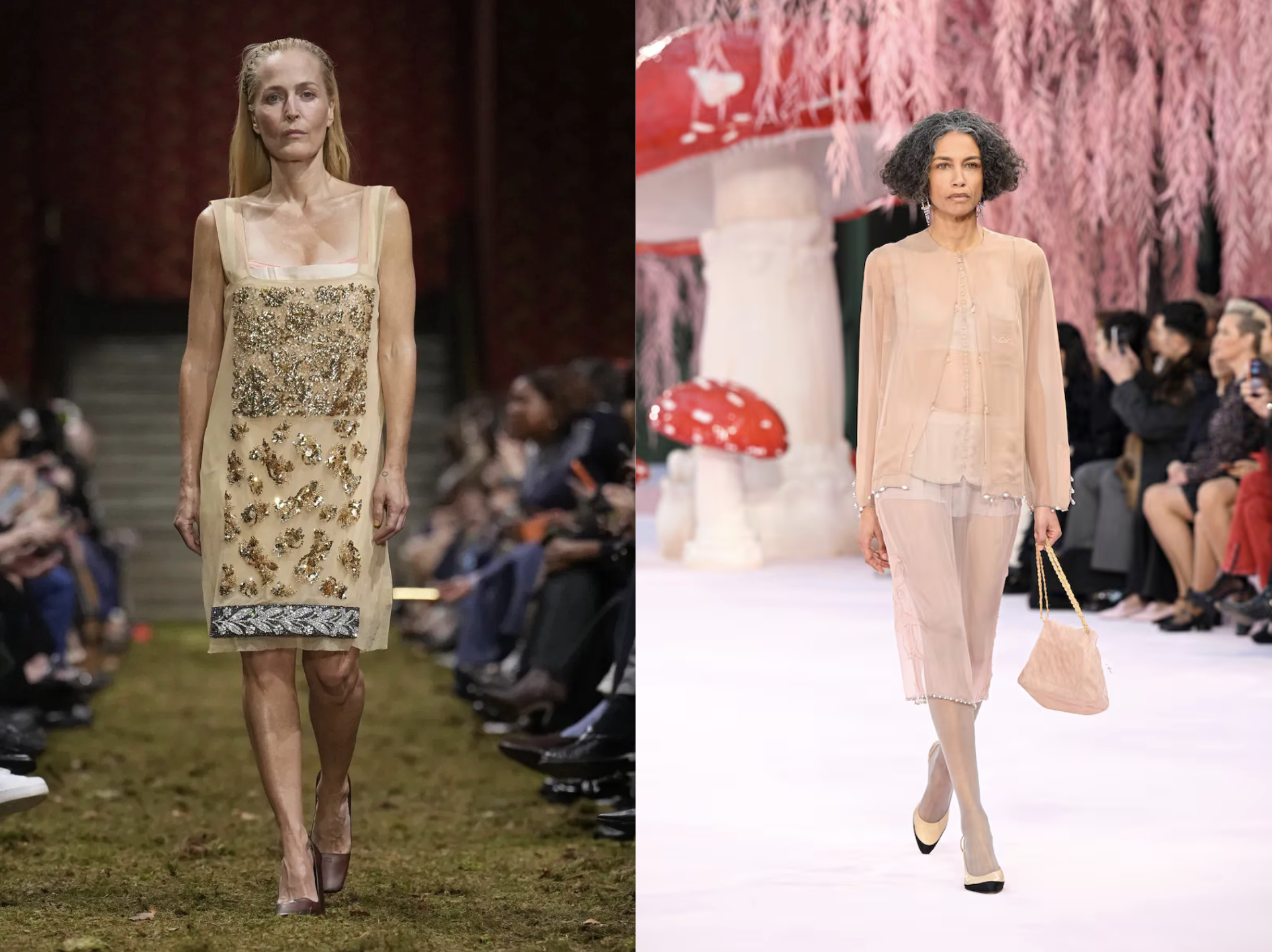
Gillian Anderson for Miu Miu; Stephanie Cavalli for Chanel
Opening Matthieu Blazy’s debut Chanel couture show was 50-year-old Stephanie Cavalli, adorned in a sheer suit, with diamond earrings dangling from her grey bob. In subsequent shows, Blazy has made it clear that older models aren’t some sort of marketing gimmick, they “bring a completely different dimension to the clothes,” he said backstage. “They have life; they’ve seen the world.”
Fashion commentator Chani Ra expands on this concept in her piece for Who What Wear: “The new face of aspiration is rooted in reality,” she writes, “and the brands young women want to buy are those they can grow with.” Ra also emphasises how meaningful representation of women over 40 is for the trans community, noting Dominique Jackson walking for Conner Ives this year and Connie Fleming featuring in a MAC campaign. Actor and trans rights activist Rajee Narinesingh shared how, “If you see older transgender people, it shows the younger community that it's possible I can have a life. I can live to an older age.” Wearing your age is a badge of honour, not something to conceal.
Protein AGENCY provides insight, foresight and strategy for global brands that's rooted in culture and the collective knowledge of SEED CLUB - our decentralised research community of 450+ global experts.