The thread in SEED CLUB, with all its millennial-finality, is titled : The Death Of The Corporate Dream. The mood is ambivalent, cynical, curious. Less a funeral, more a post-mortem conducted in real time.
Because while the cultural script says the office is over – automated, alienating, “bullshit” – the algorithm is telling a different story. Corporate life isn’t disappearing. It’s becoming content.
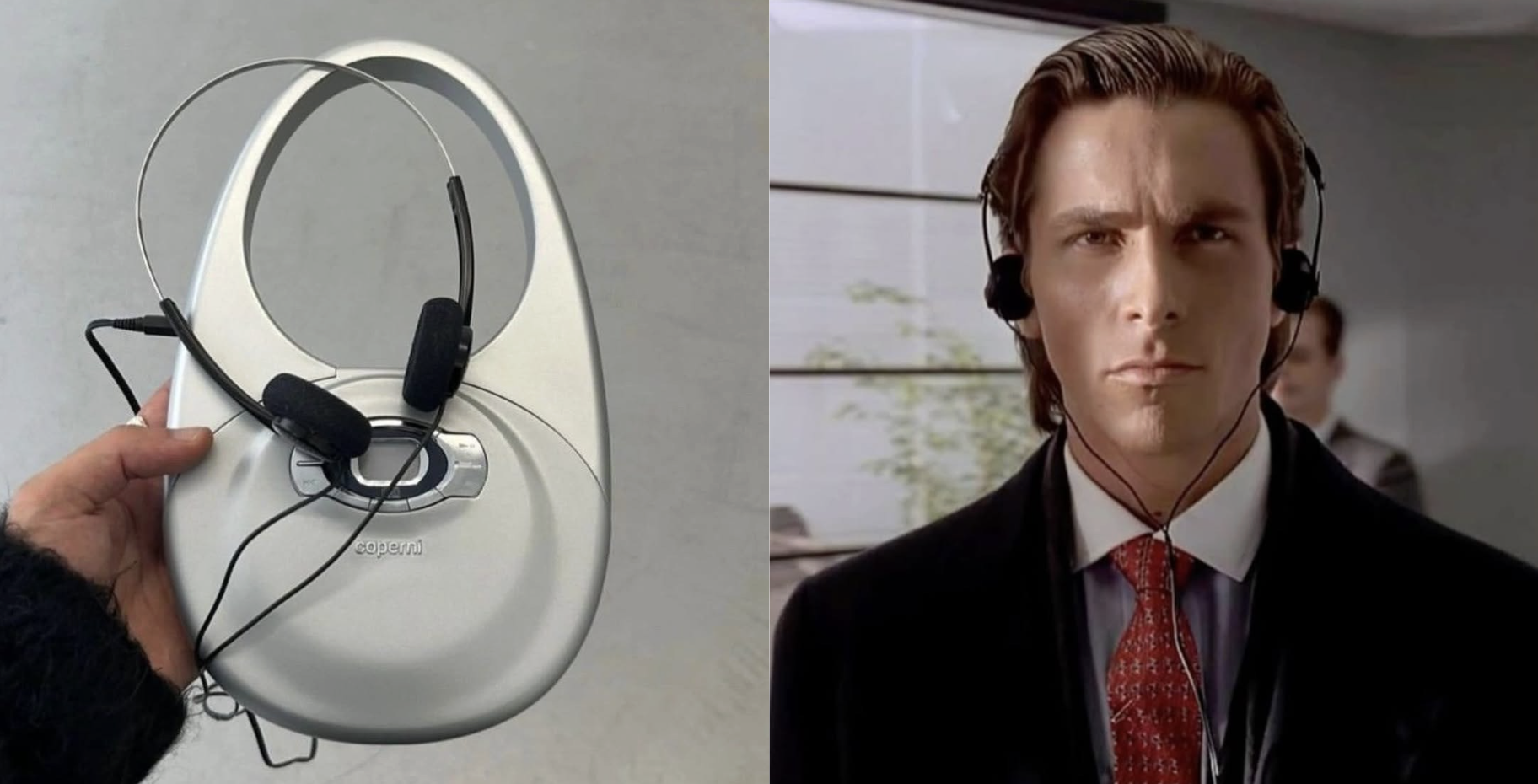
Look at Kat from Finance. Sample post: “Patrick Bateman would lose his mind if he saw this” below a picture of an iteration of Coperni’s popular Swipe bag but with a new, very distinctive feature: it doubles as a CD player. Most of her pictures are selfies in her office bathroom or posed on her desk: “This is your reminder to keep doing your daily stretches” one caption reads. As her Instagram bio puts it: “A corporate slay a day keeps the doctor away.”
Or take Natalie Marshall, known online as Corporate Natalie. She has made a name for herself by highlighting the absurdities of office life: how everything is “urgent”, the dread of corporate jargon like “synergy” and the performative insistence that “work is your life”. Her TikToks have been viewed tens of millions of times, resonating because viewers instantly recognise the everyday office rituals she dramatises.
Marshall is part of a growing wave of “9-to-5” influencers. Around a million TikTok videos now appear under #9to5 or #CorporateTikTok. Some show gruelling schedules; others turn attention to the small routines – the morning coffee, the commute outfit, the pre-work ritual before logging on. It could read as mundane, but audiences watch because it feels unfiltered and real in a way few scripted dramas achieve.
Other creators have experimented with the same format. Jemima Grace, who counts over 300,000 followers on TikTok and 200,000 on Instagram, recently left her office job, leveraging her following to explore brand collaborations. Connor Hubbard, another corporate influencer, amassed a large audience documenting his analyst life – but after leaving his job to focus on content full-time, some fans argue he lost the relatability that first drew them in.