
What’s Next For Social?

Continuing our series on the state of social media, SEED CLUB identifies the new moods shaping online culture.

For more than a decade, social media felt inevitable. Log on, scroll, post, repeat. But lately the vibe has shifted. The platforms that once promised connection now feel like infrastructure for extraction and addiction – harvesting attention, data, creative labour.
In a sprawling SEED CLUB thread our global community of experts began asking what's next for the platforms we all spend too much time on? The conversation reads like a snapshot of a moment where the internet feels both exhausted and on the brink of reinvention — which began with a provocation from Malena Roche two months ago:
“There’s been tons on the news about Musk and Zuckerberg and the TikTok ban, but I want to talk about people’s desire to find a new ethical home for their online personas. Seems like all major channels are owned by technocrats, but I see an appetite for something else... People want to exist online without unwillingly helping rich immoral men get richer.”
The Technofeudalism Moment
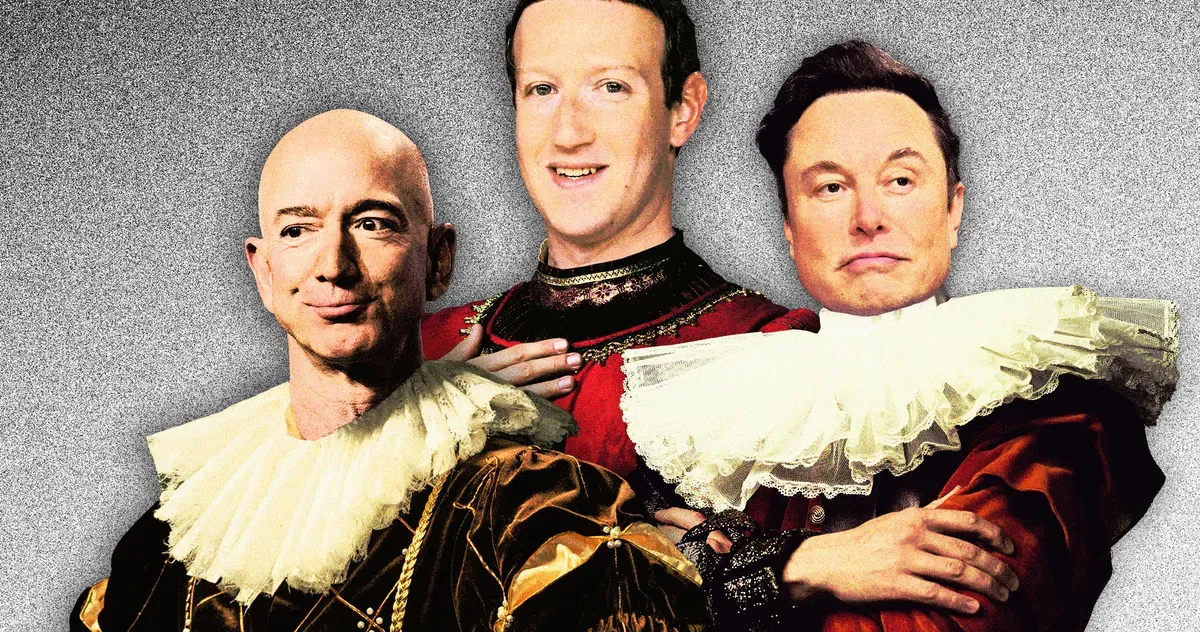
A big theme in the thread is something economists and writers have increasingly called technofeudalism – the idea that digital platforms operate less like open markets and more like medieval estates, where a few powerful players control the infrastructure and everyone else works the land.
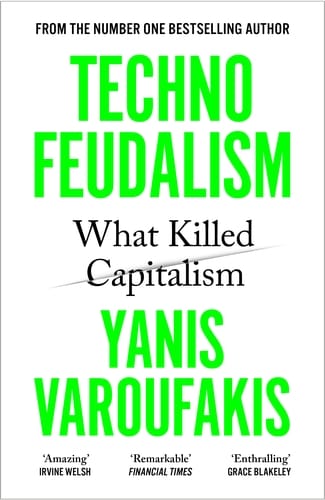
Roche references the concept directly:
“I’m also reading a book that’s somewhat on this topic called Technofeudalism, and it touches upon some interesting topics such as people being monetised for data/content, which I guess, at first, was not perceived as problematic, but as more and more online spaces become toxic and bully central, this thesis becomes more and more infuriating.”
That feeling – of slowly realising you’ve been working someone else’s digital farm – seems to be spreading. Juliana Callia-Long frames the next phase as a potential rebellion against the system:
“I’m also interested in the concept of ‘technofeudalism’ and the necessary counter-movement that may need to emerge. I’m thinking of something around social platform fluidity and disobedience, but I’m still unsure how it will manifest.”
For brands and cultural organisations, this shift matters. The platforms that once functioned as neutral media channels increasingly feel political – raising new questions about where brands show up and what ecosystems they support.
Migration Era
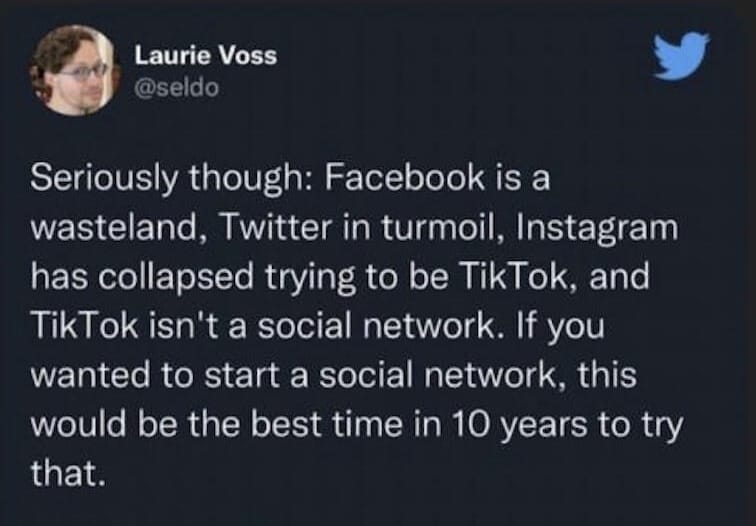
Right now, though, the most visible response has simply been migration. People leaving one platform for another, hoping the grass is greener.
Laura Holliday describes the moment:
“I feel like we’re in an era of migration atm, where a lot of focus seems to be on replicating existing platforms as closely as possible and just instructing everyone to flock there (eg. X → bluesky, tiktok → rednote), and the choice for many is either move or otherwise abandon that style of platform completely, which many do. But the result is these places aren’t able to gradually build their own identity naturally or instead have it erased and something else transplanted onto them which is disruptive and unhelpful. We need to move away from it but not sure what the solution is”
Roche picks up on the deeper question underneath:
“It raises another question: is the problem with social media platforms the model or the execution? Because if the problem is the execution, this makes sense. One platform copies the other, and so on. But if the problem is the model, then I wonder if there’s space for a new type of disruptive social media network to arise.”
For brands, that distinction could be important. If the problem is simply bad actors, new platforms will replace old ones. But if the model itself is broken, the next wave of digital culture may look radically different.
Enshittification
One explanation for the current disillusionment comes from a concept that has become a meme in tech criticism: enshittification. Shikhar Bhardwaj summarises it like this:
“Enshittification, also known as crapification and platform decay, is the term used to describe the pattern in which online products and services decline in quality over time. Initially, vendors create high-quality offerings to attract users, then they degrade those offerings to better serve business customers, and finally degrade their services to users and business customers to maximise profits for shareholders.”
The cycle is familiar: platforms start fun, then become advertising machines. For marketers, it’s a cautionary tale. The attention economy that brands rely on may also be what eventually alienates audiences.
Performance To Intimacy
Several contributors believe the next phase of the internet will shift away from mass broadcasting and toward smaller, more private spaces. Henry Cooke points to emerging behaviour already visible in research:
“Many users feel trapped by the addictive nature of platforms like TikTok and Instagram. These platforms are designed to prey on users’ limited attention spans by serving endless streams of targeted content, which has led to resentment and concerns about mental health. As a result, there is a noticeable shift away from global timelines, such as those on Facebook and X, towards more private digital spaces like group chats and Discord servers.”
In other words: the public feed may be losing its cultural dominance. Keva Epale echoes the idea:
“There is a profound realisation of where we truly want to share parts of our lives… The answer may lie in real-life interactions and less in personality-driven social media. Instead, we might gravitate toward more confidential, secure platforms – underdog ecosystems where we can attempt to exist digitally in a different way.”
This shift suggests a future less about broadcasting and more about community presence – brands showing up in spaces where people actually gather.
Death Of The Profile Page
Another possibility? The entire architecture of social media could change. Eileen Meng argues the traditional profile page might be outdated:
“I would love to see the ‘profile page’ go,” she writes. “It creates a permanence that feels unnatural and is archaic really. The ‘close friends’ feature and finstas have been ways to work around needing to construct a ‘self’. Also, engagement is rewarded to the loudest voice in the room, quantifying it, making it inherently performative.”
She suggests future platforms could feel more like environments than identity showcases – borrowing cues from online games where participation doesn’t always revolve around a visible persona. It’s a subtle but radical shift: less self-branding, more shared spaces.
Curated Chaos
While infrastructure debates rage, cultural signals are already evolving. Christina Fakhry highlights a new aesthetic trend spreading across feeds:
“Been hearing a lot lately about the global shift towards curated chaos on social media and how users/creators are putting forth visual displays that aestheticise chaos in slice of life fashion while still being carefully curated [by colour/form/premise]. Everyone is tired of tidiness (bye bye clean girl and anything with ‘core’ attached to it, hello pattern mix and boho revival), but even in chaos, they want to keep control of their storytelling approach by curating their chaos.”
For brands, this signals a broader cultural move away from hyper-polished content toward something messier – but still intentional. Authenticity is no longer raw. It’s styled.
Attention Fatigue
Underneath everything lies a deeper issue: exhaustion. Tyla Jurgens captures the feeling through a quote she shared from a New Yorker article headlined The Battle For Attention:
“She watched one for four or five seconds, then dispatched it by twitching her thumb. She flicked to a text message, did nothing with it, and flipped back. The figures on her screen, dressed carefully and mugging at the camera like mimes, seemed desperate for something that she could not provide: her sustained attention.”
That tiny moment – the thumb twitch – might define the current era of social media. Endless content competing for fragments of attention. Jurgens adds her own reflection:
“This fatigue I feel has also pushed many generations to retreat into private online spaces… as though they can escape some of the overhwelm and feel more curated in what they consume via their private relationship sharing.”
Smaller, Slower, Stranger
So what replaces the current system? SEED CLUB doesn’t have a definitive answer. But several themes keep resurfacing: decentralisation, niche communities, slower forms of interaction.
Jon Jacobsen frames the core dilemma:
“Once curation becomes the business model, it stops being communal and turns into an economy of control… I’m kind of less interested in which app comes next and more in whether we can culturally sustain ‘smaller, slower’ models of intimacy and trust.”
Others point to decentralised networks, open protocols and community-owned platforms as possible paths forward. Tristan Spill expresses cautious optimism:
“I am optimistic about a return to diverse grassroots tech social platforms, away from dark web ‘feudal caves’ and small room slums.”
A New Prompt For Brands
Perhaps the most interesting takeaway comes from Janne Baetsen, who reframes the conversation entirely:
“The very question – what is the future of social media? – keeps us tethered and reactive to an existing (dying/harmful/…) architecture… Perhaps a way to go is to approach it with different questions, such as ‘What do we want the future of social interaction to be?’”
It’s a useful shift for brands, too. Instead of asking what's next, the more strategic question might be: where – and how – do people actually want to connect? The next era of the internet may not revolve around bigger platforms at all. It might be smaller. Slower. Stranger. And for the first time in a long time, that possibility feels exciting.
| SEED | #8394 |
|---|---|
| DATE | 17.03.26 |
| PLANTED BY | PROTEIN |
