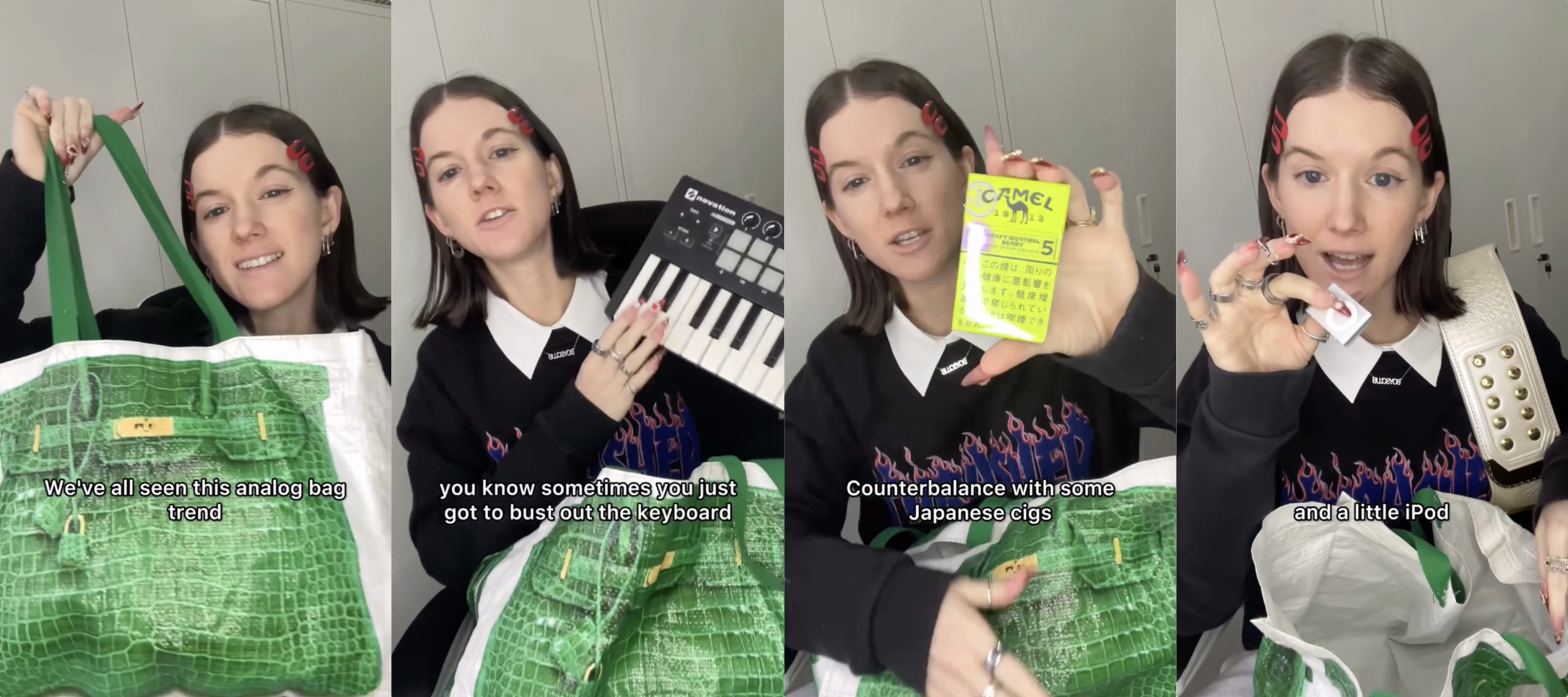
Analogue is becoming a form of resistance, but when disconnection becomes a status symbol, who actually gets to log off?
Born in the late 1990s, I’ve watched the internet shapeshift in real time. It started as a raw tool for peer connection, evolved into an influencer-driven stage for performance, and has now become an AI-saturated landscape where speed dictates culture and virality outweighs meaning.
As synthetic content floods our feeds, the question shifts from what’s trending to what’s trustworthy.
Recently, online influencers and media outlets have started calling 2026 “the year of analogue”. The phrase circulates online – a paradox that perfectly captures the tension of the moment. The message is about disconnection; the medium is still very much the feed.
One unexpected outcome of this shift is the resurgence of analogue and tactile media not as nostalgia, but as infrastructure for meaning, trust and identity. A consequence of an over-digitised world that leads many people to feel burnout, as digital systems optimise for speed, scale and automation, shortening our attention span to a point where many of us can only watch movies with subtitles on.
There’s rebellion in this, too. As companies such as Amazon quietly remind us that we don’t actually own most of what we buy online, physical formats start to look more radical. Tactile media introduces friction, materiality and intention – qualities increasingly valued by young people and smart brands alike.
It would be naive not to acknowledge that the first digital shift also turned real-life connection into performance. It marked the beginning of the systemic curation of everyday life for pictures and videos. The 2012-2013 Tumblr era was also filled with an analogue fascination, but it was much more nostalgic, with the use of analogue filters and vinyl collected “for the vibes” and the romanticisation of being an “old soul”.
The new shift takes it a step further, driving trends like “analogue bags” and “arts and crafts dinner parties,” which convey a moment of disconnection that eventually makes its way onto social media. The transition from offline to online, although unspoken, is made clear from the start through Pinterest-perfect decorations, curated to make photos and videos of the night visually interesting and optimised for social media algorithms.
Protein AGENCY provides insight, foresight and strategy for global brands that's rooted in culture and the collective knowledge of SEED CLUB - our decentralised research community of 450+ global experts.