

Collective Memory

Amid the endless scroll, what would social media feel like if it really mattered?

Scroll social media for long enough and things can start to blur into the same polished loop – carefully-edited lifestyles, recycled memes, AI-generated filler and content that sometimes feels designed less for people than for the algorithm itself. Sometimes the internet feels less like a place where things are actually happening and more like a machine that manufactures attention.
Inside SEED CLUB, one of the most commented-on threads (160 posts and counting) since the community began is simply titled: “What next for social media?” For a lot of people, it’s not just about tweaking social media – it’s about starting over.
One answer currently bubbling up is Collective Memory, a new live-posting platform that tries to pull the internet back into the real world. The rules are deliberately simple: you can’t upload from your camera roll, you can’t use filters and you can only post what you’re seeing right now. Picking up where BeReal dropped off, every piece of content – or “Memory” – is captured live and pinned to a specific place and time, turning the feed into a stream of moments happening across the world in real time.
The Collective Memory feed
The twist is that attention on the platform has actual value. Instead of likes, users stake a native token called ATTN on posts they think deserve attention – meaning the people who capture the moments everyone cares about can actually make money from them.
Below, we speak to Eitan Matteo Caggia, one of the app’s co-founders, about why social media feels increasingly disconnected from reality, how limitations can change the way we document our lives and why anchoring content to time and place might be the internet’s next big reset.
What made now the right moment to build Collective Memory?
Social platforms, as they exist now, go against our most basic instincts. We’ve lost the ability to tell what’s real. Everything is engineered for constant dopamine hits, and the result is sugar fatigue: too much, too empty, too constant. On top of that, AI slop makes you question your perception of reality. Platforms accelerate this feeling because they optimise for their own profit.
How does visual culture work on Collective Memory? How’s it different from the usual social feed, and where do you see it going?
On Collective Memory, you can't upload from your camera roll. You can’t add filters. Everything is captured live, geotagged to a specific place and time. This forces the user to appreciate and use their surroundings to tell a story. What you see is what was actually there. It’s a fundamentally different visual culture rooted in presence, not perfection.
When you give people a very basic set of tools, they find new ways to tell a story. They document 100 times more details than they normally would. Context, Genuinity, and details become more important, and creating a perfect piece of content becomes irrelevant. We believe that visual culture needs to move in that direction, back to familiarity. Consuming content in survival mode, when you constantly question if what you see is real, is exhausting.
Collective Memory uses a native token (ATTN) that can be cashed out – how do you balance financial incentives with healthy cultural engagement? What’s the upside – and the risk – of turning attention into actual cash?
The key distinction is that ATTN isn’t a tip or a donation. It’s a stake. When you invest ATTN into a Memory, you’re making an economic statement: “This deserves attention”. It’s skin in the game. It’s felt by both the staker and the creator, without the cold transactional vibe of handing over cash. This isn’t a strip club. It’s an exchange of attention.
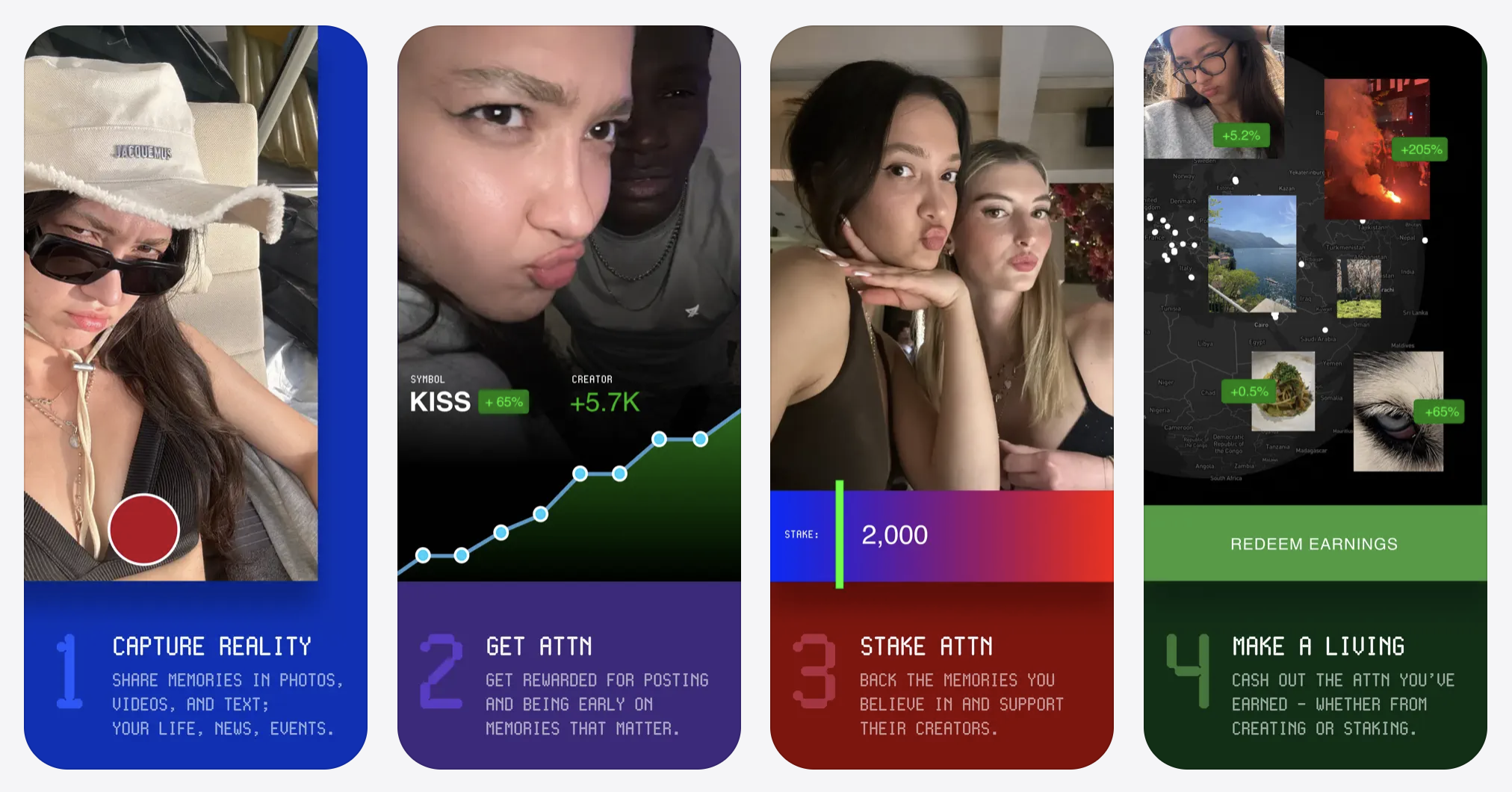
ATTN is scarce in contrast to a like, which costs nothing and means nothing. Staking carries financial value. You think before you stake. This creates meaningful interaction rather than mindless scrolling. As a result, we also see barely any trolling, bullying or griefing on the platform. What you post and what you stake in has financial consequence. The system incentivises taste, judgement and being early to what matters.
The concern people raise is always: “Won’t people just chase money?” But the opposite happens. When attention has real value, people treat it with more care. You're not performing for an algorithm, you’re participating in a market for what matters. And unlike platforms that extract all the value, nearly all our revenue is redistributed back to creators and early supporters.
Is the token system just a feature, or part of a bigger plan to rethink how social networks work?
Absolutely. The social network is the first product, not the vision. What we’re really building is a new information primitive. We call it a “memory”: a piece of content that is geotemporally grounded, unfiltered and carries its own economic value. It’s a building block, not a post built for engagement.
The blockchain is there because we know what happens when a centralised power controls a platform. They extract value upward, dictate rules downward and change them whenever their agendas shift.
The bigger vision is that these memory-building blocks can underpin entirely new systems: search engines, news platforms, AI datasets, dating apps… We're building the infrastructure. What others build on top of it is the exciting part.
Any surprising ways people are putting Collective Memory to work — reporting, creating, or speaking out?
It wasn’t unexpected, but people are using the platform to document some of the most hostile and remote realities around the world. We’ve seen people document their lives in Gaza, the frontlines of Ukraine and, most recently, Iran.
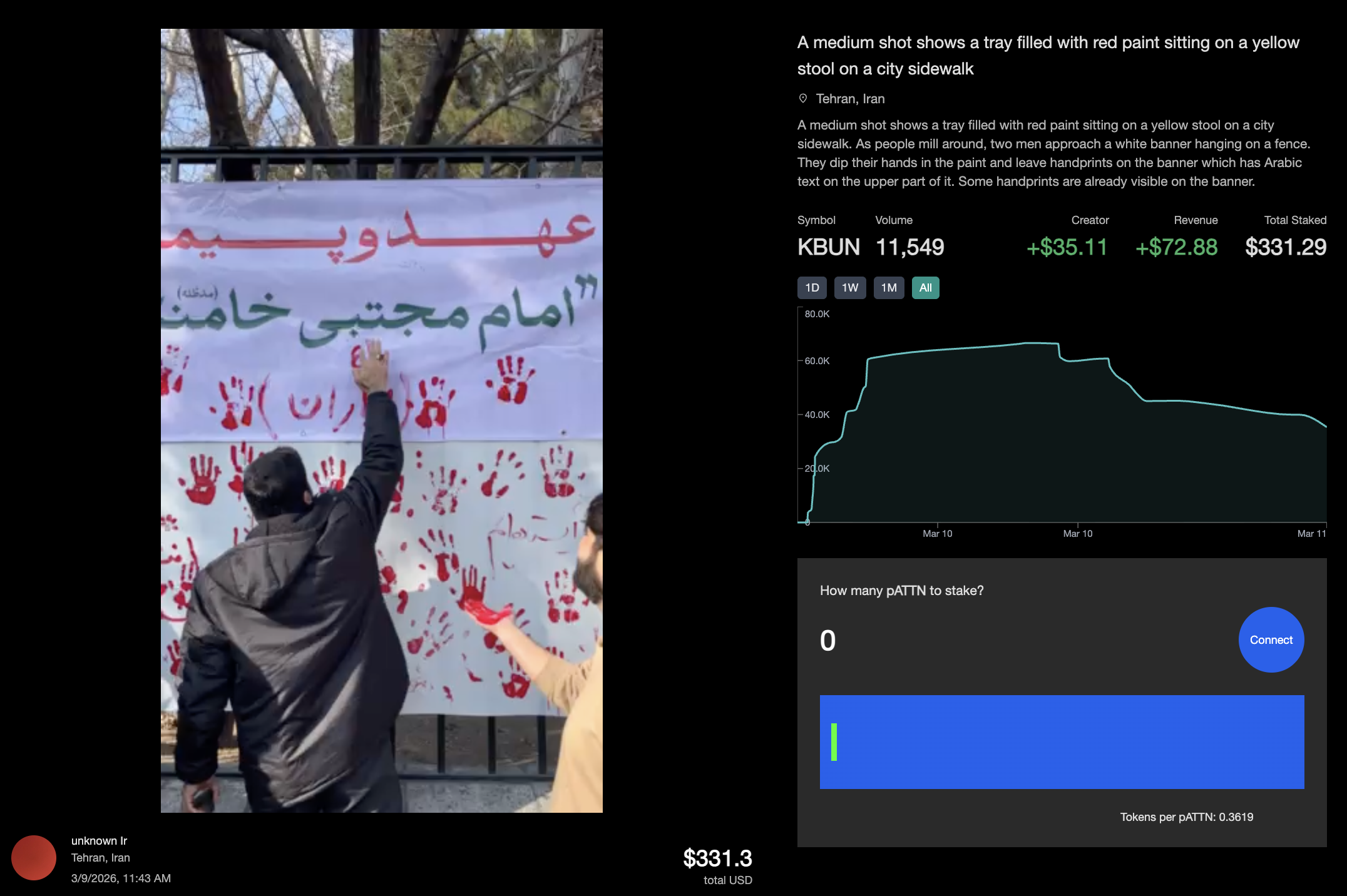
These places are usually heavily censored and prone to embargoes. Collective Memory’s set of features allows these activists and photojournalists to document their reality in a way they couldn’t before. Their content is verified, immutable and almost immediately holds intrinsic financial value that they can access.
| SEED | #8393 |
|---|---|
| DATE | 12.03.26 |
| PLANTED BY | PROTEIN |
