In 2021, Vauhini Vara asked OpenAI’s GPT-3 to help her write about her sister. Since her sister’s death, Vara hadn’t been able to do it herself. The then-emerging technology offered an unusual path through the block. 

This was pre-ChatGPT and the resulting text was novel: a piece titled "Ghosts: I didn’t know how to write about my sister’s death—so I had AI do it for me." Vara’s words were published in bold, with GPT-3’s contributions beneath in Courier New. Littered throughout were what we now call hallucinations: AI-generated responses that contain something false presented as fact. But, as the story unfurled, the bold sections lengthened, with the final chapter almost entirely made up of Vara’s own words. 

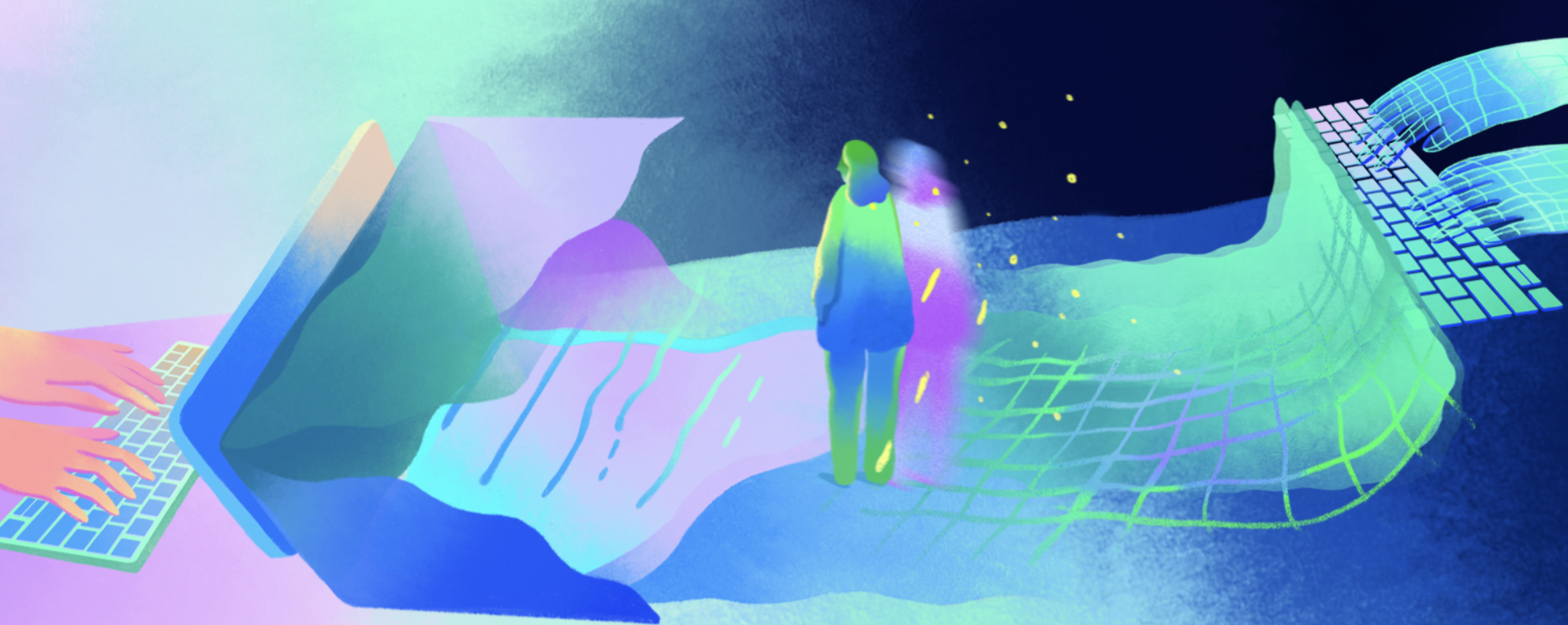
Illustration by Jesse Zhan, source: Ghosts by Vauhini Vara

The last paragraph was stirring: Once upon a time, my sister taught me to read. She taught me to wait for a mosquito to swell on my arm and then slap it and see the blood spurt out. She taught me to insult racists back. To swim. To pronounce English so I sounded less Indian. To shave my legs without cutting myself. To lie to our parents believably.  To do math. To tell stories. Once upon a time, she taught me to exist.”

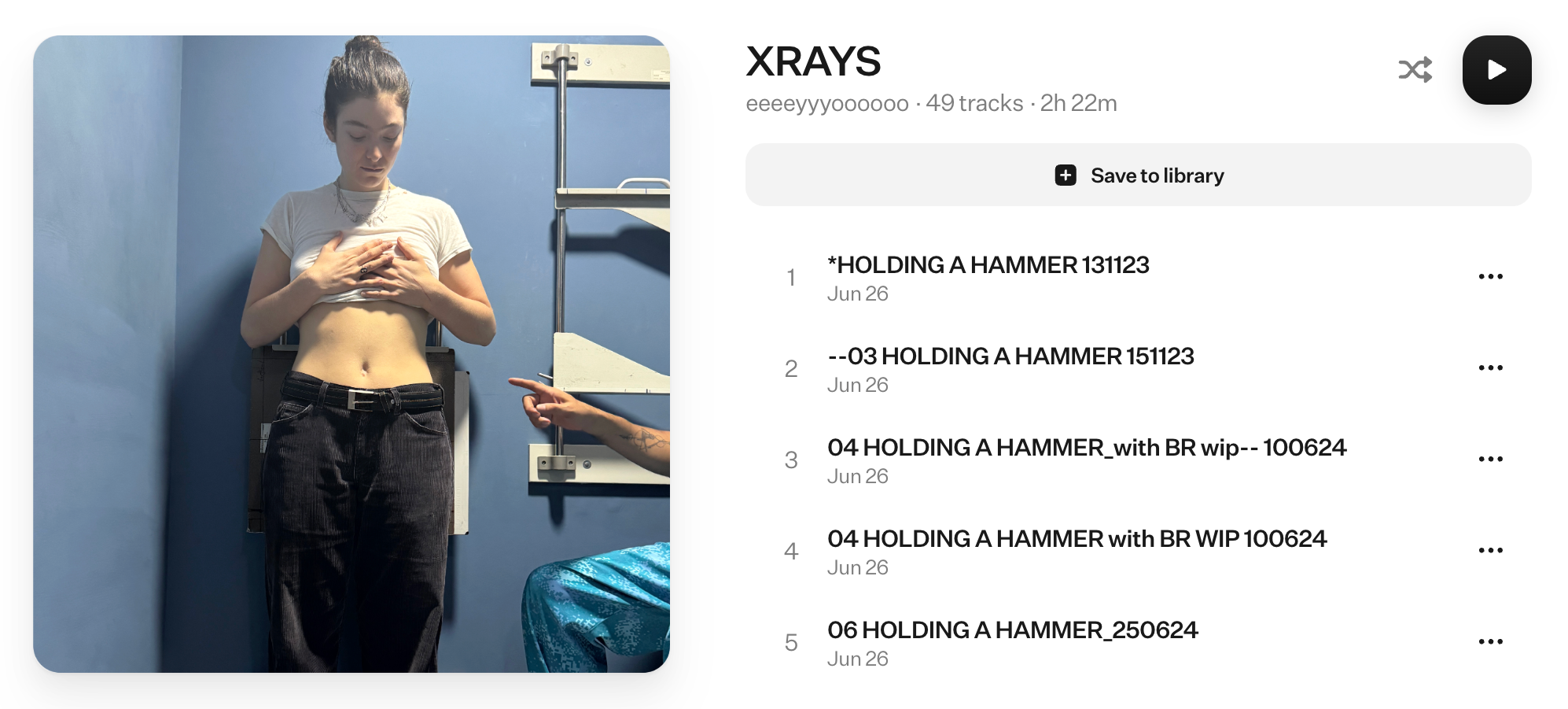
Vara had worked through her grief with the language model, and shared that working with the world. At the time, it was provocative – today, sharing your chatbot interactions is becoming something more practical. It’s proof of effort. In the same way, pop stars are pulling the curtain back on their creative processes, like Charli xcx via her Substack or Lorde dropping a 49-track release of raw recording sessions. Brands too are going to great lengths to prove their marketing is human-made – Apple TV’s new logo was made with sheets of glass and Google’s Mother’s Day doodle used a real baby’s hand. Taking things a step further, people have started publishing their conversations with AI.


XRAYS by Lorde

0:00
/0:32

The making of Apple TV's new logo by MAL

Last year, Venkatesh Rao launched the “Sloptraptions” section of his Substack. As a companion to his internet-famous Contraptions newsletter, the posts go out twice a week and are written in collaboration with AI; Rao calls it “elevated slop”. Initially, he ended each post with a “recipe”, detailing how the “co-authoring protocol” worked. And, in at least one instance, he linked out to his conversation with ChatGPT

Clicking the link was like accepting an invitation into Rao’s brain. It was intimate, and reading the transcript was far more interesting than the final AI-generated product. I almost didn’t care about what Chat was writing; I was looking at the questions Rao was asking, the adjustments he was making along the way, the way he was thinking.

A new series from Substack – Model Behavior – pulls on the same strings. The inaugural issue, published at the end of July, announced “we’ll ask each guest to give us a behind-the-scenes look at their creative process […] we’ll get into the prompts they choose, their tool stacks, or their 100% analog workflows.” The first guest, prominent tech journalist and meme lord, Taylor Lorenz, shared that she spends about $300 per month on AI tools and detailed how they feature in her day-to-day work, including the exact 364-word prompt she feeds five separate models to get title and thumbnail suggestions for her podcast episodes. 

Lorenz likely has no ulterior motives for sharing these details. Still, seeing how much work she puts into squeezing the most out of these models could shift things a little. AI may not seem like such an easy shortcut when you quantify the amount of effort that goes into using it. And arguably, as AI detection tools become more commonplace – such as Pangram and Substack’s recent partnership – transparency over LLM usage could become a necessity. 

While you don’t want to get caught “Claudefishing” – passing off AI-generated prose as your own – the most exciting element of these prompt receipts is the glimpse they give into thought processes: a whole new genre of content, a new depth of understanding. Whose brains could we peek into next? Bobbi Brown discussing colour theory with ChatGPT? Ralph Lauren debating Claude on English versus American style? Ronald McDonald arguing with Grok over the McRib?

Software developer Dave Griffith compares this to the documentary film No Maps For These Territories, a rambling conversation with science fiction author William Gibson conducted from the back of a limo rolling around Singapore. “I recently realized I would pay real money for a fifty-page chatbot transcript produced by William Gibson and Claude,” Griffith writes on his Substack. “Not an interview, not an essay, not a novel — a raw working session where Gibson is thinking through whatever he’s currently obsessed with, with an inhuman interlocutor that can keep pace and push into interesting territory.”

His interest in this imagined artefact is similar to my interest in Rao’s conversations with ChatGPT: he wants to see Gibson’s mind move. “Here’s what makes the shared transcript genuinely different from every communication medium that preceded it: it transmits thinking, not thoughts,” Griffith writes. “A transcript is a cognitive portrait in a way that no finished work can be.”

SEED #8434
DATE 06.08.26
PLANTED BY SOPHIA EPSTEIN