

The Pre-Viral Economy

From brand buzz to micro-aesthetics, Polymarket transforms collective intuition into predicting the signals of tomorrow.

Culture moves fast – but the most revealing shifts often appear just before the mainstream notices. That’s where Polymarket operates: at the intersection of instinct, hype and whatever’s on the verge of breaking through, translating collective gut-feelings into shifting percentages that show which way culture is heading.
Since 2020, Polymarket has been turning speculation into spectacle. Built on Polygon blockchain, it lets people bet on possible outcomes across all kinds of events. It’s about gambling, and reading the room: the platform captures collective hunches, gut feelings and digital chatter, transforming them into a living, breathing map of what might happen next.
Polymarket’s biggest markets remain political or financial - the 2024 US election cycle saw over $3.3 billion wagered on the presidential race alone. But beneath such mountains of capital are new, smaller economies that have been accelerating in recent months: bets on celebrities, brands, cultural events and pop-phenomena. These markets crack open a window onto what increasingly large numbers of people around the world are convinced will matter next.
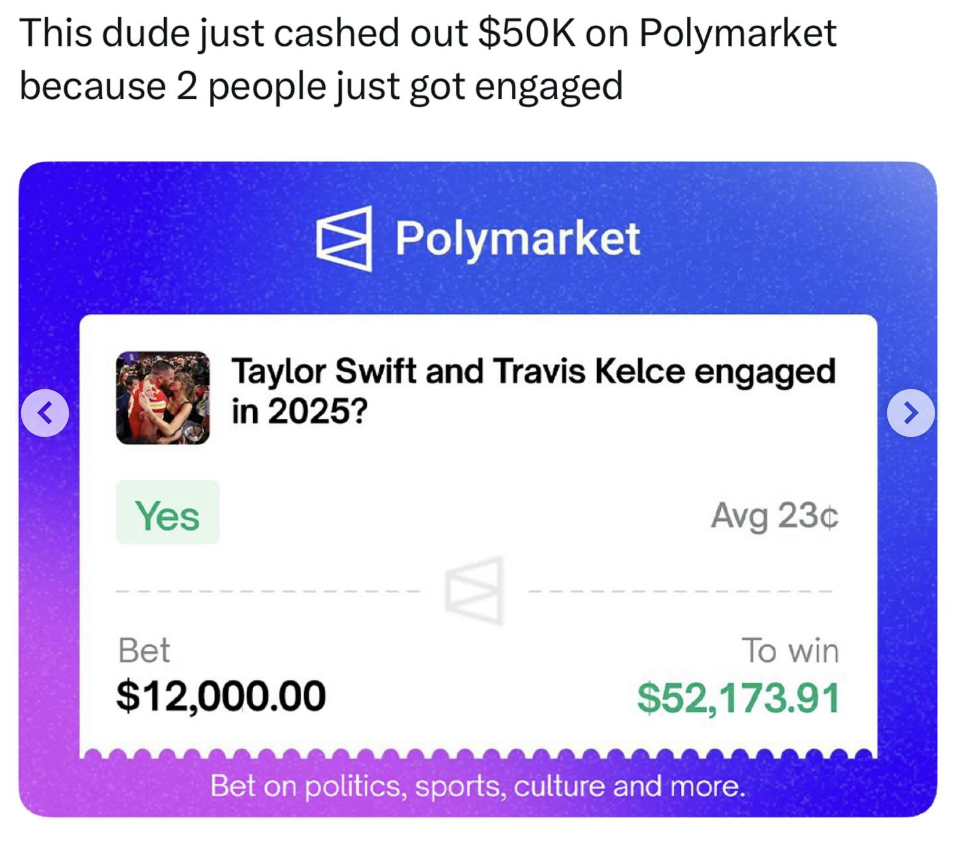
The case of Taylor Swift and Travis Kelce is a good example. When gossip about their relationship heated up earlier this year, a “Will they get engaged in 2025?” market appeared on Polymarket. As the rumour intensified, so did the odds. Eventually, when they did announce their engagement, one trader turned a $12,000 stake into over $50,000. That moment wasn’t just a financial win – it was a signal. It amplified the globally diffused sense that this coupling matters. Fans, casual onlookers, TikTok-ers hunting for Easter eggs: all of them fed into the hype before mainstream media even ran headlines. Polymarket didn’t cause it – but it quantified the tension and made it legible as cultural data.
Or consider how Polymarket surfaces the weird, the niche, the internet-native obsessions, like “Will Trump smoke weed on Rogan?” It may seem frivolous, but precisely because these markets reflect fringe ideas (or meme-driven irreverence), they help sketch the outer edges of digital subcultures: what feels edgy or provocative, what people are joking about, what risks they sense on the horizon.
For culture and trend-forecasting, the platform offers something rare: real-time sentiment quantified through financial stakes. Unlike social media chatter, which is often noisy, performative and vulnerable to bots, prediction markets force participants to put money behind their beliefs. That pressure rewards informed intuition, producing signals that can precede mainstream awareness.
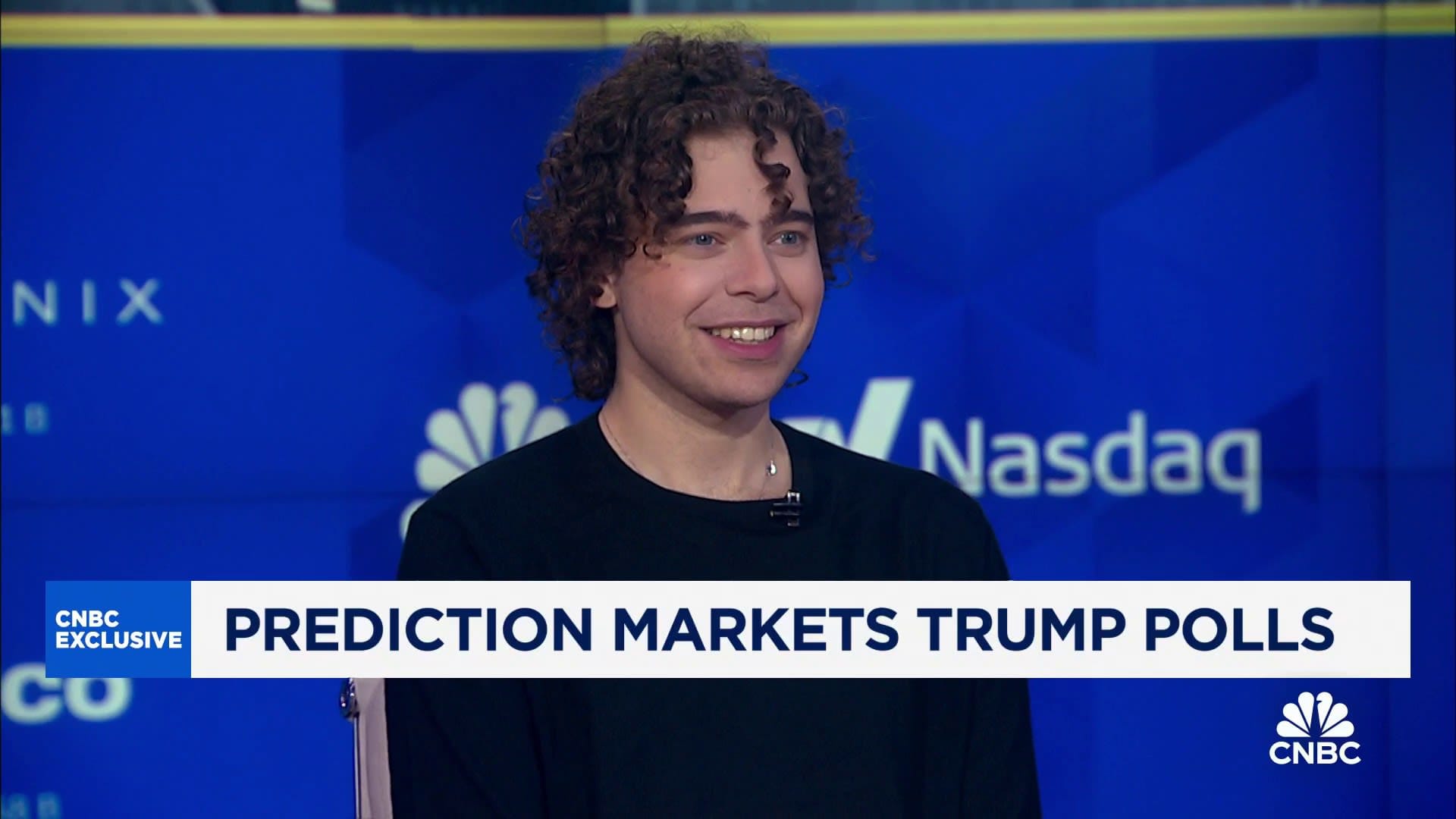
Shayne Coplan, the 27-year-old college dropout turned billionaire CEO of Polymarket, says his prediction market is “the most accurate thing we have as mankind right now.” Hyperbolic, of course. But for a culture-watcher, the edges often define tomorrow’s centre. Trends rarely break as smooth arcs – more often they crack through disruption, awkwardness or marginal fury. The fact that Polymarket lets users put real money on weird and esoteric but emotionally charged bets means you’re witnessing real stakes, not just clickbait or algorithmic noise.
People are betting with conviction. That conviction is messy, reflexive, selective, often steeped in internet-native bias. The typical Polymarket user tends to be crypto-literate, male and vaguely libertarian – factors that skew which markets take off, and the narratives they endorse. In that sense, Polymarket offers early-adopter energy rather than mass-market consensus. Then again, early adopters are often the ones who spark trends.
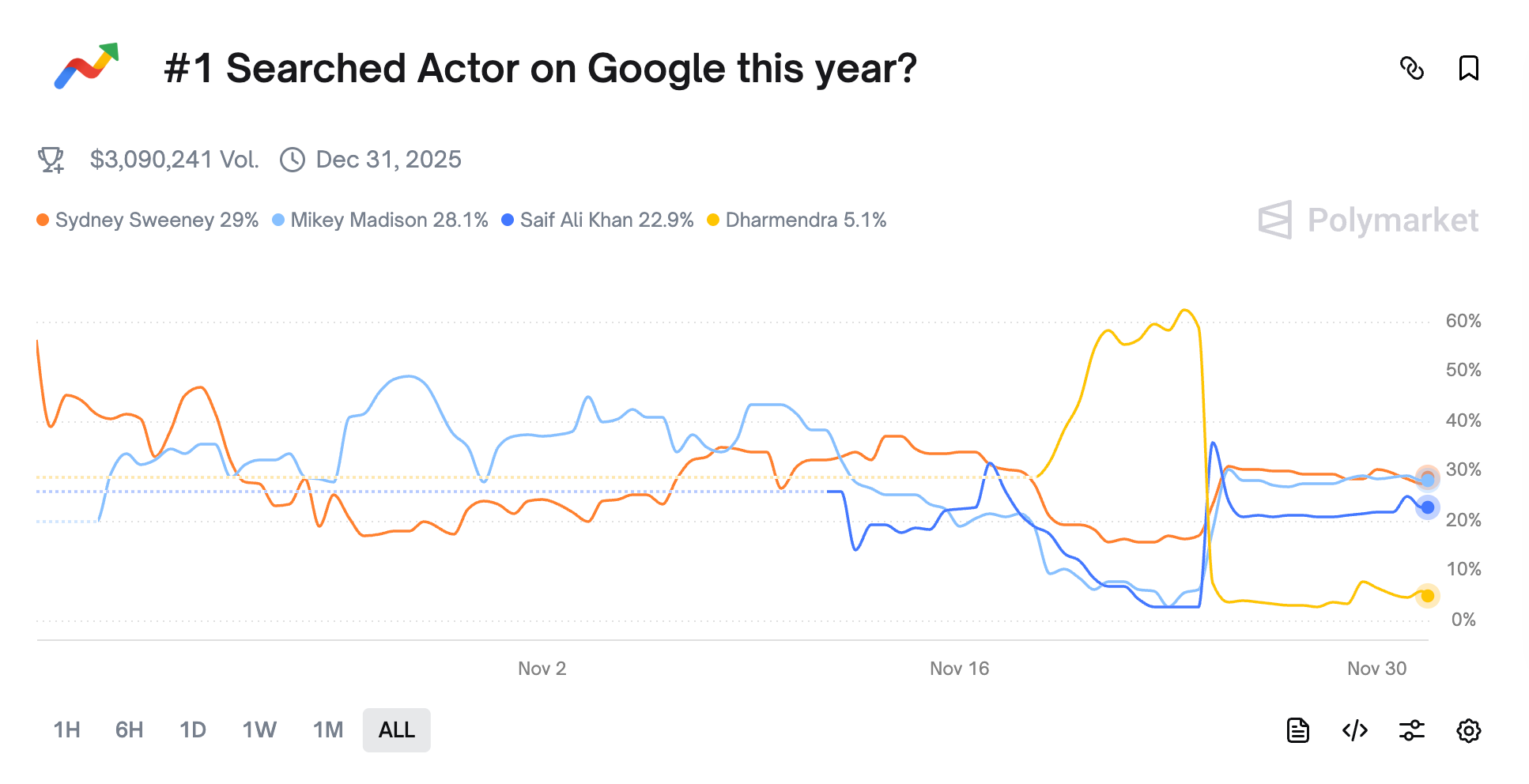
Seen as signals rather than predictions, Polymarket’s value becomes strategic. Patterns of rising odds – even when they don’t materialise – can flag shifting sentiment, latent cultural anxieties and emerging obsessions. Casting your next campaign? At the time of writing, Mikey Madison is neck-and-neck with Sydney Sweeney for the title of most-searched actor this year – but she’s nowhere near as expensive. Polymarket clocks that kind of momentum long before the analytics dashboards catch up.
After taking a well-publicised hit, is Nike finally on the rebound? Over $3 million is on the line as traders bet on whether the US sportswear giant will post a profit per share in its next quarterly report – and right now, 63% are saying “yes”.
Surfacing niche hype cycles? Polymarket users bet on the next influencer aesthetic to go viral. The platform doesn’t just reflect trends; it flags what’s about to emerge from the internet’s outer edge. Polymarket users have also bet on high-profile cultural events such as the choice of the next editor of Vogue, outcomes surrounding the “Coldplaygate” scandal and breakthrough moments in music and entertainment. These markets reflect the rapid, crowd-driven speculation powering key cultural turning points.
Of course, the tool comes with caveats. Polymarket remains unstable – bets can be manipulated and volatility is extreme. But that unpredictability is also part of its utility: if a market spikes, even briefly, it means something stirred – and that something is often raw, unfiltered cultural energy.
For anyone tracking aesthetics, memes and slow-moving cultural undercurrents, Polymarket offers a radical proposition: treat collective speculation as real data. Instead of asking “What is trending now?”, you’re asking “What are people betting will trend?” It’s speculative, but no less real.
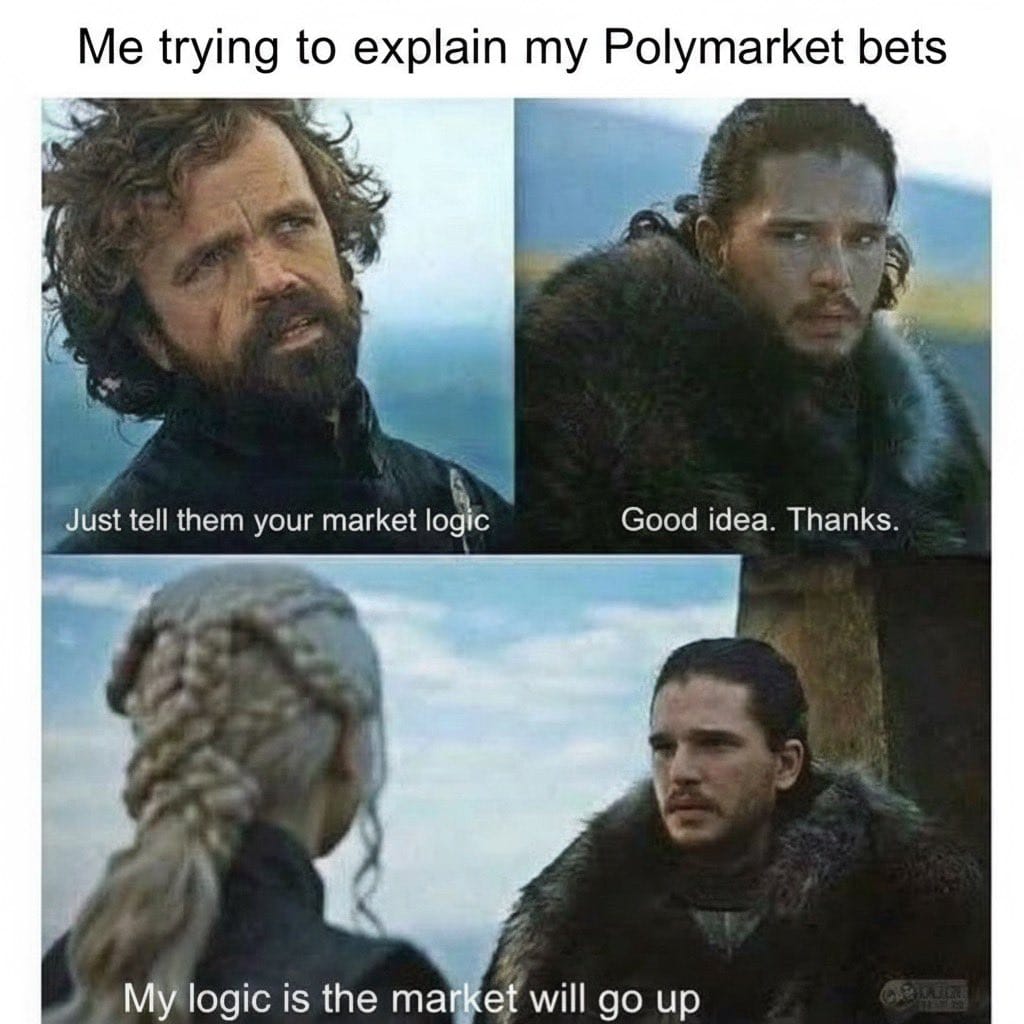
In other words: Polymarket isn’t a crystal ball. It’s a pressure gauge. And when enough people press their money into a meme-driven panic or a brand prophecy, that pressure becomes readable. For anyone working to decode what’s bubbling beneath the feed, this can sometimes be as valuable as judging something from the amount of likes or retweets.
Polymarket shouldn’t replace traditional cultural research. It can, however, complement it. Brands that treat prediction markets as a live observatory of collective hunches will gain a sharper sense of what’s “bubbling” beneath the surface. In a landscape where trend cycles are accelerating and cultural noise is overwhelming, a platform that converts intuition into measurable probability is a tool worth watching. Brands that monitor these micro-bets gain insight into the subcultural humour and viral topics shaping what everyone will be talking about next.
| SEED | #8370 |
|---|---|
| DATE | 02.12.25 |
| PLANTED BY | PROTEIN |
