After Bad Bunny’s Super Bowl halftime show, we started wondering – what does the US actually represent right now?
America’s brand feels less like a story and more like a collision. On one hand, the country can put Bad Bunny on the Super Bowl halftime stage, gear up to host a football World Cup, and still dominate music, film and creative culture. On the other, it’s still exporting images of ICE crackdowns, Epstein scandals and political extremism.
So we asked SEED CLUB what Brand America actually stands for today. Is it still aspirational, or has it become a case study in contradiction – progress and regression existing side by side? Fractured, evolving, hypocritical, resilient – or all of the above?
Nic Allum
America isn't a tightly designed, very controlled brand book PDF myth: freedom, family, opportunity, the frontier.
It’s a pile-up of signals all running together at the same time. The country still produces culture that feels open, magnetic and globally influential, but it now does so while broadcasting its own fear, hatred, control and instability just as loudly.
Big cultural moments can’t hide the contradiction, so they have to carry it. It’s aspirational because it shows what happens when identities, power and culture are constantly being remixed in public without a referee. The contradiction is not a flaw in the brand – it is the brand.
Sophia French
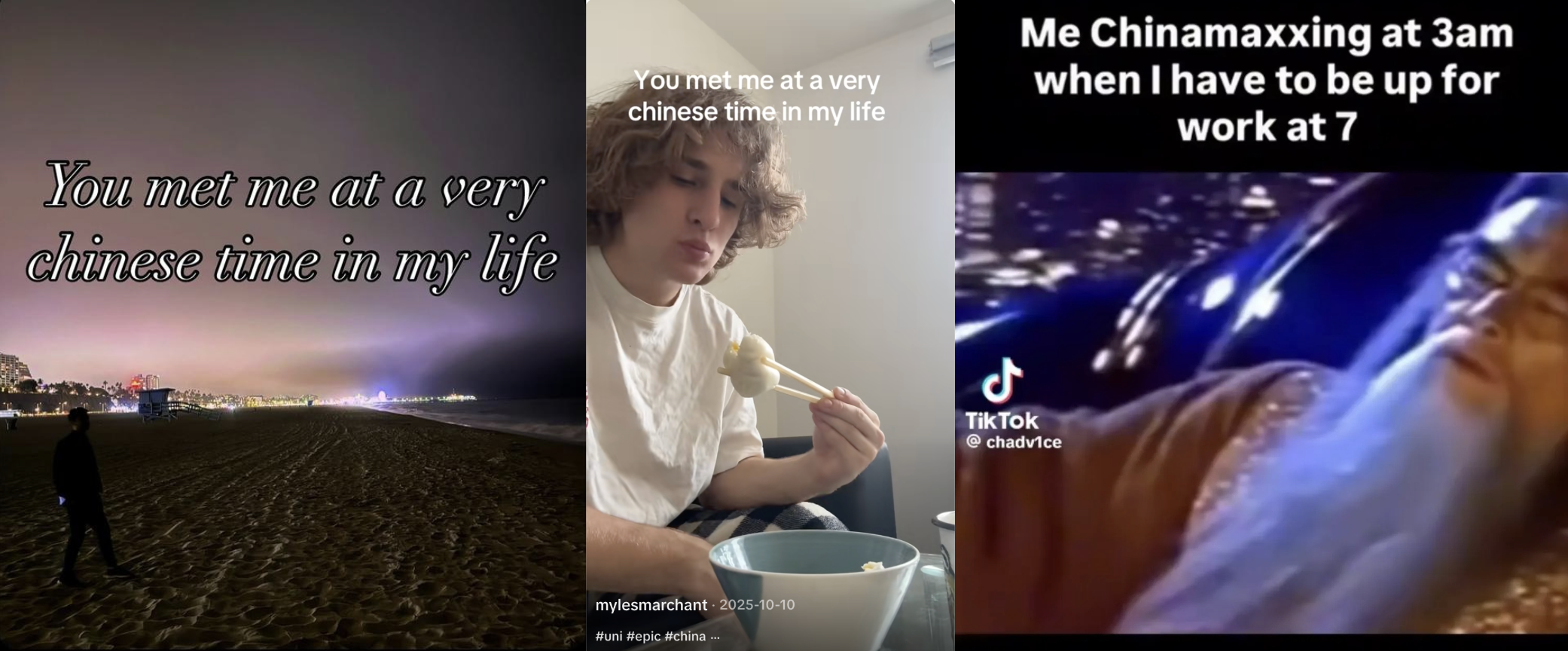
The caption “You met me at a very Chinese time in my life” accompanies thousands of TikToks showing Americans adopting stereotypically Chinese habits: drinking hot water, practising tai chi, using rice cookers, gua sha-ing, wearing slippers indoors. I’m reluctant to deploy yet another -maxxing suffix, but the internet has already decided – the term, of course, is Chinamaxxing.
Much of the trend reads as genuine admiration for Chinese culture. Still, unease from some Chinese observers is understandable, particularly against the backdrop of contemporary anti-immigrant violence tied to Trump’s ICE and a long Western history of portraying China and Chinese culture through suspicion or caricature.
As US supremacy falters and geopolitical tensions with China intensify, shifting attitudes toward China feel less coincidental than symptomatic. Chinamaxxing is as much about embracing Chinese culture as a rejection of “Brand America”. As Minh Tran writes in her Substack piece My Year of Rest and Chinesemaxxing, “In the twilight of the American empire, our Orientalism is not a patronising one, but an aspirational one.”
Protein AGENCY provides insight, foresight and strategy for global brands that's rooted in culture and the collective knowledge of SEED CLUB - our decentralised research community of 500+ global experts.