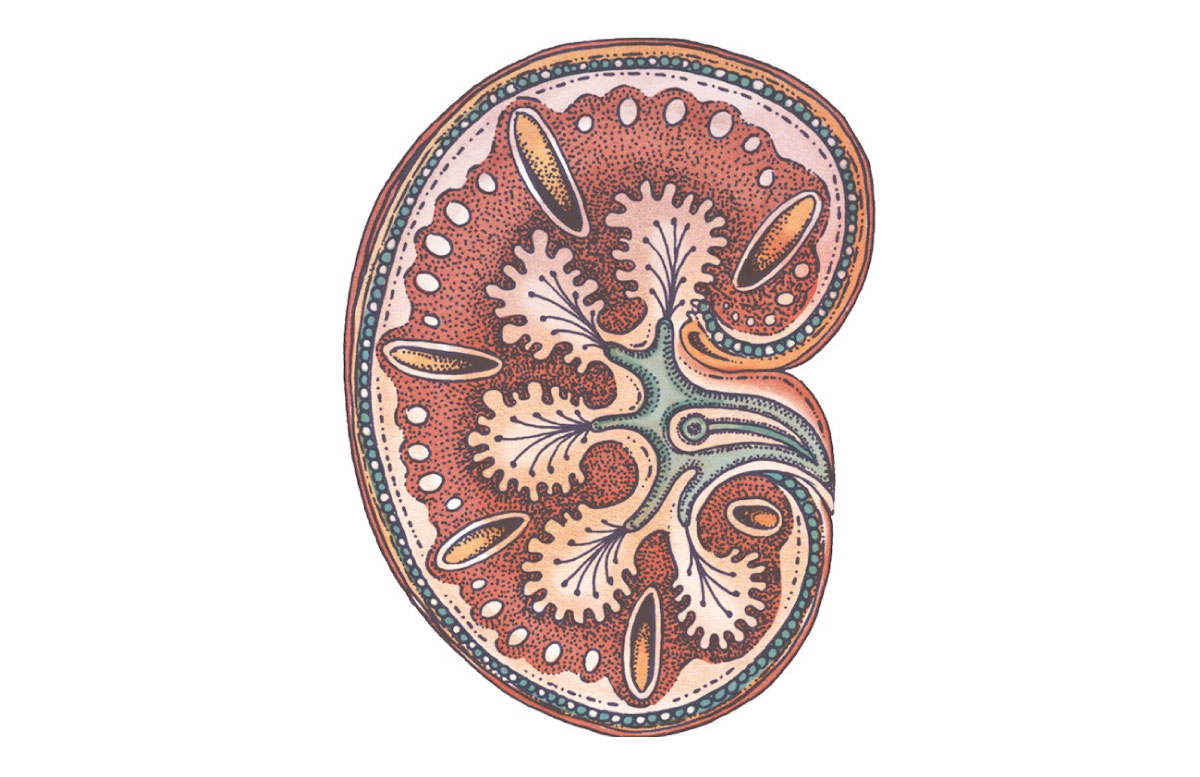
Scientists are making leaps and bounds in developing ways to grow human body parts.
Illustrations by Katie Scott
Science fiction is slowly becoming science non-fiction. Scientists are making leaps and bounds in developing ways to grow human body parts, a breakthrough that could revolutionise the way we treat, repair and think about the human body.
Last April, advanced medical research company Organovo presented a groundbreaking feat in biotechnology: the world’s first fully cellular, bio-engineered liver tissue. In layman’s terms: a man-made liver. It was small – just 20 cell layers thick – and remained alive for only five days. But what was fascinating about this tiny piece of tissue was how it had been made. It had been built by a 3D printer.
Bioprinting is a technological process that places individual cells alongside one another to form new living tissue structures. It works using a device not entirely unlike a more traditional paper printer. A cartridge is loaded with a special mixture of cells, which are slowly assembled, by a computer, into a three-dimensional shape. After that it’s down to nature. The new cells instinctively adapt to each other to complete the construction of the organ.
Want to go deeper?
Get one of our strategists to unlock what this SEED means for your brand, audience or category: