

Fast, Furious, Frictionless

Silicon Valley’s obsession with speed is reshaping culture – but as 'accelerationism' burns out, a new wave of brands is taking notice.

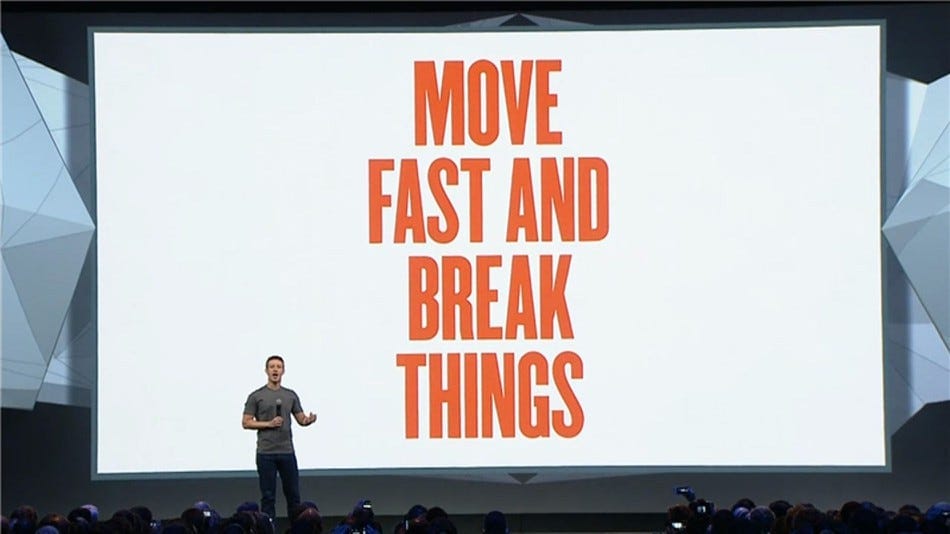
In the early days of platforms, “move fast and break things” was a startup mantra. Since then, Silicon Valley has taken the idea a few steps further. Unregulated tech, runaway economic growth, all leading to superintelligence – that’s the new “move fast”. What’s to break is everything in the path to get there.
At the core of this speed-obsessed ideology is Nick Land – co-founder of Warwick’s Cybernetic Culture Research Unit, a collective that mixed cybernetics, rave culture and esotericism among other things – whose belief in so-called “accelerationism” reads like a job description for AI founders and right-wing politicians keen to push ideas without permission.
In short, accelerationism is the idea that push tech hard enough and you either get utopia – or everything completely burns out. Land aligns with the latter: techno-capital is a feedback loop designed not for humanity, but for a future superintelligence building the next economic age. Slowing down, he argues, only delays the inevitable. If that future is inevitable, why not burn bright on the way there?
Over a decade ago, Land began publishing online, attracting a new cohort of pro-market, anti-human readers. Crowning themselves the Dark Enlightenment, this mix of alt-right communities fused Land’s accelerationism with Curtis Yarvin’s anti-democratic ideals.
Today, figures like JD Vance, Marc Andreessen and Peter Thiel channel these ideas into political and financial power. Thiel built Palantir on Landian logic: anti-regulation, authoritarian dominance. Elsewhere, OpenAI, SpaceX, Meta and Google all navigate between vanilla accelerationism, build before safety and end-times capitalism.
In 2025, tech moguls showed up at Trump’s inauguration, not hiding behind algorithms for profit but staking real political claim. New realities are forming as technology embeds ideology at scale. Those who accelerate fastest – skipping regulations – begin to shape politics instead of being shaped by it.
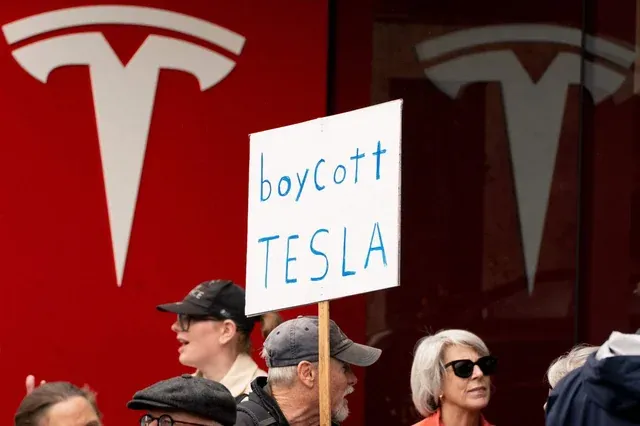
But this is accelerationism’s real effect: users bear the cost while the abstract promise of collective good looms. US courts have recently recognised Meta and Google’s algorithms as intentionally addictive. When Elon Musk’s Department of Government Efficiency cut essential jobs in the name of streamlining, grassroots pushback – like the Tesla Takedown movement – hit back.
The gap between those accelerating tech and those disrupted by it widens. But while the Dark Enlightenment fantasises about a world where human ethics are scarce, others are building for what they want in the spaces they can control. It’s no surprise people retreat to private group chats, ban smartphones in schools and nostalgically scroll Tumblr.
Mozilla Foundation notes this shift: a rising tech elite builds for scale and ideology, while post-naive internet spaces grow from realism. Online hubs, tools and media now reflect the specific needs of communities rather than vague, universal ideals. Out of the shadow of end-times capitalism, new brands and platforms are building rails for actual people.

Platforms like Uber and Instagram have prioritised frictionless activity between seller and buyer, creator and consumer. They want to create tools that don't impose and only act as an infrastructural middle man. Now, however, nuance increasingly matters. Understanding community needs and responding slowly and thoughtfully is key. Post-naive internet spaces aren’t invisible infrastructures – they are intentional, ethical and embedded in their communities.
Protein’s recent Friction-Forward BRIEFING captures this shift: in a culture burned out by seamlessness, friction is becoming a feature, not a bug. The smartest brands aren’t removing resistance but reintroducing it – slowing users down, creating intention and making interactions feel considered rather than automatic.
Look at Subvert. In response to the music industry’s failure to value musicians digitally, Subvert provides cooperative user ownership. Musicians and members set the rules for sharing and monetisation. Unlike accelerationist platforms chasing infinite scale and capital, Subvert starts small, human-first, building infrastructure around real user needs.
Subvert
Academics Spencer Jordan and Peter Boxall observe that our entanglement in tech networks we can’t control sparks a craving for structure. Post-naive internet spaces answer the “how and why” by centring community and culture. Accelerationist logic skips these questions, chasing abstract futures.
The UK tech company Nothing knows this. Its Discord hosts 50,000 members, its forum over 100,000 and its subreddit 122,000 weekly visitors. For two years, its Community Edition Project has taken hardware, software, accessory and marketing submissions from users and built them. Essential Apps even lets Nothing Phone users code apps they want. Give users infrastructure control, and they’ll tell you what matters. In spaces increasingly alienating, this community-first approach is exactly what people want.

Grand narratives of the future inspire less and less. As journalist Laura Bullard notes in her profile of Thiel’s Antichrist obsession, beneath the Dark Enlightenment lies something simpler: deep fear and a pessimism divorced from reality. Accelerationists build for a world where humanity is a footnote. Others build for subcultures, scenes and communities where humanity is the point – where culture thrives because it’s specific, and tech works because it’s made by the people who use it.
| SEED | #8398 |
|---|---|
| DATE | 02.04.26 |
| PLANTED BY | WILLEM DEISINGER |
