

Built By Accident

A look at skateparks, DIY spaces and brand-funded hubs that thrive not through polish or permission, but through collective authorship.

As an architect, I’ve always been fascinated by the energy DIY spaces seem to generate almost by accident. Architectural education trains designers to see themselves as experts – in structure, in aesthetics, in authority. The result is often a culture of telling rather than listening. DIY spaces, like skateparks, operate in a different register. They emerge without the weight of architecture’s ego. They’re a kind of folk architecture rooted in function and a sense of place.
Architects often see themselves as indispensable crafters of space. DIY architecture quietly disputes that, showing how communities can – and do – build environments that are functional, loved and alive, without asking permission first.
Last summer, I drove across the Missouri River from my hometown of Omaha, Nebraska, to Broadway Skate Park in Council Bluffs, Iowa, where the non-profit Skatefest was hosting a competition. As local skateboarders glided, kickflipped and grinded through the bowl, the neighbourhood gathered along its edges.
Skate scenes like this exist everywhere, but it’s only recently that skateboarding has crossed over from counterculture to Olympic sport. Its global rise can’t be explained by technical skill alone. What pulls people in is the attitude: a culture that prizes persistence, creativity and shared ownership over polish or perfection. Where others see benches, ledges and crumbling concrete, skaters see raw material – a playground waiting to be activated.
That spirit is embedded in skateboarding’s origins. In 1950s California, surfers attached rollerskate wheels to shortened boards so they could practice when the waves were flat. Early skateboarding was improvised, homemade and proudly unrefined. There was no masterplan – just collective experimentation. The same logic still underpins the spaces skate culture creates today.
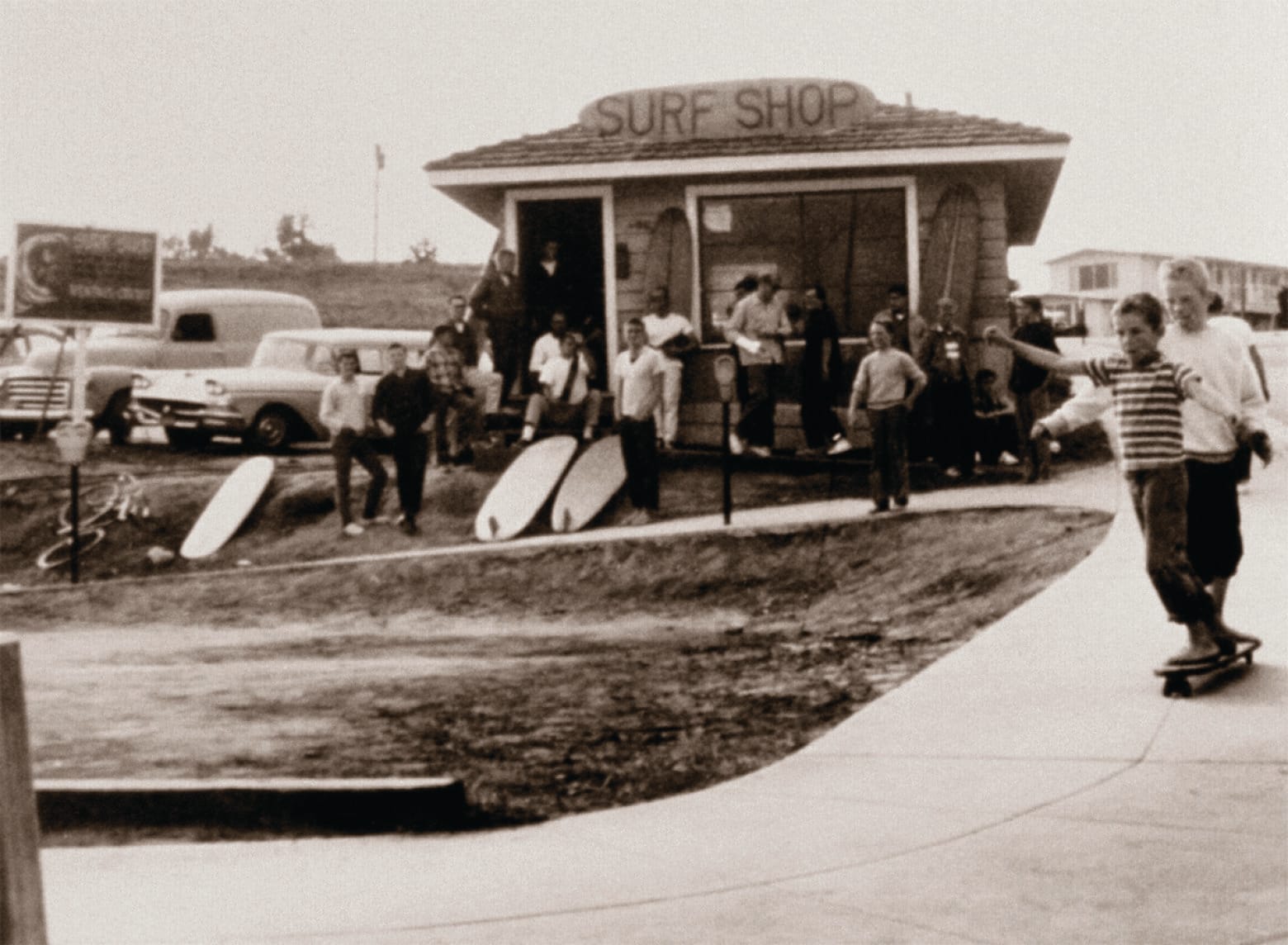
Skaters are drawn to the city’s forgotten edges. In these neglected corners, skaters are able to experiment more freely. These heterotopias celebrate the awkward, the marginal and the unfinished – often irritating city authorities, but frequently revitalising neighbourhoods in the process.
LOVE Park in Philadelphia is a good example. Designed in the 1960s by city planner Edmund Bacon to revitalise a post-industrial city, the park quickly fell into decline. It was unassuming skaters in the 1990s who breathed new life into the space, transforming the plaza into a global icon. LOVE Park went on to host the X Games in 2001 and 2002, generating $80 million for the city. Not bad for a community the space was never officially designed for.
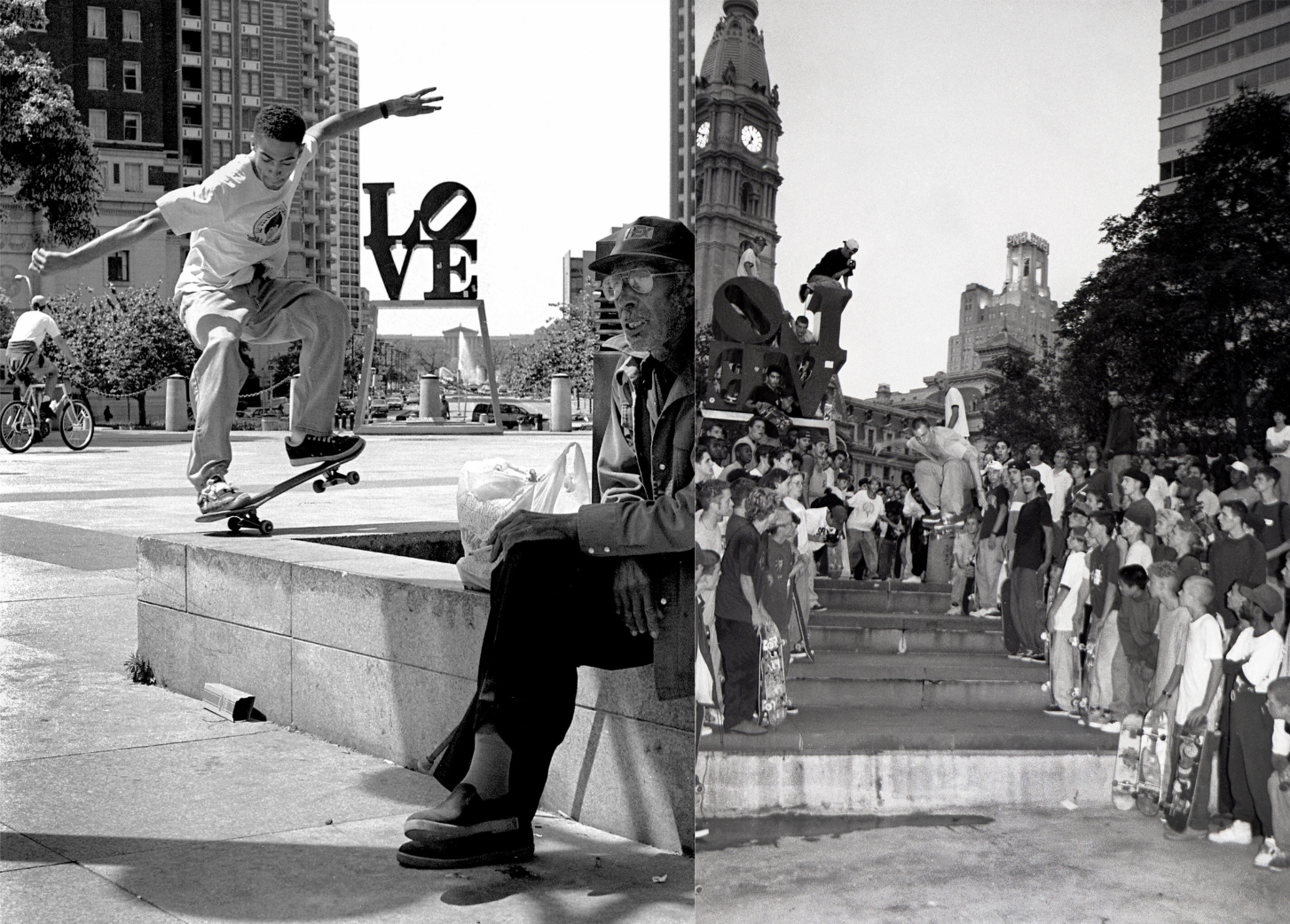
When the park closed for redevelopment, a 92-year-old Bacon climbed onto a skateboard in front of a gathered crowd. He could never have predicted his plaza would become one of the most legendary skate spots in the world. But by embracing how people reinterpreted his design, Bacon demonstrated a crucial cultural lesson: the most enduring spaces — and the most resonant brands — are built through co-authorship, not rigid intent.
A similar ethos underpins Burnside Skatepark in Portland, Oregon – one of skateboarding’s most mythologised DIY spaces. Looking for shelter from Portland’s incessant rain, a group of skaters began building under a bridge. There was no permission, no funding, no finished vision. The park grew slowly, shaped by an expanding network of skaters, organisers and neighbours. In 2016, the city formally recognised Burnside as an official skatepark.
Despite its cult status, Burnside’s mantra has never changed: “Come help and you’re in.” Its unrefined elements are the point. Every crack and imperfect pour marks the presence of many hands. Burnside’s value lies not in refinement, but in visible participation.
Skatopia, in southeastern Ohio, pushes this logic even further. Spread across 88 acres, the park operates on a “build as you go” philosophy – an anarchic, constantly evolving assemblage. It’s less a destination than a living experiment in collective authorship.
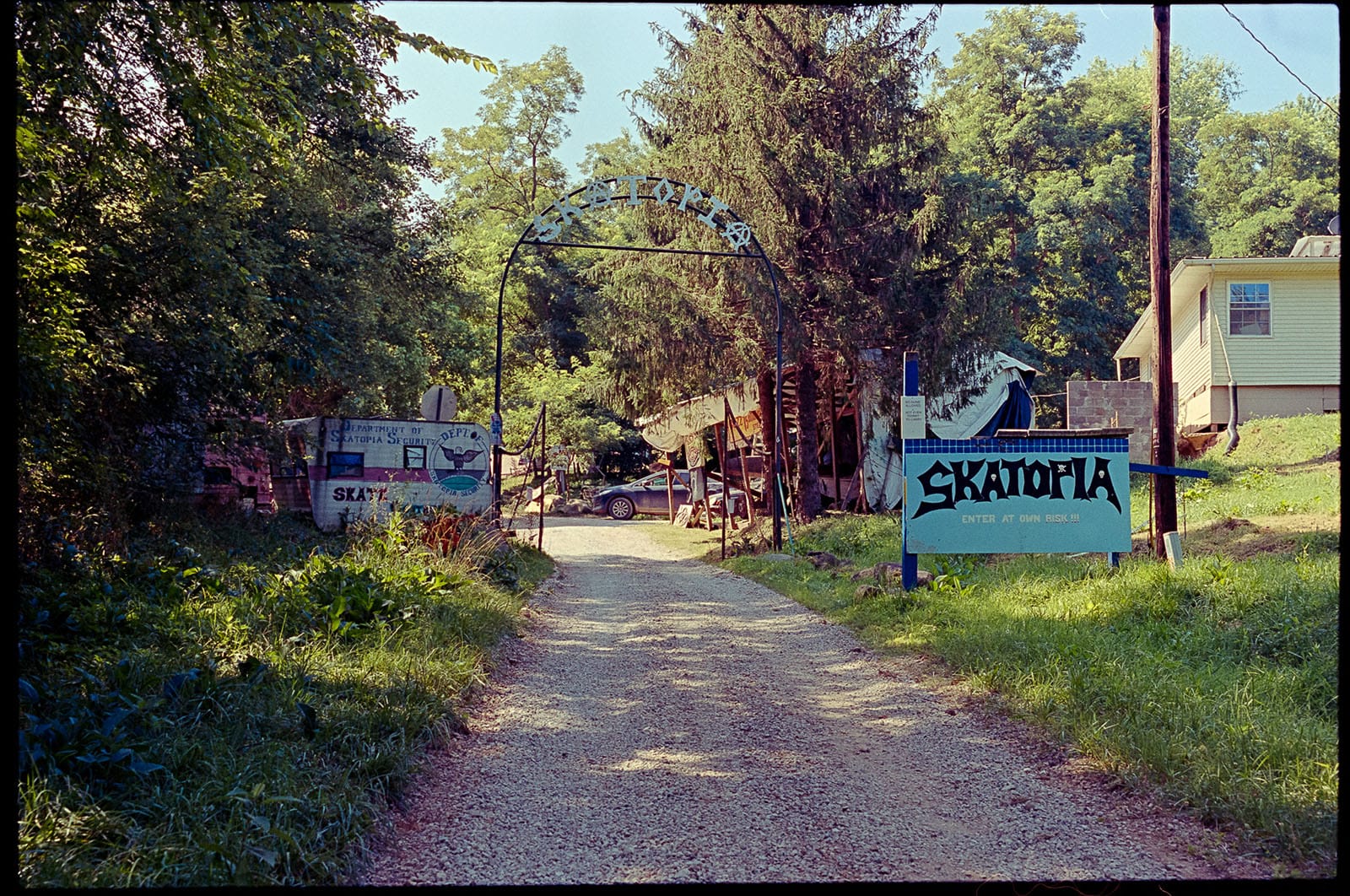
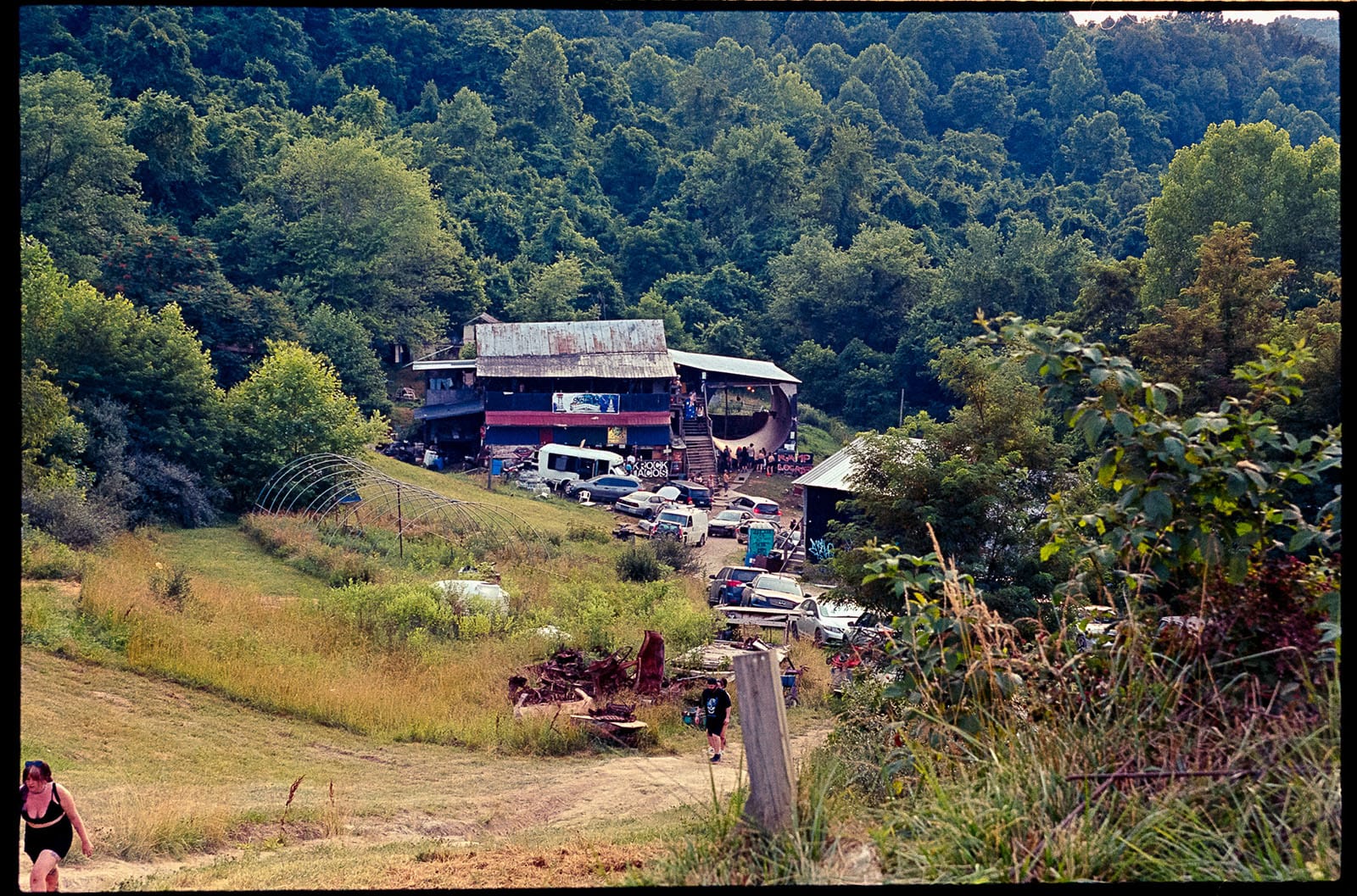
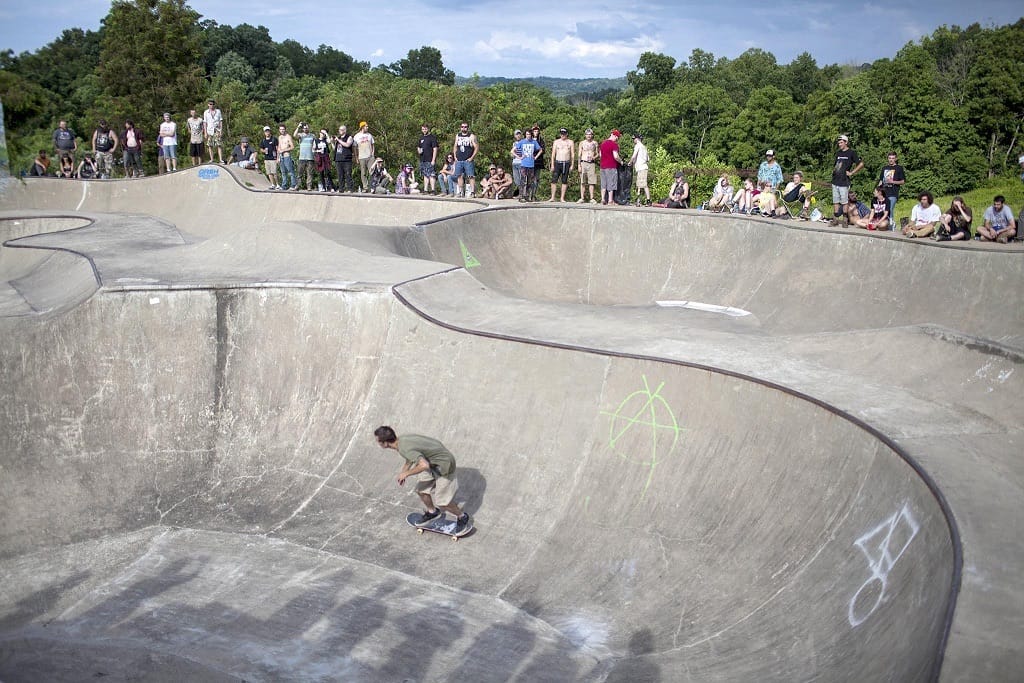
Skatopia, Ohio
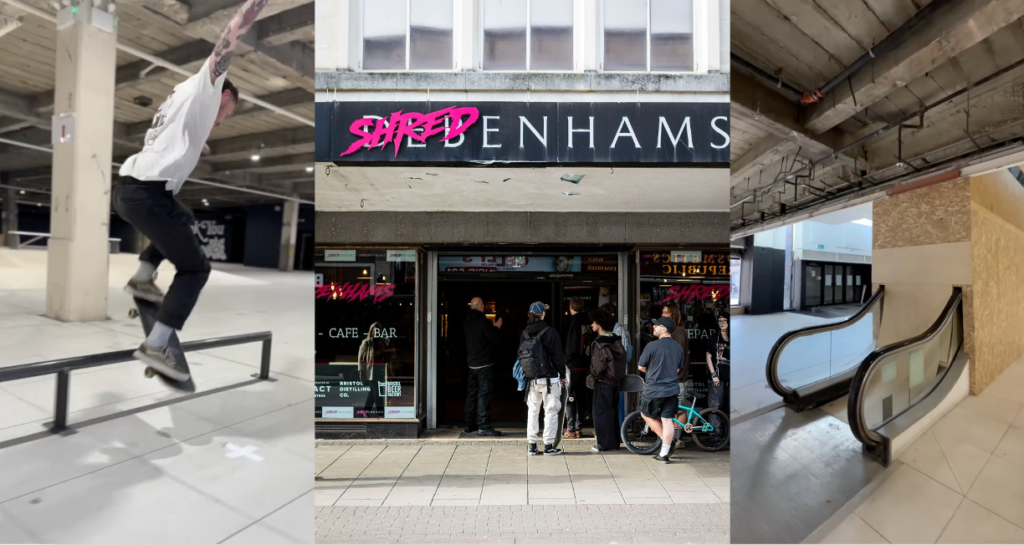
And then there’s Shredenhams in Bristol, which was set-up by the non-profit skater-owned Campus Skateboarding, which transformed a huge, empty Debenhams department store into a massive, temporary indoor skatepark. Under a “meanwhile” planning usage it created a vibrant community hub with skate ramps, games and events before the building’s eventual demolition for a tower block.
When unprogrammed third spaces emerge and start to thrive, they’re often quick to be sanitised, branded or controlled. But their power lies precisely in remaining unfinished. The messiness of co-creation binds together people who might otherwise never meet: skaters, neighbours, business owners, local officials. These spaces weren’t built overnight – they evolved by staying responsive to the communities shaping them.
You can read more by Charlie Weak on the built environment here.
Case Study
Nike x Palace – Manor Place
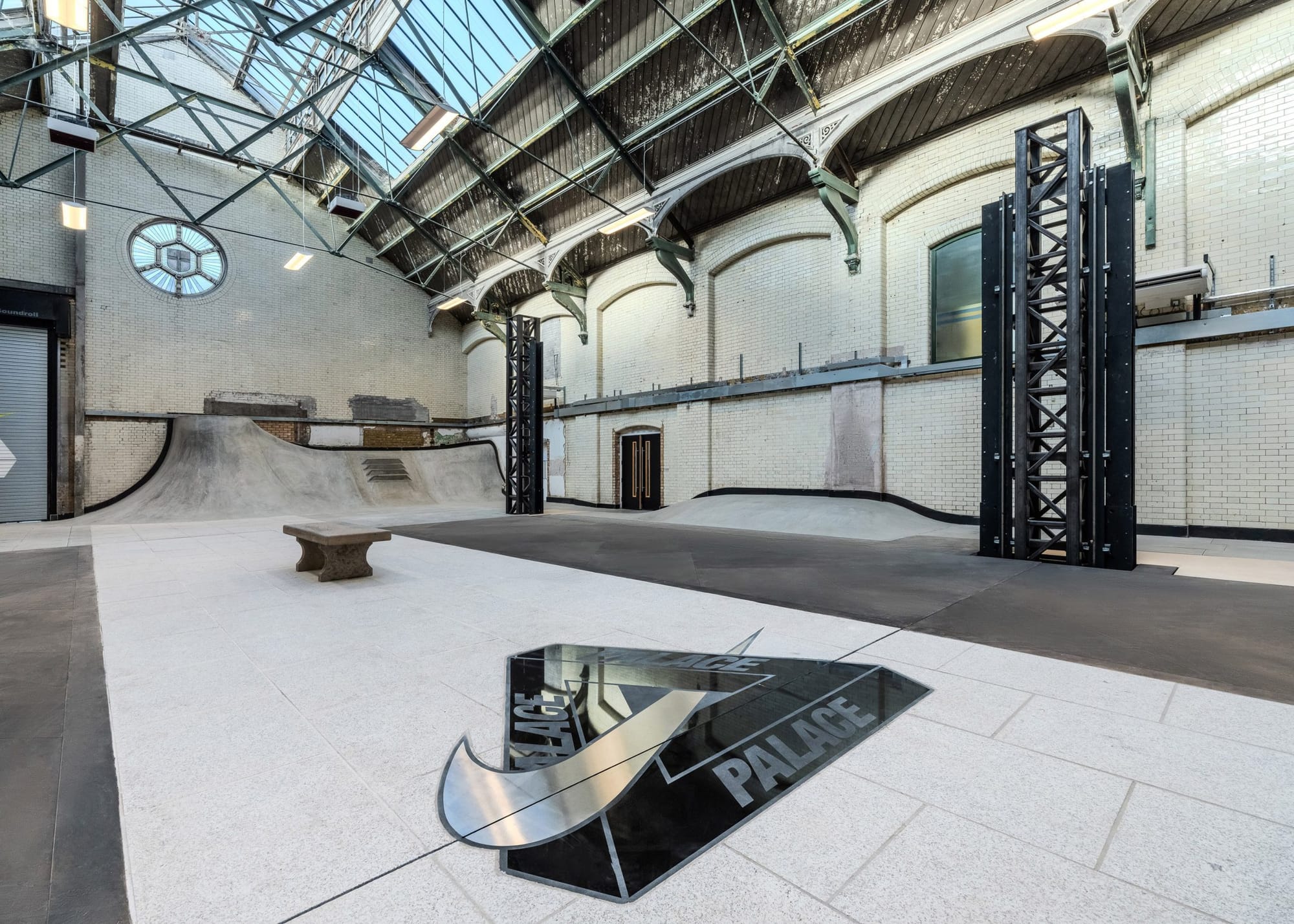
Nike and Palace have recently opened Manor Place in south London, a centre for sport and creativity open six days a week and free of charge. Housed in an old Victorian bathhouse, the space includes artist studios and a skatepark that can be transformed into a football pitch.
Palace co-founder Gareth Skewis said of the project, “I wanted to try and create something new, something that's really community based… That’s a word that is often bandied about without any real meaning behind it. I want Manor Place to be somewhere safe and friendly where people can skate, play football and discover new things.”
While the extent of community consultation during the design process remains unclear, Manor Place’s long-term credibility will depend on how much authorship it cedes. Its programme – including a women’s football league (with teams backed by Martine Rose and Nia Archives), free skate coaching for under-14s, exhibitions and craft fairs – suggests an understanding that cultural value isn’t installed at launch, but built through sustained use. The test, as with any DIY-adjacent space, will be whether the brand can resist over-curation and let the culture do its own work.
For brands looking to engage with culture rather than extract from it, the lesson is clear. Participation matters more than polish. Control must be loosened. The most meaningful brand presence in these environments doesn’t come from imposing an identity, but from contributing to an ongoing process – becoming a platform for shared creation rather than a logo stamped onto someone else’s world.
| SEED | #8379 |
|---|---|
| DATE | 22.01.26 |
| PLANTED BY | CHARLIE WEAK |
