

Brand America, Interrupted

After Bad Bunny’s Super Bowl halftime show, we started wondering – what does the US actually represent right now?

America’s brand feels less like a story and more like a collision. On one hand, the country can put Bad Bunny on the Super Bowl halftime stage, gear up to host a football World Cup, and still dominate music, film and creative culture. On the other, it’s still exporting images of ICE crackdowns, Epstein scandals and political extremism.
So we asked SEED CLUB what Brand America actually stands for today. Is it still aspirational, or has it become a case study in contradiction – progress and regression existing side by side? Fractured, evolving, hypocritical, resilient – or all of the above?
Nic Allum
America isn't a tightly designed, very controlled brand book PDF myth: freedom, family, opportunity, the frontier.
It’s a pile-up of signals all running together at the same time. The country still produces culture that feels open, magnetic and globally influential, but it now does so while broadcasting its own fear, hatred, control and instability just as loudly.
Big cultural moments can’t hide the contradiction, so they have to carry it. It’s aspirational because it shows what happens when identities, power and culture are constantly being remixed in public without a referee. The contradiction is not a flaw in the brand – it is the brand.
Sophia French
The caption “You met me at a very Chinese time in my life” accompanies thousands of TikToks showing Americans adopting stereotypically Chinese habits: drinking hot water, practising tai chi, using rice cookers, gua sha-ing, wearing slippers indoors. I’m reluctant to deploy yet another -maxxing suffix, but the internet has already decided – the term, of course, is Chinamaxxing.
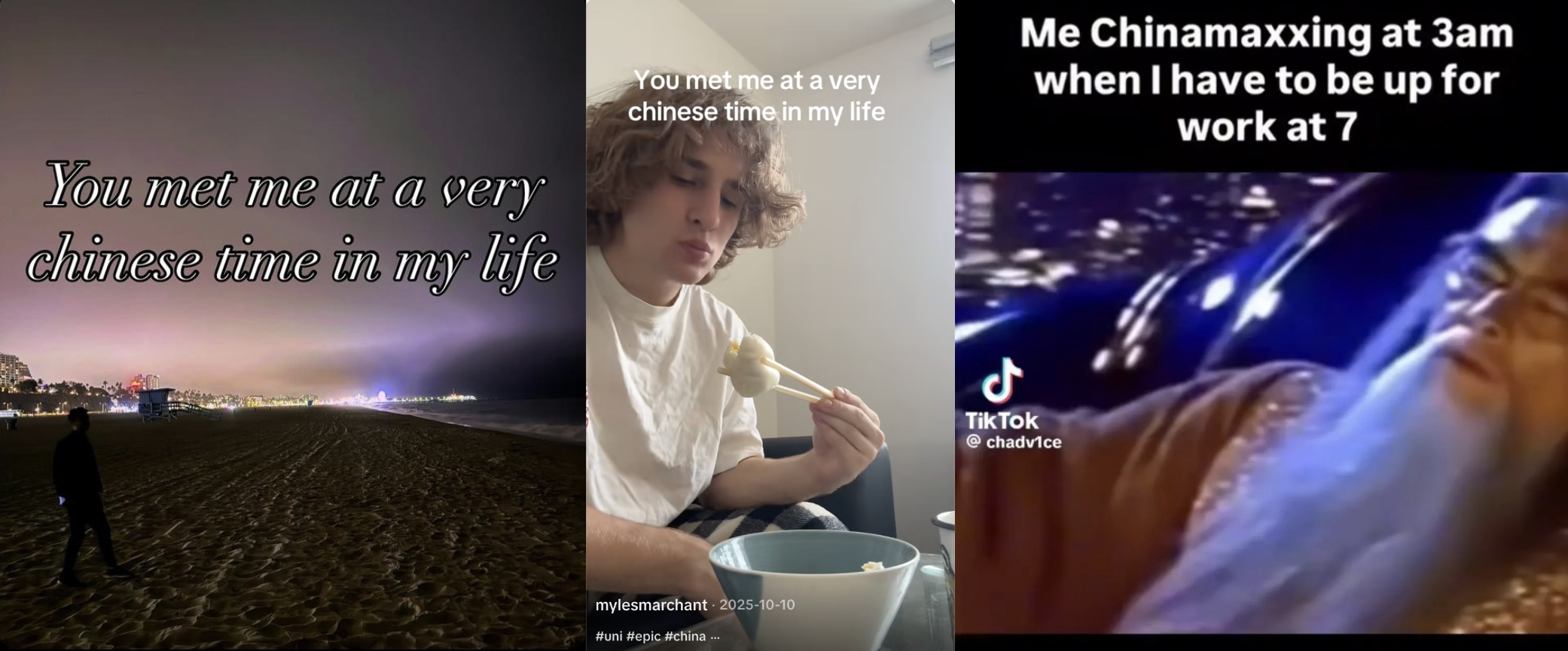
Much of the trend reads as genuine admiration for Chinese culture. Still, unease from some Chinese observers is understandable, particularly against the backdrop of contemporary anti-immigrant violence tied to Trump’s ICE and a long Western history of portraying China and Chinese culture through suspicion or caricature.
As US supremacy falters and geopolitical tensions with China intensify, shifting attitudes toward China feel less coincidental than symptomatic. Chinamaxxing is as much about embracing Chinese culture as a rejection of “Brand America”. As Minh Tran writes in her Substack piece My Year of Rest and Chinesemaxxing, “In the twilight of the American empire, our Orientalism is not a patronising one, but an aspirational one.”
Charles Weak
It’s probably fair to say that Brand America is in a collision moment right now. There’s a regression in what it means to be American on the global stage, and it’s sanding off a veneer of American exceptionalism that long masked a rotted underbelly.
That sanding really begins around 2016, though the rot itself is born out of a politics of cruelty that arguably goes back to Reagan, or even Nixon. The MAGA movement owes a lot to figures like Newt Gingrich and institutions like Fox News. If the US had a more robust social safety net – and real investment in the working and middle class (universal health care, paid maternity leave, a livable minimum wage, free college, stronger corporate regulation, better-funded public schools) – I don’t think we’d be in the situation we’re in now.
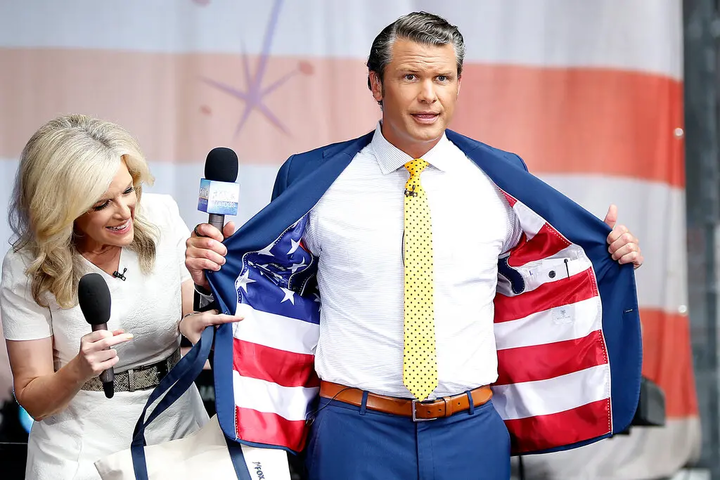
On the other hand, for the first time in a long while, people seem pissed in a non-partisan way. A meaningful chunk of the population thought Trump would be more anti-war, would release the Epstein files, would lower the cost of living, and so on, but he’s managed to do the opposite in almost every case (naive, given his history).
The “brand” may just be an extension of this moment. I saw a report suggesting Europeans now have a generally negative view of America for the first time – or at least the first time in a while – and I wonder whether that’s a negative view of the country or of Americans themselves. Most of us don’t want some – or any – of what’s happening via our government, and that’s where the tension lives.
There’s certainly around 30% of Americans who are hardcore right-wing and unlikely to change, and that faction has moved into the spotlight in recent years. We’ll see what happens with that.
I guess all of this is to say that global audiences who are only now paying closer attention may be noticing the tension and evolution. America has been “Blue team vs. Red team” for a long time, thanks to the two-party system, but that framework is splintering (which is a good thing) because no one trusts our politicians. The tension is shifting toward “people vs. their politicians,” and no one really knows what comes next. America has a flair for beautiful, clarifying moments – amid a sea of stupid, petty and prideful ones.
Edmond Lau
My cynical view is that brands will gravitate towards whatever makes them money/is palatable. Other than that, don’t say something unless you’re willing to commit to it. Nobody wants to hear a brand patronise them anymore.
Jon Jacobsen
Brand America (US) in 2026 feels less a “promised land” and more a conditioned liberty. A Marlboro ad for the digital age: be the billboard cowboy and the world is yours – at the cost of your lungs.
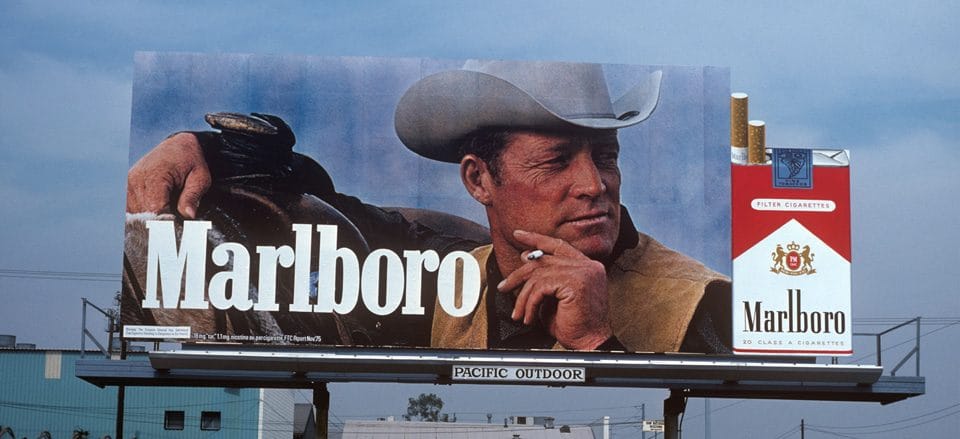
We’re witnessing a measurable divorce between familiarity and reputation. The US remains the world’s most-watched stage, yet its soft power is in historic freefall. Entertainment projects diversity as spectacle, while beyond the screen lies a hostile maze of erratic visa policies and stalled tourism.
American freedom now arrives with a Terms & Conditions pop-up: progress is celebrated as long as it’s profitable – so long as you don’t stand, or kneel, in a way that disrupts the machine.
A land inside a green screen, where the background is entirely dependent on whoever’s holding the remote.
Cathal Berragan
I’m a UK citizen who moved to the US a decade ago, and I’ve watched the perception of this country – culturally and politically – erode in real time. Growing up in England, America felt like the most aspirational place on earth. I listened to American music, watched American movies, played American video games.
When I moved to New York in 2016, America’s biggest cultural export was hip hop. Kanye, Drake and Kendrick were at the top of their game. Mumble rap dominated the charts. I landed in NYC and genuinely felt like I was at the centre of the universe.
Then something happened in 2016: Trump’s first term. Since then, America’s biggest cultural export has become its politics.
Everything is hyper-politicised now – sports, music, film, even the Super Bowl halftime show. Everything America produces arrives with a comment section ready to turn it into a referendum on race, gender, identity and money. Much of that discussion is important and necessary. But the cumulative effect is exhaustion. You can’t just enjoy something anymore; everything comes pre-loaded with discourse.
Kanye lost the plot. Drake’s brand is in the mud. And in October 2025, for the first time in 35 years, there wasn’t a single rap song in the Billboard Hot 100’s Top 40, ending an unbroken streak that began in 1990.
At the same time, the growth of tech has actively flattened culture. Most of the wealth in this country has flowed to swagless, morally ambiguous tech lords who recycle capital into property and more tech. The power laws of Silicon Valley funnel money toward engineers solving problems that often exist in direct conflict with culture. Music remains one of the worst business models in the world in terms of value capture. America’s quiet new cultural export is B2B SaaS.
Last night’s Super Bowl felt like a crystallisation of all of this. The ads were stale, cringey millennial slop – easy nostalgic celebrity punchlines, lazy writing and a flood of dystopian AI commercials desperately trying to hijack culture while wildly overestimating their self-awareness.
Bad Bunny saved the halftime show. The first Latino solo artist to headline, performing almost entirely in Spanish. Even that couldn’t escape the machine. It immediately became a political flashpoint, with conservatives calling for his removal and Trump posting that it was “one of the worst, EVER”.
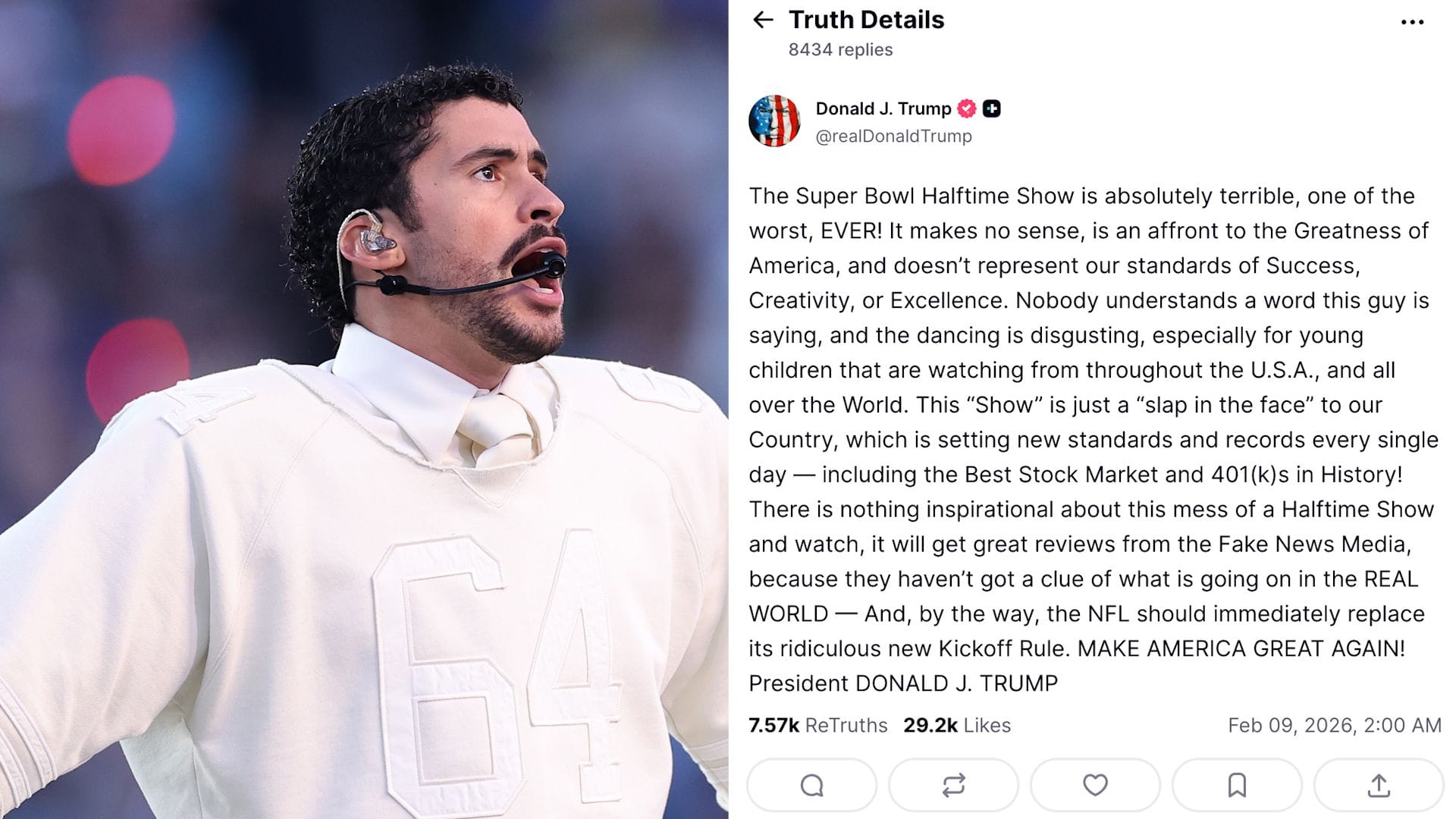
The fact that the best moment of America’s biggest cultural event came in Spanish, delivered by a Puerto Rican artist who previously refused to tour the mainland US over ICE raids, tells you almost everything about where Brand USA stands right now.
Even the game itself – a 29-13 blowout – was dull, confusing and inaccessible to anyone outside the existing fanbase.
The most exciting thing set to happen to this country in 2026 is the World Cup: a sport America has historically rejected and still barely understands. Forty-eight teams, eleven US cities, arriving during America’s 250th anniversary.
America’s role will be to host a game it didn’t build and doesn’t own. That might be the most honest version of Brand USA we’ve seen in a long time.
Jorge Vega Matos
Answering this question as a Puerto Rican while in London is funny, because Brand America right now looks a lot like the late British Empire trying to have it both ways.
The contradiction of a Britain that celebrates its multi-ethnic population during the World Cup or Olympics, then frames immigration as an existential threat the rest of the year, has clear analogies in the US. The same interests that put Bad Bunny on the Super Bowl stage to stage a beautiful Pan-Americanist moment – performing in Spanish to 130+ million viewers, explicitly reclaiming “America” for the entire hemisphere by naming every country from Canada to Argentina – ignore, or even enable, ICE raids, border militarisation, and the Monroe Doctrine creeping back into view.
Anyway, the shift to a multipolar world is the key framing for understanding where Brand America is headed.
Bad Bunny’s Pan-Americanism and Trump’s renewed imperial posture are different responses to the same hemispheric realization as the global order shifts. Multipolarity pairs cleanly with US re-encroachment within the Americas. If China challenges global hegemony, the hemisphere – with all its resources – becomes the fallback control zone for the US.
In this new world, Brand America will rest on claims of abundance, stability and independence, shifting away from 20th-century appeals to military dominance and technical innovation – claims China now legitimately contests.
Abundance and stability matter here. The US is absurdly young compared to other nation-states. Britain managed decline after centuries of extraction had peaked; the US still has vast natural wealth in play: energy-independence potential, diverse climate zones, enormous arable land, and geographic buffers. That provides a long runway for absorbing volatility.
The elites know this. Just look at the rise of the Abundance movement across tech and policy circles, linking YIMBY development, high-speed rail, and pro-growth infrastructure. It’s more than techno-optimism – it assumes the US has enough material buffer to build through its contradictions. Climate impacts will be uneven; the US has geographic advantages most places don’t. Energy security, water access in certain regions, and the ability to produce food at scale even as other areas destabilise. Political rifts that would fracture states with less cushion can persist here precisely because the underlying resource base buys time.
Britain’s civic-nationalism reckoning arrived at a moment of genuine imperial exhaustion. The US faces a similar test – can it embrace multi-ethnic reality and economic equality as necessities rather than threats? – but with far more buffer to delay a clean choice. The contradictions can coexist longer because the system has more slack.
So what does Brand America stand for? The same thing it always has, just with a brighter spotlight and contradictions that are harder to package. It still has a real opportunity to reconfigure itself in ways past declining empires couldn’t – and in that sense, to keep selling an unusually US-ian belief in reinvention.
Noelle Weaver
Brand America is not dying but it is very much experiencing an identity crisis.
(Note: this response is in reference to the United States because, as Bad Bunny reminded us during the Super Bowl, “The America’s” encompass 35 sovereign countries._
In “The Land Of The Free Has A Branding Problem”, Ricardo Saca, of Cato Brand Partners, a global design and branding consultancy, writes : "If you’ve ever worked with a legacy brand that’s lost its relevance, you’ll recognise the signs: inconsistent messaging, internal conflict, alienated or confused audiences, emotional disconnection, loss of trust, and outdated or broken promises. The logo may still be intact, the taglines may still be circulating, but the brand no longer delivers on its core value proposition. That’s where America is today.”
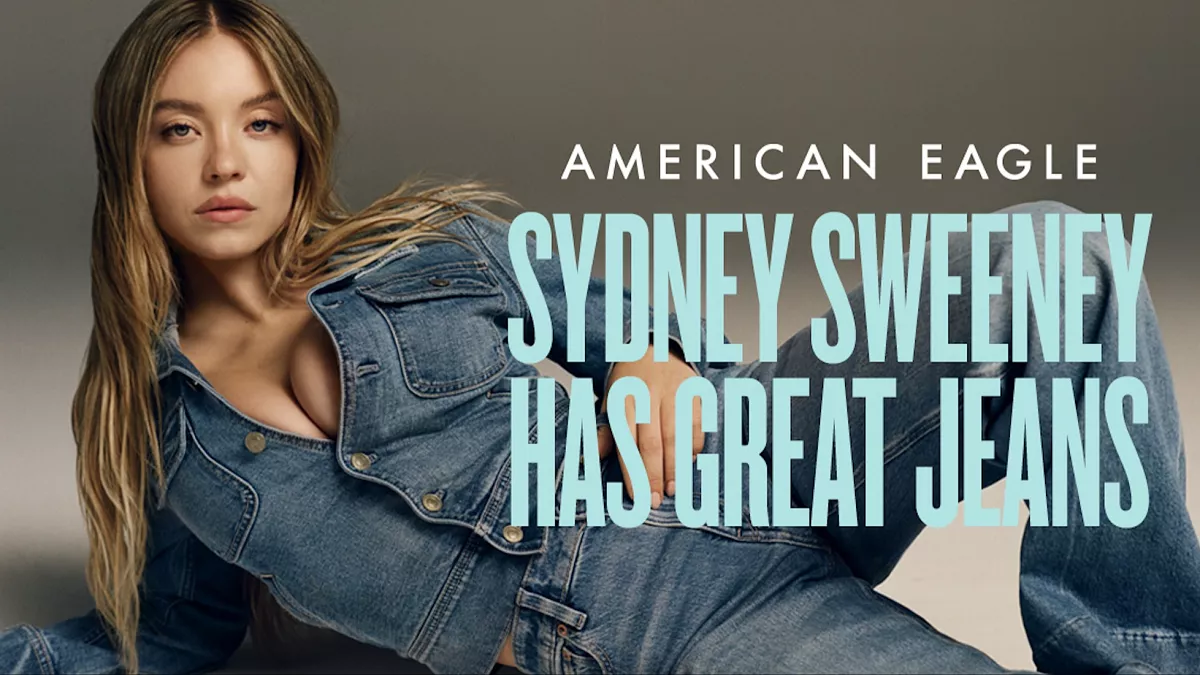
Brand America is operating from two different moral systems.
One is rooted in “the self“ and a strong duty to protect people “like me” above all else and the other is focused on “the community” who celebrates all the differences around us. “The self” sees these differences as a threat.
One believes that care is shared and responsibility extends outwards and the other believes obligation ends a “mine” there is no common ground to find.
One has a sustained belief that they are in a constant battle over what’s being “taken away” from them: power, status, culture, certainty. While the other is trying to build more empathy, accountability, and equality.
One is rooted in head-lead thinking (fear-based, profit-led, control). The other is led in heart-led (thinking care, time, creativity, connection).
The machine that runs the US doesn’t change but our values, as humans, do. And I very much believe that it is changing from head-led thinking to heart-led. If we meet what’s rising with our old armour as so many are doing today, we’ll miss what’s trying to be born. But if we as a society meet it with open hands, grounded hearts, and the courage to feel instead of control, then this moment won’t break us. It will transform who we are.
Julián Medrano Hoyos
I’ve been thinking for some time about the idea of the US as the current “falling empire,” and I do think we’re seeing its decline – albeit primarily due to monetary and credit issues. Ray Dalio explores this in depth in The Changing World Order, explaining that over the last 500 years, empires have fallen after systematic debasement of their own currency spirals out of control, disrupting money and credit cycles and triggering internal disorder and geopolitical conflict. The US dollar, as the world’s reserve currency, will drag down other economies, which partly explains the chaos we’re seeing globally. These processes, however, usually take decades, which means that even if this is the twilight of the US as the leading superpower, most of us won’t be around to witness it crumble.
Viewed through the lens of Terence McKenna’s “Novelty Theory” – which posits that due to the exponential increase in novelty, connectivity and complexity, we are living in the most chaotic period in human history – there’s some evidence that Brand America is indeed fractured. For much of the last century, the US was the engine of novelty, but as novelty has steadily lost its appeal (there’s simply so much of everything that we seek ways to step back), so too has the brand.
I’m Colombian and spend much of the year in France. I’m noticing increasingly negative views of Americans and the US in both Colombia and Europe. So where does Brand America stand right now? I see it in the middle of a transformation – from the “American Dream,” the land where anything was possible, to the actual outcome of that promise.
Joe Muggs
I always look at America through the prism of real and fictional pasts and presents, and the futures that people have extrapolated from those pasts and presents. The America of James Ellroy and Joan Didion, Brett Easton Ellis and Gossip Girl and Succession, Judge Dredd and Transmetropolitan and William Gibson’s Sprawl trilogy has always been one of ugly, inhuman or posthuman power blocs – gangs, mafias, corporations, clans, klans, the quiet old power of the NY/New England WASP establishment – and the thugs and psychopaths who make them up, barely if at all constrained by law or convention, somehow kept just barely in balance with one another by the physics of power and violence, frequently setting off sparks terrifyingly close to volatile chemicals (Bay Of Pigs, Kent State…. everything about the MAGA regime), and that is what is everywhere on the surface right now, as self-parodically as anything in Transmetropolitan or Illuminatus! – that, more than ever, is Brand America.
But then there’s the America of Toni Morrison, John Steinbeck, Armistead Maupin, Octavia Butler, Gloria Anzaldúa, Ta-Nehsi Coates, Ocean Vuong, Studs Terkel – Laurie Anderson? David Byrne? SUN RA? – of the plastic chairs on Bad Bunny’s album sleeve, and of course of James Baldwin (“The world is held together, really it is held together, by the love and the passion of a very few people”) – the America of people for whom the above machinations are just natural phenomena to be weathered, the America with the sense of chosen family and constructive optimism and clinging-on-by-the-fingernails wild hope that only an immigrant nation that remembers it is an immigrant nation can have.
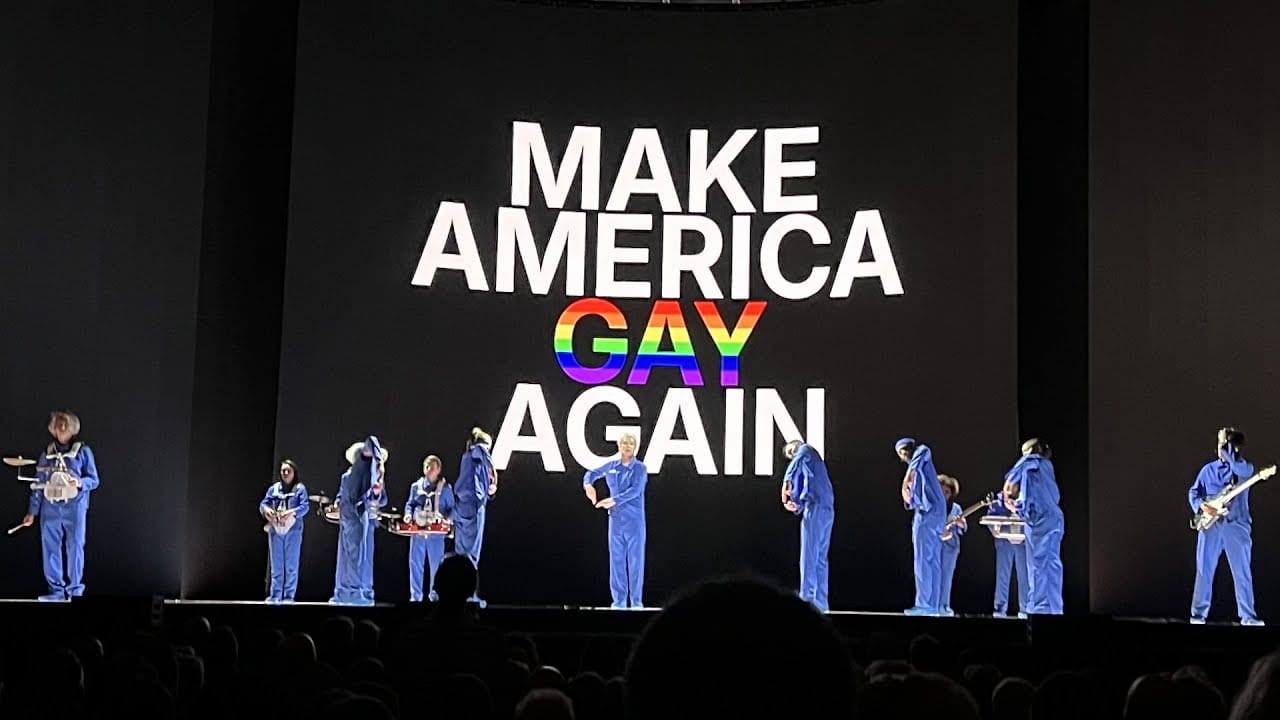
I’m not sure where that lives most right now, but it is definitely there, still, in the art scenes and zines and people showing up with whistles and crochet and mad plans and belief that They, The People can imagine and become otherwise… that the cosmos is bigger than the cops? Not that the USA has a monopoly on resistance or rag-tag solidarity, of course it doesn’t. And as in so much of its pop culture now, it increasingly echoes a multipolar world – not just China but Korea, Japan, South Asia, Arab and African, even (shock) European aesthetics in the mix. When Bad Bunny says “GOD BLESS AMERICA” then listed every nation in the Americas from south to north, that is the story too, the permeable America. But The USA is, whether we believe the empire is falling or not, still the centre of the world, and the unique permutations are still Very American and our attention is still on them as such.
| SEED | #8384 |
|---|---|
| DATE | 11.02.26 |
| PLANTED BY | PROTEIN |
