

Archive-Futurism

Why exploring the past is the best way to imagine the future.

First published on Alexi’s Substack Idle Gaze, this SEED picks up on the ways culture is collected, catalogued and sometimes lost – as we covered in Brands As Libraries, which traced the archival impulse in design and branding, and in Vanishing Culture, exploring the fading footprints of websites and digital traditions online. If the past is never fully gone, how can we mine it to imagine futures that don’t yet exist?
I keep thinking about how some of the most innovative artists and forward-thinking brands today embrace thoughtful retrospection more than ever. I’m not talking about the rose-tinted, nostalgic kind of reflection. I mean the ability to decode the cultural canon with nuance: digging into the back catalogues, obsessing over niche references and unearthing obscure details. In a cultural landscape that trades on novelty, sifting through the archives is a quietly radical act. It’s not about seeking comfort in the familiar; it’s about treating the past as unfinished material, something to be decoded, challenged, and rebuilt.
Recently, Maison Margiela announced its plans to open up its inner workings to the public through an initiative titled MaisonMargiela/folders – a digital archive, publicly accessible via Dropbox. The Margiela atelier will use the online folders to store reference images and inspiration from the brand’s previous collections, alongside project timelines and other working documents as it prepares for its Fall-Winter 2026 show. This is interesting on a few levels. For a brand with a penchant for anonymity, choosing to work in public is a significant gesture in itself. But it also reveals something deeper: a commitment to showing how carefully curated archival references eventually turn into fully formed visions for the future.
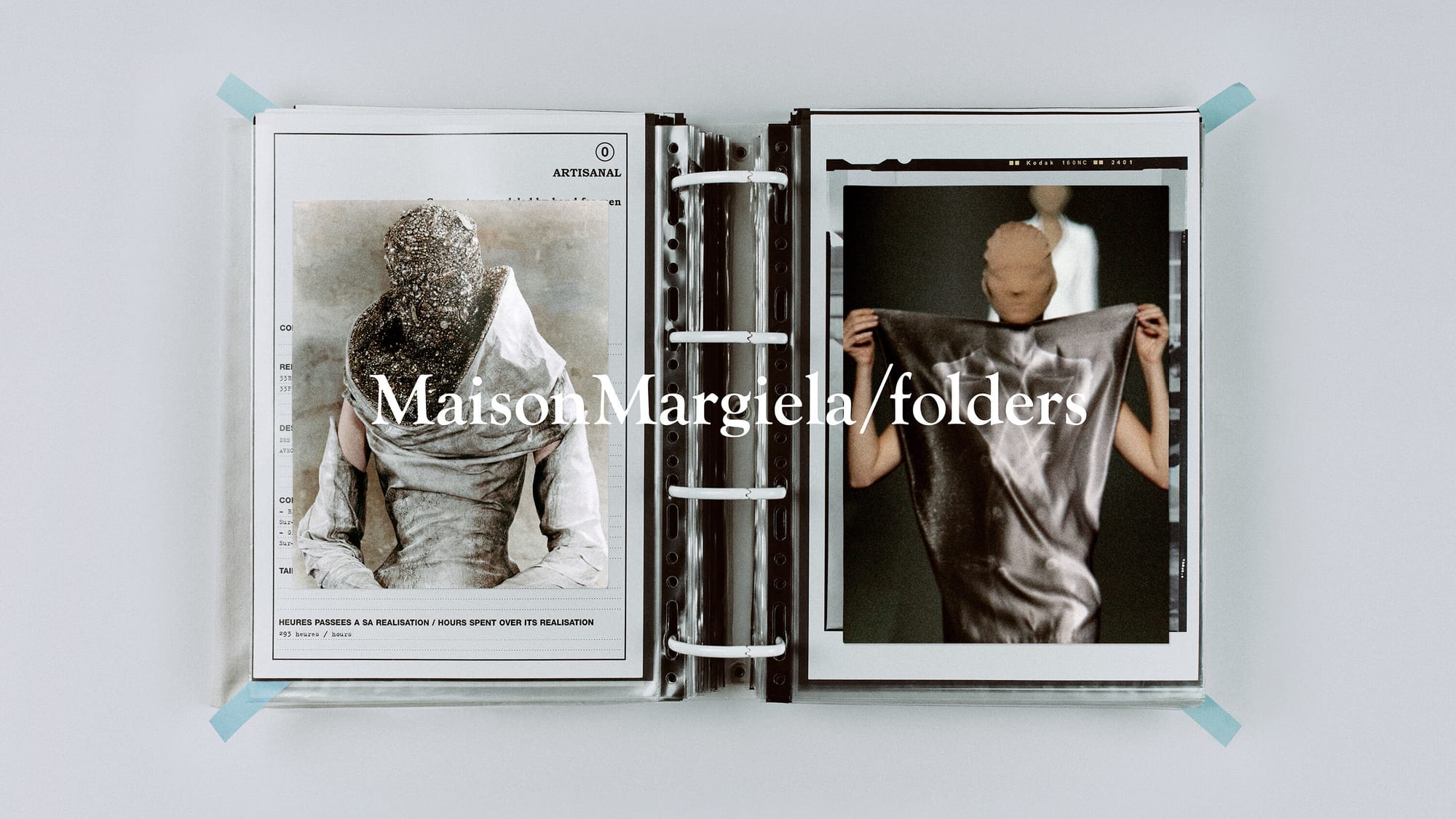
Maison Margiela Files is just one of many recent initiatives across luxury fashion and beauty that explore the past as a path to innovation. Coty recently introduced a scent based on a 120-year-old blend from their archives, while cult Indian label Kartik Research drew on 70s archival textiles for their Fall-Winter 2026 collection.
Dior’s Spring-Summer 2026 show, helmed by Jonathan Anderson, stayed true to the house’s origins while carving a new path forward, by diving deep into the brand’s archive. The opening film, by Adam Curtis, provided astute symbolism for how the fashion house wished to frame its excavation of the past. Beginning with the caption “Dare to enter the house of Dior”, the film deployed Curtis’ signature whiplash digressions, menacing atmospherics and near-psychedelic compilations of archival footage, flashing the house’s history before guests’ eyes, interweaving it with horror films, before imploding into a Dior shoe box. As if to say: our past is well understood and respected, but as a source of inspiration, not a template to be replicated.
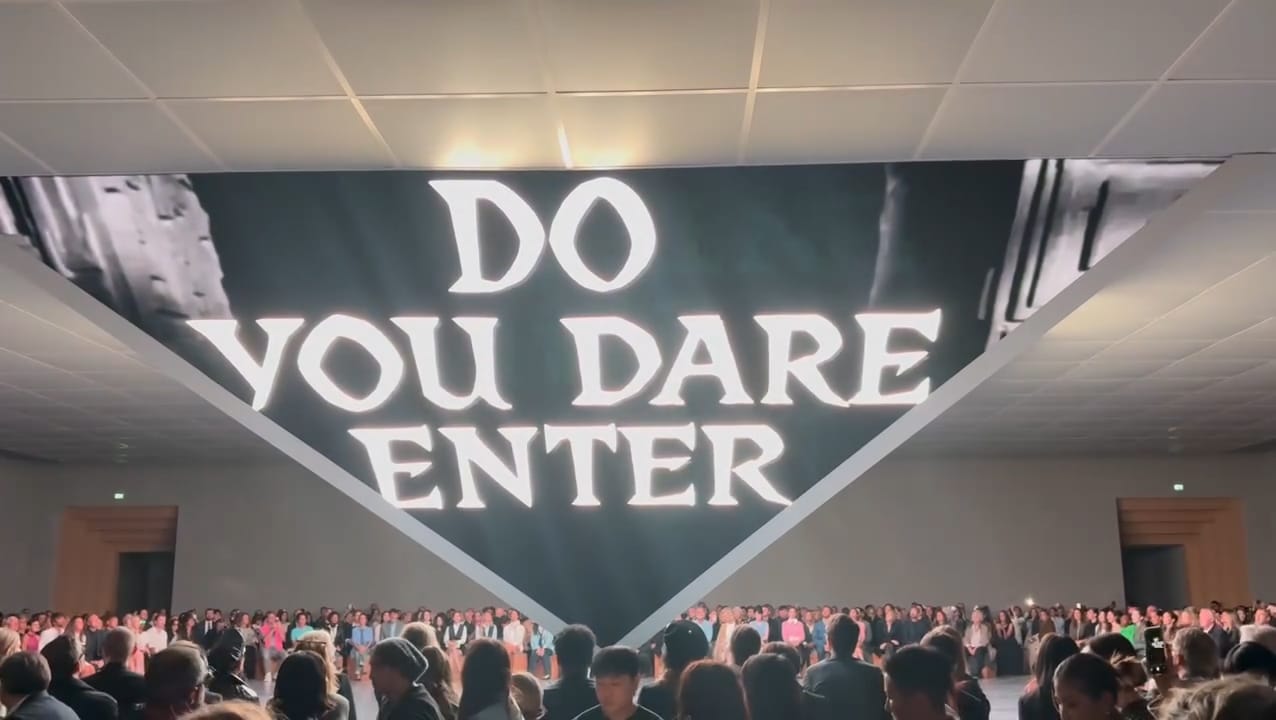
This is Archive-Futurism: a nerdy curiosity about a brand’s history and its place within the wider cultural canon, paired with the creative zeal to connect dots, recontextualise and remix what came before into something entirely new. The most interesting creatives today aren’t simply referencing the past; they treat back catalogues, history books and retrospectives as raw material for future visions.
When everyone seems to be leaning on the same recycled moodboards, Archive-Futurism can play a pivotal role in enriching the creative ecosystem. As TikTok account 020sik argues in a video, one of the reasons culture feels stagnant right now is that artists simply aren’t reading anymore:
They therefore end up using the same references and producing the same output competing to see who can feed it to the algorithm best. I think [creatives] who are nerds of their art forms, other art forms, politics and history, are able to inform their work in unique and interesting ways, and that’s something we’re really lacking right now. We need to bring back artists who can read, because otherwise it’s getting so boring.
020sik names Grace Wales Bonner, Kode9 and Lubaina Himid as creatives who engage the canon with genuine curiosity and critique. Grace Wales Bonner, in particular, is a prime example of archive-futurism at play. In addition to running her namesake label, she serves as creative director of Hermès menswear, and across both roles, she is renowned for her approach to archival research. A function first and foremost positioned as a creative practice, described as “the melding of ideas from not only her immediate peers but also the nuance that can be found in the films, art and worlds of those she finds influential, finding a way to seamlessly integrate them into her output.”
Take the Autumn/Winter 2020 collection Lovers Rock, an ode to the British Afro-Caribbean music scene that emerged from underground London house parties in the 1970s. Or the brand’s recent campaign featuring UK rapper Dave, which channels Vermeer’s Girl With A Pearl Earring through a contemporary lens.
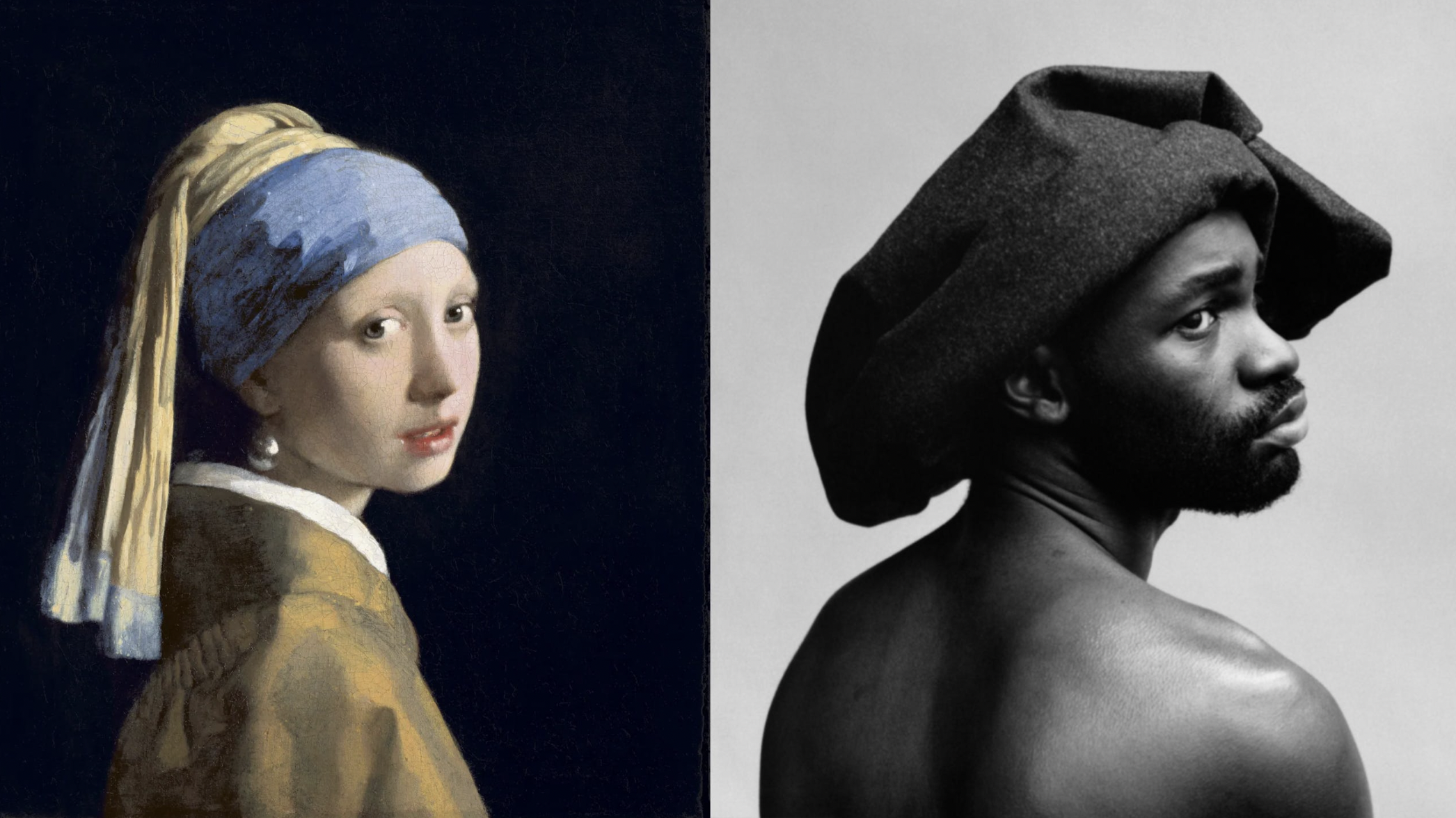
In a feature for WePresent, she explains how visual and historical research unlocks new meaning:
I’m interested in what’s created in that between space, through things that already exist, through conversation, and in turn, creating something which I hope will be richer through that process.
This same impulse, making something new from the spaces between, is equally felt in the music zeitgeist. One of my current obsessions right now is the American artist Oneohtrix Point Never, arguably one of this moment’s most influential producers, who operates as a kind of sonic archaeologist.
While many might not be familiar with his name, they’ll have heard his productions infiltrating the pop music zeitgeist through his collaborations with The Weeknd, Rosalía and FKA Twigs, and in his scores for films including Uncut Gems and Marty Supreme. His latest album, Tranquilizer, pulls from a vast archive of once-ubiquitous digital samples from the nineties, the kind that seeded themselves into the soundtracks of TV shows, video games, corporate videos, and ads of the era. The result is an album that feels futuristic and otherworldly, yet eerily familiar, what Sasha Geffen at Resident Advisor aptly called a “wonderland of decay”. A perfect example of forward-thinking work built from the ruins of the past.
Archive-Futurism might be exactly what culture needs to escape its current malaise. In his recent book, Blank Space: A Cultural History of the 21st Century, W. David Marx argues that over the past 25 years, pop culture has suffered from a perplexing lack of reinvention. As a result, we’ve entered a cultural “blank space”: an era when reboots, rehashes and fads flourish, while bold artistic experimentation struggles to gain recognition. To restore cultural innovation, he proposes, paradoxically, that we once again need to become intimately familiar with all that has come before:
In the past, conservatives treated the canon as a sacred and complete archive, something to be preserved rather than expanded. This is precisely why the avant-garde sought to destroy it. But in truth, even the avant-garde need the canon. The only way to invent something new is to fully understand what came before…the goal should be a disciplined engagement with historical works, paired with a futurist drive to forge entirely new creative pathways.
Today, re-engaging with the canon is not just a creative necessity; it has clout. We are entering an era of what Beth Bentley calls ‘wisdom-signalling’. In an age of algorithmic flattening, where information is abundant but insight is scarce, appearing well-informed is becoming powerful social currency. Amid the democratisation of information through search and AI, basic domain knowledge is no longer enough: “people want others to see them as someone who can think deeply and broadly in a world that so rewards quick hot takes and simplified soundbites”.
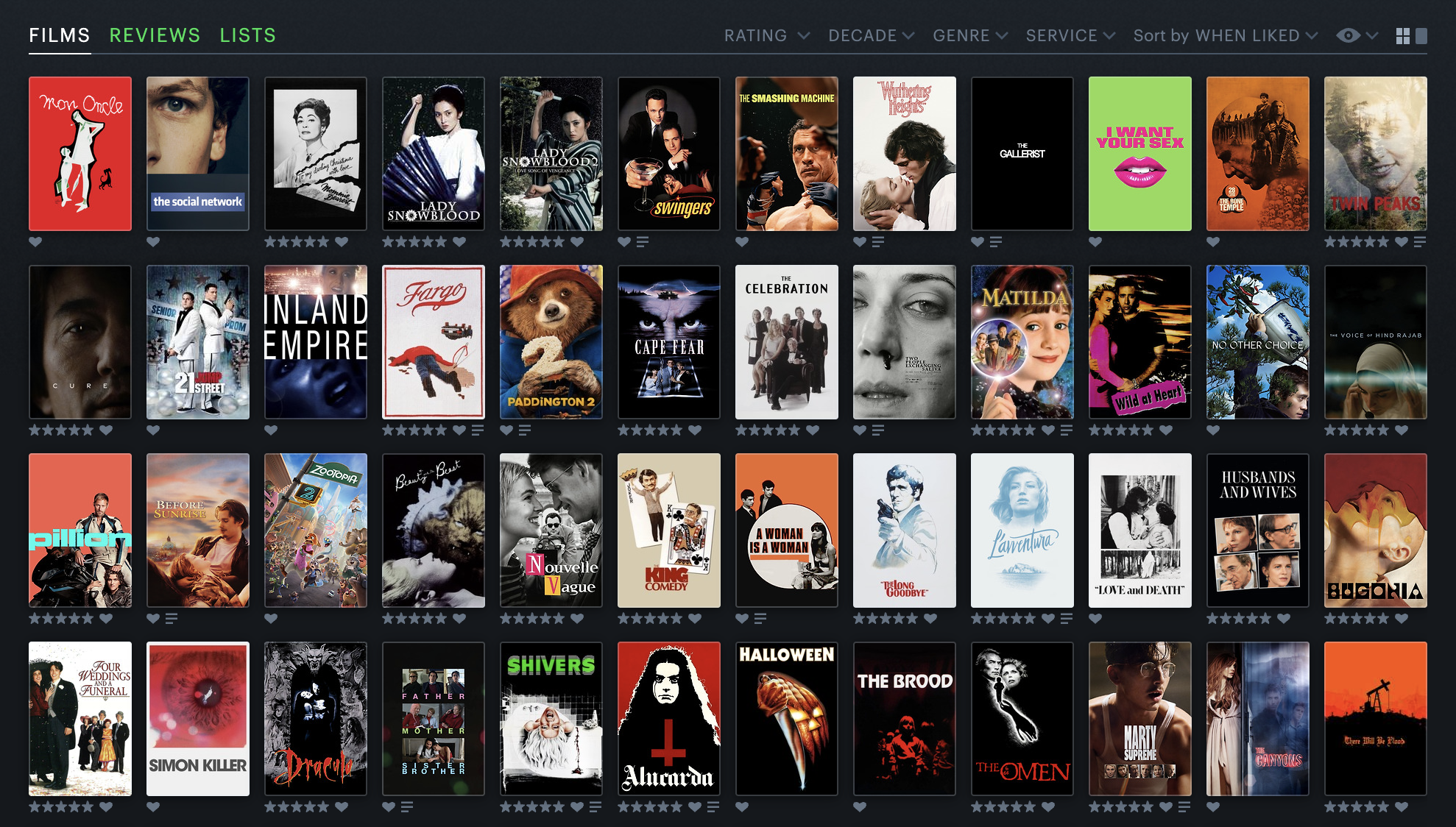
As a result, I’ve noticed that contemporary artists, who may have previously dismissed works of the past as stuffy anachronisms, are now far more likely to flaunt their knowledge of the 20th-century pantheon. Take Charli XCX, for example. She consistently pushes pop culture forward, yet also shows genuine appreciation for the canon. She recently went on Criterion Closet Picks to showcase her love for classic auteurs like David Cronenberg, posts Letterboxd reviews of obscure indie flicks from the 70s and proclaims an appreciation for Turner Prize-winning photographers in her Perfectly Imperfect recommendations. Digging through the archives feels more chic and aspirational than ever.
Last month, in a now widely-shared speech at the World Economic Forum, Mark Carney, the Canadian prime minister and economist, argued that “nostalgia is not a strategy”. He’s right. Yearning for how things used to be is unproductive. Even so, there is still immense value in studying what came before, not in hopes of repeating it, but in order to create something radically new in the spaces in-between.
| SEED | #8388 |
|---|---|
| DATE | 24.02.26 |
| PLANTED BY | ALEXI GUNNER |

