



In a couple of months A24 will release its long-awaited film Backrooms, with the tagline, “A strange doorway appears in the basement of a furniture showroom”. The release marks an unusual moment in Hollywood: a major studio placing its bet on a piece of internet folklore that began as a single anonymous forum post.
For those who don’t know, the story is the product of a form of decentralised, collective storytelling the internet calls a “creepypasta,” where short horror stories are shared and reshaped across forums like Reddit and 4Chan, evolving as they spread. Collective storytelling born from the bowels of the internet.
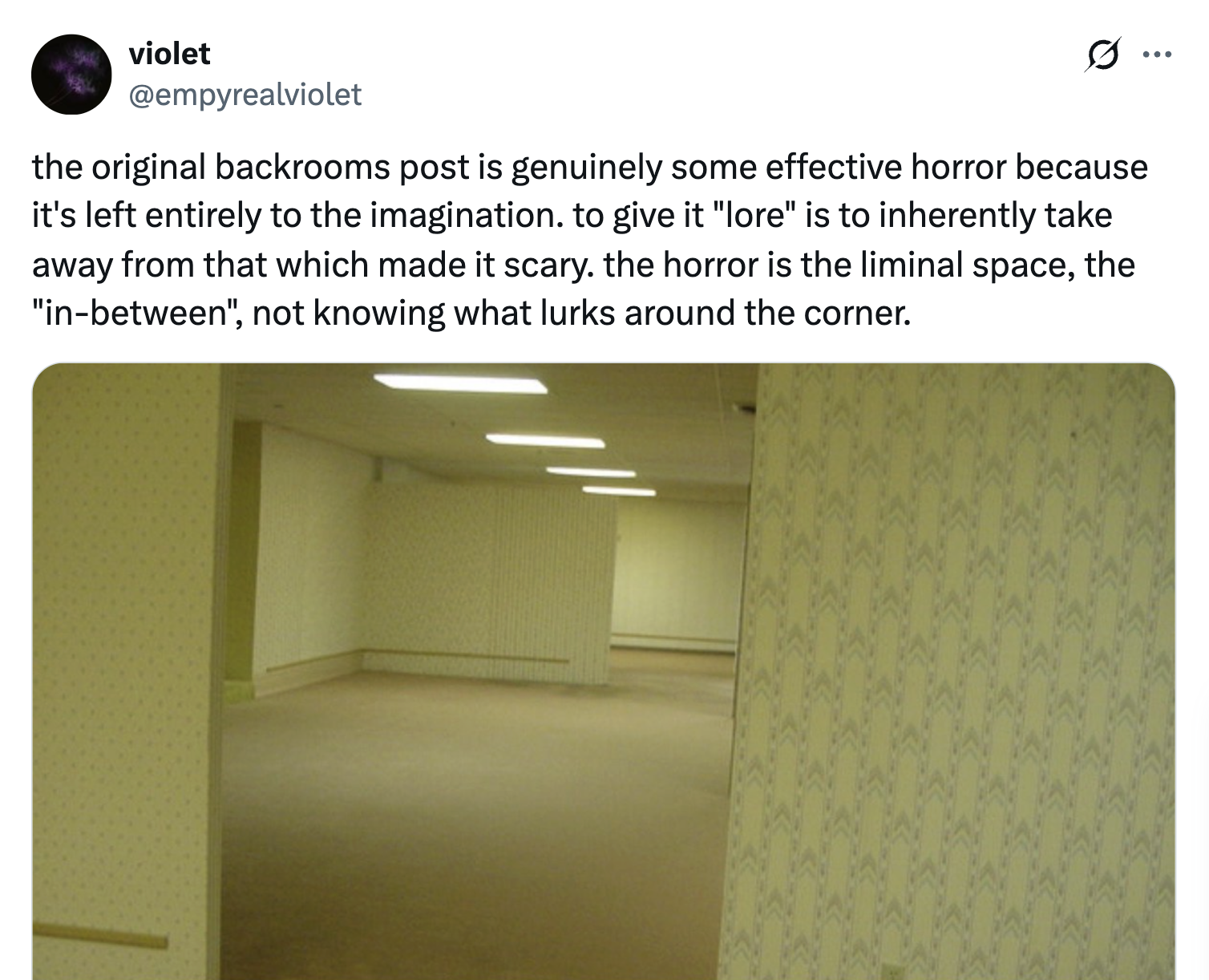
The early premise was simple: individuals fall out of our reality into an endless network of ugly yellow hallways, where monsters or malnourishment await. That two-paragraph post from 2019 has since become a sprawling mythology, built collaboratively by online communities who set rules for storytelling, catalogued “levels” and developed a narrative world through various online forums.
The broader internet really began to notice the story in 2022 after amateur videos by creator Kane Parsons (known online as Kane Pixels) went viral on YouTube. Parsons was just 16 when he released his first video, which follows a teenager who falls into the liminal yellow hallways. After Parsons’ videos, indie videogame developers created a host of inspired games, which were played by “Let’s Play” (LP) streamers who spread the content to millions of subscribers.
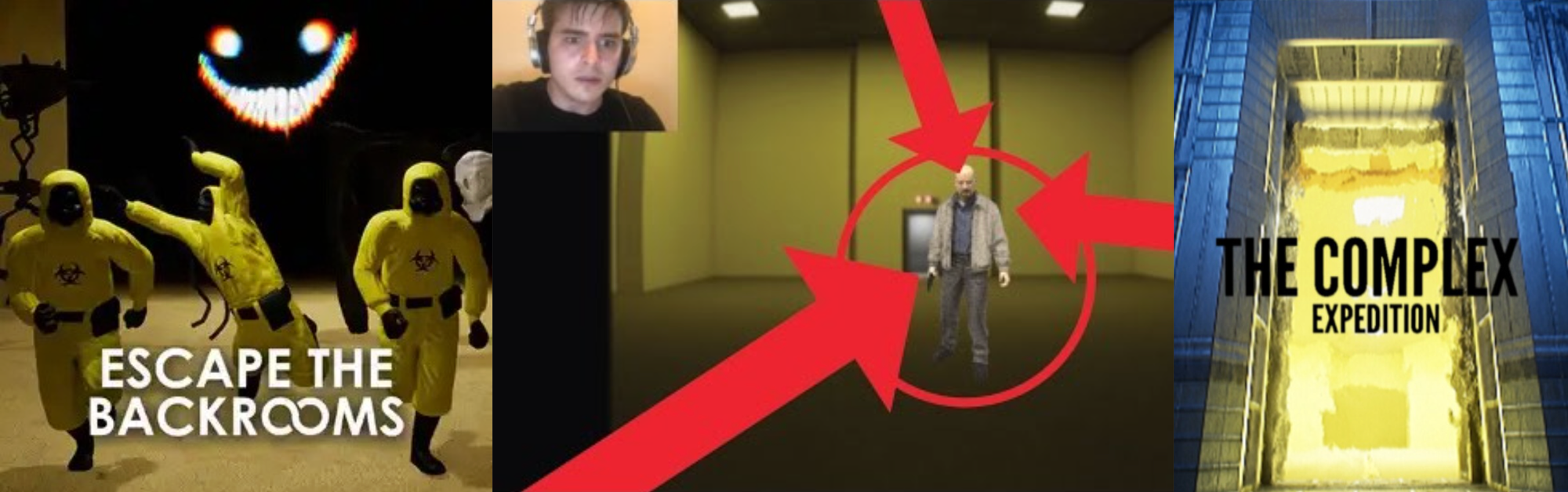
For brands and studios watching closely, this trajectory – from anonymous forum post to cinematic release in just six years – is a case study in how momentum builds online. Culture increasingly emerges from communities first, and institutions later.
Internet culture historically has not been taken seriously, but that might be changing. At the end of January, YouTube creator Mark Fischbach, who goes by Markiplier on his YouTube channel, released his debut film Iron Lung to 4,000 cinemas. It went on to make $50 million at the box office on a modest budget of $3-5 million.
The film’s success might surprise offline crowds, but not internet-dwellers like me who are already familiar with Fischbach’s internet stardom and loyal fanbase of some 40 million subscribers on YouTube. For brands, this highlights a shift from audience acquisition to audience migration. Increasingly, cultural products reach the mainstream with their communities already built.
Like Iron Lung, the 2023 Five Nights at Freddy’s movie was a surprise box-office hit, grossing nearly $300 million and spurring a sequel which also made some $240 million. Both films were inspired by indie horror videogames, which have become their own symbiotic communities online.
Indie developers share their work with YouTube LP creators like Fischbach, who stream gameplay, driving new players to their games. FNAF has even moved outside of film into crossovers in other videogames like Dead by Daylight and Fortnite, and in an instance of life imitating art imitating life, Popeyes released a FNAF-inspired meal in November of 2025.
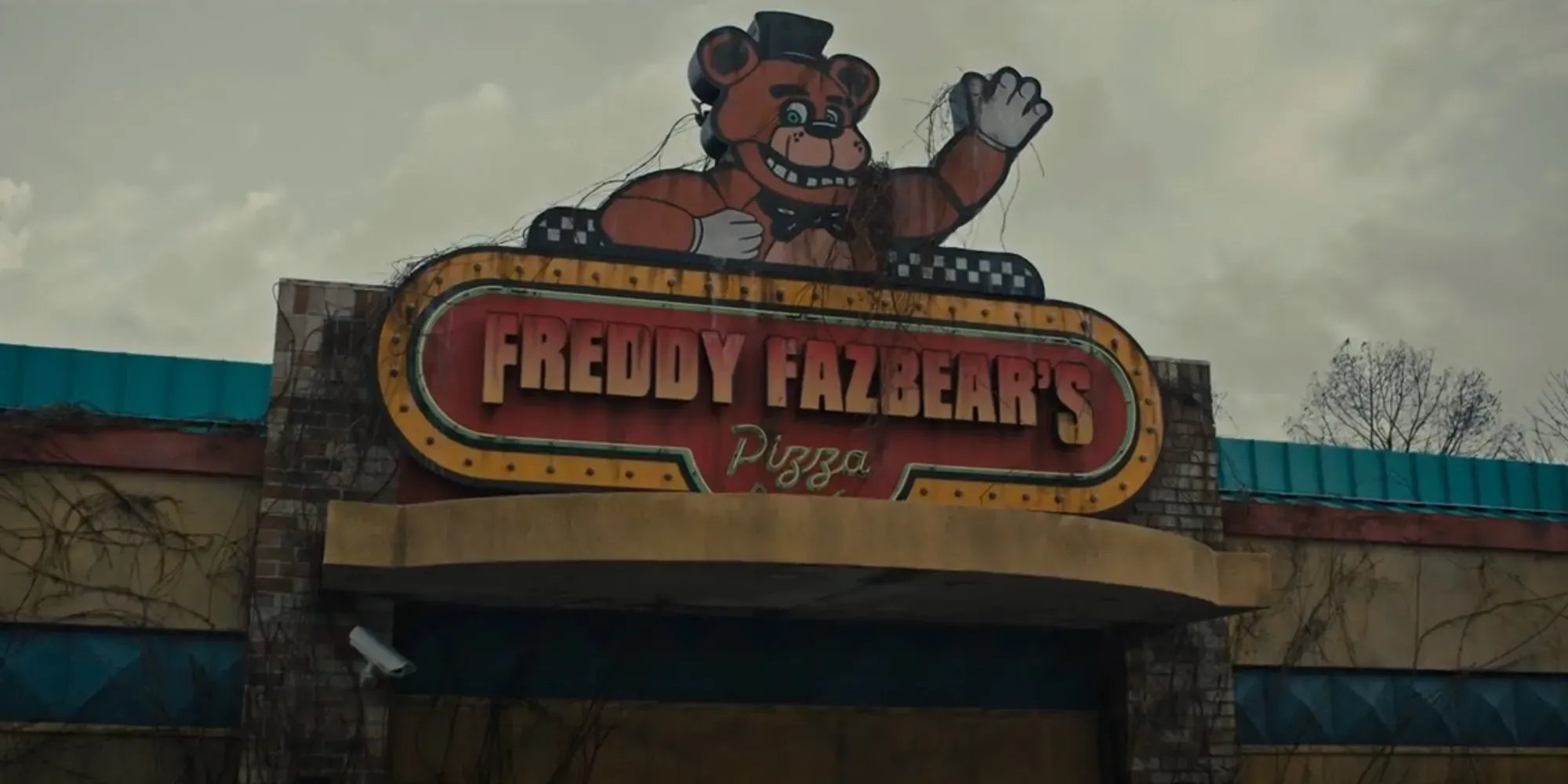
FNAF has you play as a night shift security guard at a decaying “Freddy Fazbear’s Pizza” location, a fictional children’s entertainment centre akin to Chuck-E-Cheese, where the dancing animatronic robots come to life and attempt to kill you. The gameplay is, genuinely, scary, but the internet’s fascination with FNAF is likely more to do with the mythology implied in the secrets you can find in the game if you do things like beat the game on hard mode or uncover hidden Easter eggs.
This has led to its own cottage industry of internet sleuths with YouTube channels – some with nearly 20 million subscribers – that hypothesise about the FNAF mythology as it unfolds across the series’ 12 games.
For strategists, this is an important design principle of internet-native storytelling: mystery drives participation. When audiences believe there are deeper layers to uncover, they begin doing the narrative work themselves.
In these internet communities, lore is paramount to creating the deep connection fans feel to the source material which keeps them engaged. The creators and developers who are most successful in capturing online audiences do so through bringing their community into the world-building process.
Community members take in the original content – the story as it exists in that moment – and add their own take or spin to the collective mythos. Not everything will make it deep into the lore and become influential, but in authoring some segment of the mythos, no matter how small, community members are brought deeper into the collective project. The most potent form of immersion online is co-authorship.
Fans have watched Fischbach grow over his nearly 14-year career as a streamer, which is documented on his YouTube channel – his oldest video is from 13 years ago. That long-term relationship between creator and audience is part of what makes these communities so powerful.
A24’s choice to bring Parsons, at 19, on to direct is a risky move, but this nod to the community’s origins will likely be celebrated by fans. It signals that the filmmakers understand the success of the project rides on audiences’ excitement and, crucially, their trust that the adaptation will honour the source material. Credibility with the originating community matters as much as scale.
The internet is rife with dedicated small communities infatuated with niche stories that have yet to reach the mainstream. Longtime fans of these worlds are eager to see them translated into broader culture – not as bastardised versions, but as earnest reflections of the mythos they helped build. It’s about seeing yourself and your community – who may have once felt odd or isolated for your interest in an obscure corner of the internet – recognised and celebrated on a larger stage.
| SEED | #8391 |
|---|---|
| DATE | 10.03.26 |
| PLANTED BY | CHARLES WEAK |
