Dystopia Bait
The future looks bad on purpose – with brands increasingly turning worst-case futures into launch strategy and marketing fuel.
The New York City subway has become an exhibition space for dystopian futures. Late last year, “modern IVF” company Nucleus coated a SoHo station with ads encouraging commuters to “have your best baby”.
Billboards that would’ve worked perfectly in a Gattaca prequel shouted “IQ is 50% genetic” and “Height is 80% genetic” from train doors. A4 posters taped to nearby lampposts – complete with QR codes leading to pickyourbaby.com – boasted “these babies have great genes”, a clear reference to Sydney Sweeney’s grimace-inducing American Eagle campaign.
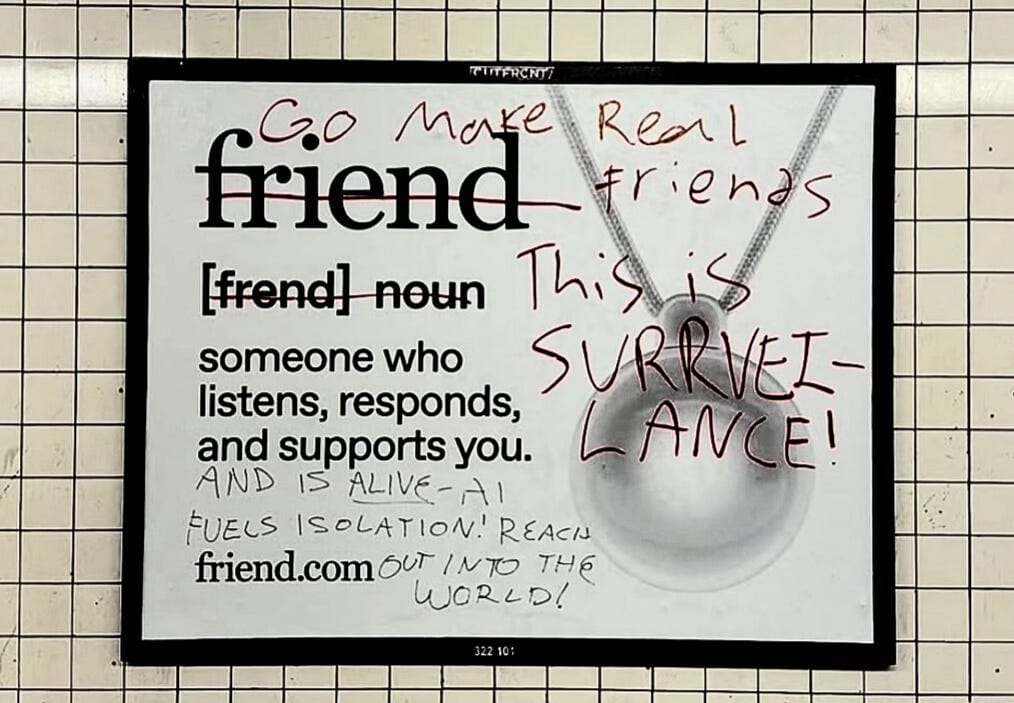
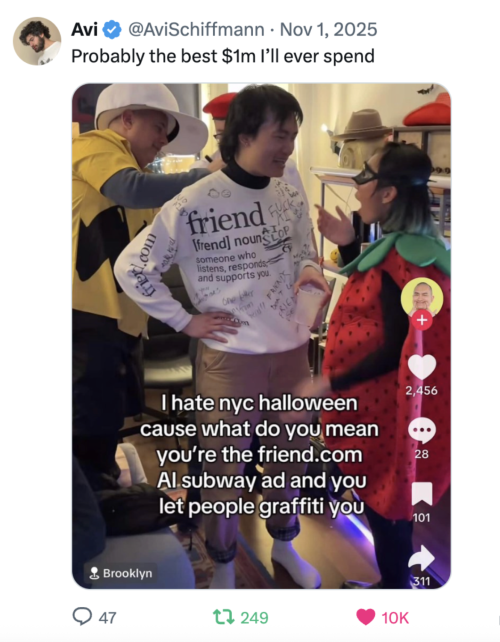
It harked back to the summer, when ads for AI wearable Friend plastered station walls and train interiors across five New York boroughs. The activation cost the startup at least $1m and was vandalised – both IRL and online, via Danger Testing’s VandalizeFriend.com.

“They’re meant to spark something,” Nucleus founder Kian Sadeghi later wrote in a public note, putting it lightly. These campaigns are concentrated and all-encompassing for a reason: their success hinges on a reaction.
As Friend founder Avi Schiffmann tweeted: “The picture of the billboard is the billboard.”

Automated work startup Artisan grabbed hate – and headlines – for its own dystopian message, “Stop Hiring Humans”, which according to a recent blog post by founder Jasper Carmichael-Jack drove $2m in annual recurring revenue. Rather than opting for a New York subway takeover, Artisan’s first billboard went up in San Francisco during TechCrunch’s annual conference.
The tagline was intentionally provocative, Carmichael-Jack writes. He even posted a photo of the ad to Reddit’s r/mildlyannoying to fan the flames. He wasn’t, however, “expecting people to get so mad”. Thousands of death threats followed.

Cluely’s dystopia bait came in the form of a Black Mirror-esque 90-second video, where a guy uses Cluely’s AI software to semi-effectively lie to his date. The message: cheat on everything. “Our ultimate bet is attention,” founder Roy Lee later told Bloomberg.
Even the biggest tech companies have leaned into dystopian narratives. Sam Altman tweeted the word “Her” ahead of the release of ChatGPT’s voice (which sounded so much like Scarlett Johansson she threatened legal action). As journalist Bryan Merchant writes, “for tech CEOs, the dystopia is the point”.
Evoking dystopia can backfire when the nightmare you’re portraying isn’t the one audiences recognise – or consent to. McDonald’s learned this in December when it released an ad in the Netherlands positioning its restaurants as safe havens from the dystopia of Christmas stress. The entirely AI-generated film was clumsy, uncanny and quickly became the internet’s favourite festive punching bag – before, and after, the brand pulled it.
McDonalds
The aforementioned young entrepreneurs – Schiffmann is 22, Carmichael-Jack is 23, Lee is 22 and Sadeghi 26 – didn’t retreat after backlash. They leaned in. They’re treating advertising the way they treat social media: what once might have been a “banger” tweet is now 1,000 billboards, designed to spawn millions of digital interactions. As one X user put it: “In 2026 you buy billboards so people will tweet about them. The ‘real’ world only exist [sic] as a feeding ground for the virtual.”
For brands, this is a crucial shift. Dystopia bait isn’t about persuasion – it’s about provocation. These campaigns don’t ask to be liked or believed, only circulated. Attention becomes the KPI, outrage the media plan.
There’s also a defensive advantage. By pre-emptively embracing criticism – even dramatising it – companies gain a degree of control over the narrative their products would inevitably attract. It’s hard to call something “backlash” if it was anticipated, engineered and publicly enjoyed.

Palantir is a more institutional example. Though effectively a software company, it leans heavily into its association with the military-industrial complex. It sponsors the Army vs Navy football game and, according to employees interviewed by Wired, uses military slang internally. And, as if anyone could forget, CEO Alex Karp declared on an earnings call last year: “Palantir is here to disrupt and make the institutions we partner with the very best in the world – and when it’s necessary, to scare enemies and, on occasion, kill them.”
This isn’t an endorsement of what Palantir – or any of these companies – are doing, or how they’re doing it. It’s an assessment of how effectively they’re generating and leading the conversation around their brands. The takeaway isn’t that brands should act more evil, or situate themselves in some speculative hellscape. It’s that culturally effective work creates friction – and knows exactly where that friction will travel next.

Dystopia bait is ultimately a subset of what tech writer Jasmine Sun calls “vice signalling”: the latest iteration of classic rage bait. “Often, dis-engagement is the best way to waste the master-baiters’ time and money,” she writes. “Don’t take the bait.”
Perhaps the final brand lesson is this: if dystopia bait works because audiences can’t look away, it also relies on their participation. Knowing when you’re being provoked – and when you’re amplifying it – is increasingly part of media literacy.
| SEED | #8378 |
|---|---|
| DATE | 20.01.26 |
| PLANTED BY | SOPHIA EPSTEIN |