Is losing things online the only way to make them matter?
Single hyperlink emails are the web’s version of meme-sharing – sudden, out-of-the-blue gestures of comradeship, and one of my favourite bonding rituals. On May 14, I received one of them:
That’s it. What a beautiful email. Gian, who sent it, is a master of formats. Earlier this year, he mailed me a handwritten letter on paper that would make Patrick Bateman jealous – finished with a wax seal stamped with his family crest. Gian leaves no detail unchecked, which is why the brevity of the email was deliberate.
As for semipermanent.com, I hadn’t heard of it, but the name alone was enough to make me click. The short description guaranteed I’d remember it the way I remember my childhood friends’ phone numbers.
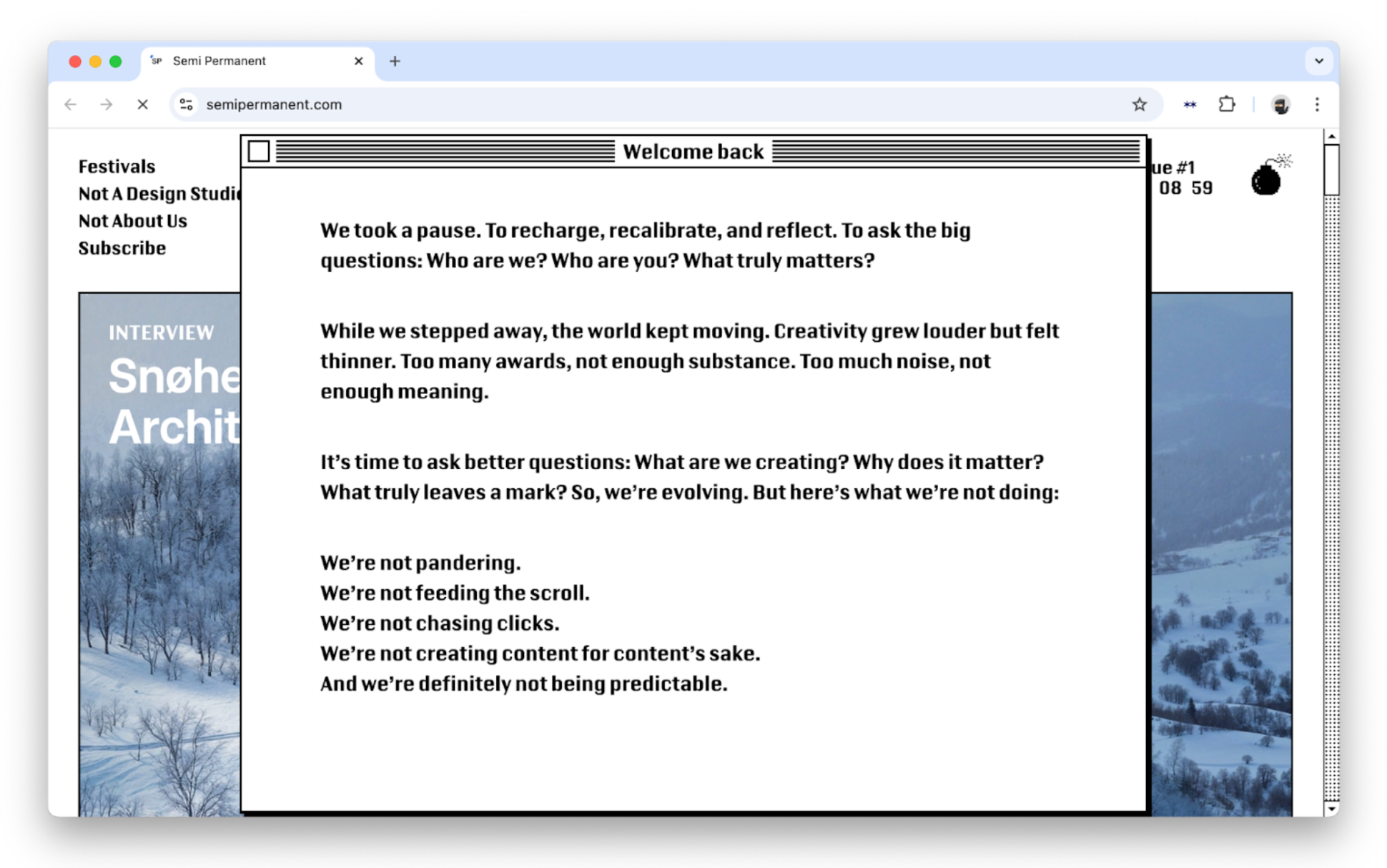
Semi Permanent landing page
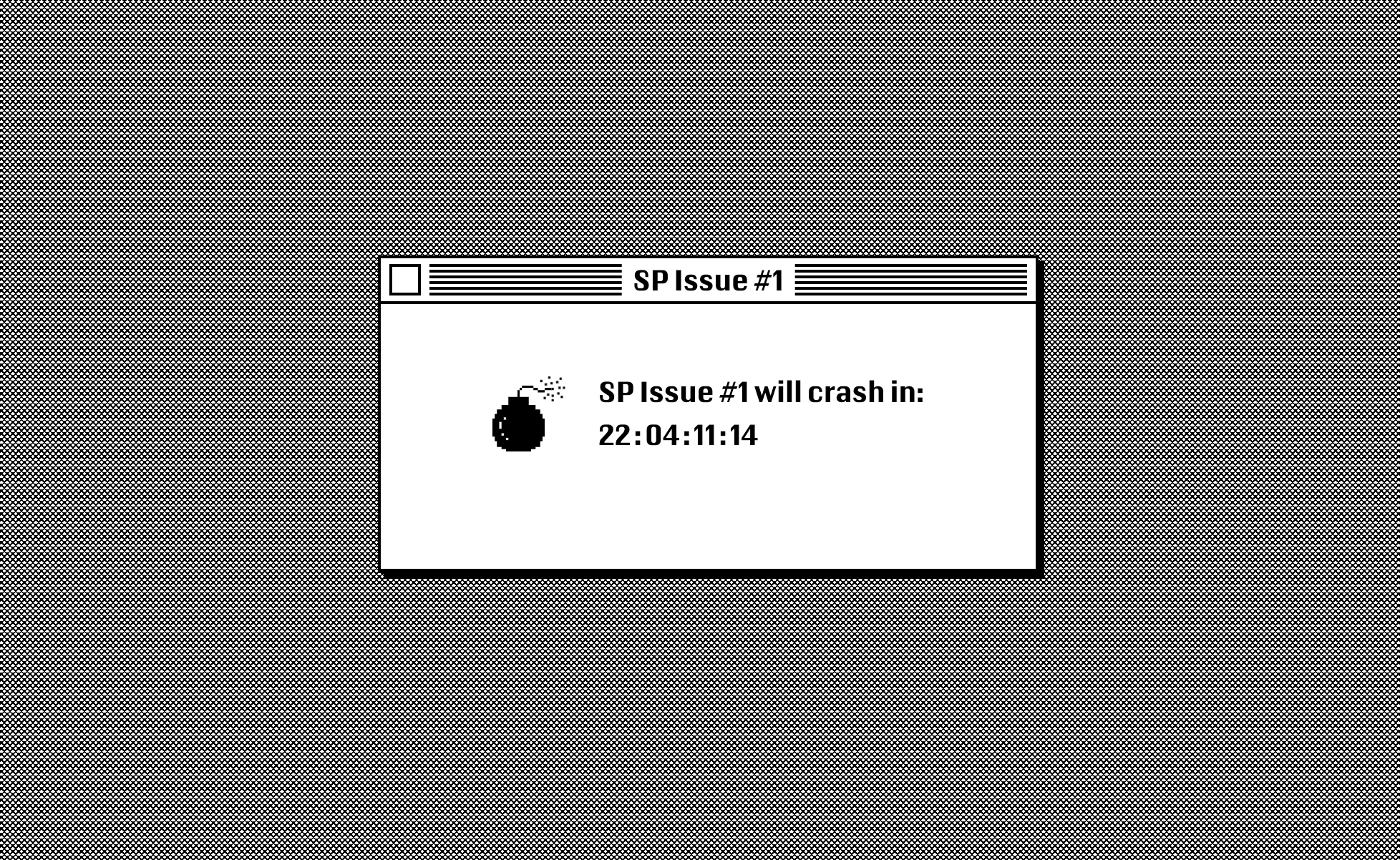
The site loads with a welcome message reminiscent of childhood video games – soothing, like a cup of tea on a winter evening. But the coziness fades quickly. As a chronically online person, I don’t need yet another manifesto telling me how terrible technology is. Luckily, I noticed a burning fuse icon in the corner and kept reading until I found the final note, left a bit like Steve Jobs’ famous catchphrase “one more thing”:
P.S. The first issue self-destructs in 30 days.
It turns out that Semi Permanent is relaunching as an online magazine where each edition disappears after a month. Perfection. 10/10. A++.
Yes, cynics will say it’s just artificial scarcity, a gimmick. And sure, anyone could download the articles or save them to the Wayback Machine. But I prefer to see it differently – as poetry. In a digital culture obsessed with permanence and efficiency, the act of letting something vanish becomes an invitation to pay closer attention. If you want it afterwards, you’ll need memory and effort.
Protein AGENCY provides insight, foresight and strategy for global brands that's rooted in culture and the collective knowledge of SEED CLUB - our decentralised research community of 500+ global experts.