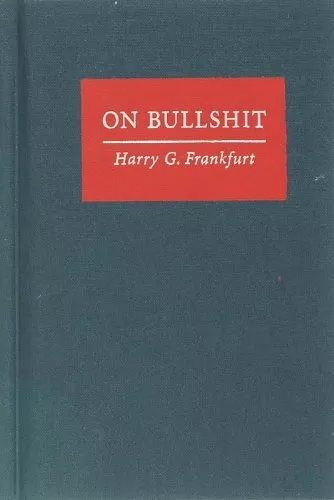
“One of the most salient features of our culture is that there is so much bullshit,” wrote Harry Frankfurt in his seminal 1987 essay On Bullshit. He bemoaned the rise of the “bullshitter” as somebody who was not interested so much in promoting false truths, but as someone who had no interest in the truth.
Unlike the liar who intends to propagate a false idea, the bullshitter is indifferent to whether or not their bullshit is true or false. They have “no conviction about what the truth might be” and “pays no attention” to what the truth could be. Instead, their bullshit serves as a distraction from the whole enquiry of truth seeking itself.
Frankfurt was a philosopher who was concerned with the definition of the bullshitter as an archetype and bullshit as a mode of speech. But I think this misses the power of bullshit. Its prevalence in our culture lessens its existence as an epistemological alternative to truth. It is instead an economic phenomenon with an awesome – perhaps lethal – comparative advantage when it comes to shaping general impressions, evoking emotions and building a brand.
This is all too well understood by perhaps one of the greatest bullshit artists of our age, Steve Bannon. “The real opposition is the media,” Bannon said in a 2017 interview, “and the way to deal with them is to flood the zone with shit.”
By launching messages or policies at a breakneck speed, the media is soon overwhelmed, only able to focus on a narrow slither of the onslaught. The second Trump administration has, indeed, been such a flood that even Republican lawmakers are complaining of “overwhelming sensory overload.”
This strategy takes advantage of the “bullshit asymmetry principle”, coined by the software engineer Alberto Brandolini in 2013. It states that “the amount of energy needed to refute bullshit is an order of magnitude bigger than to produce it.”
In the 14 years since, the cost of bullshit has dropped exponentially. The rise of Large Language Models (LLMs) – marketed as “artificial intelligence” – has created a sort of bullshit singularity: infinite bullshit at zero-cost.
ChatGPT, Claude, Grok and other “AI” chat-bats are able to spew endless reams of text, image and video which look true but are in fact packed with so-called “hallucinations”. These things look true but aren’t, yet the chatbot will insist they are.
This may be an endemic problem of LLMs, as larger and more advanced models are not more true. As three ethics scholars summarise, “ChatGPT is a bullshit machine”: “describing AI misrepresentations as bullshit is,” they say, an “accurate way of predicting and discussing the behaviour of these systems”.
The question of whether or not LLMs can ever not be bullshitters may be immaterial. It may well be that, thanks to Brandolini’s law, bullshit is strategically desirable. “Spam” content is pure, unadulterated bullshit, and has long been enormously profitable. It is now cheaper than ever to create at scale.
Protein AGENCY provides insight, foresight and strategy for global brands that's rooted in culture and the collective knowledge of SEED CLUB - our decentralised research community of 500+ global experts.